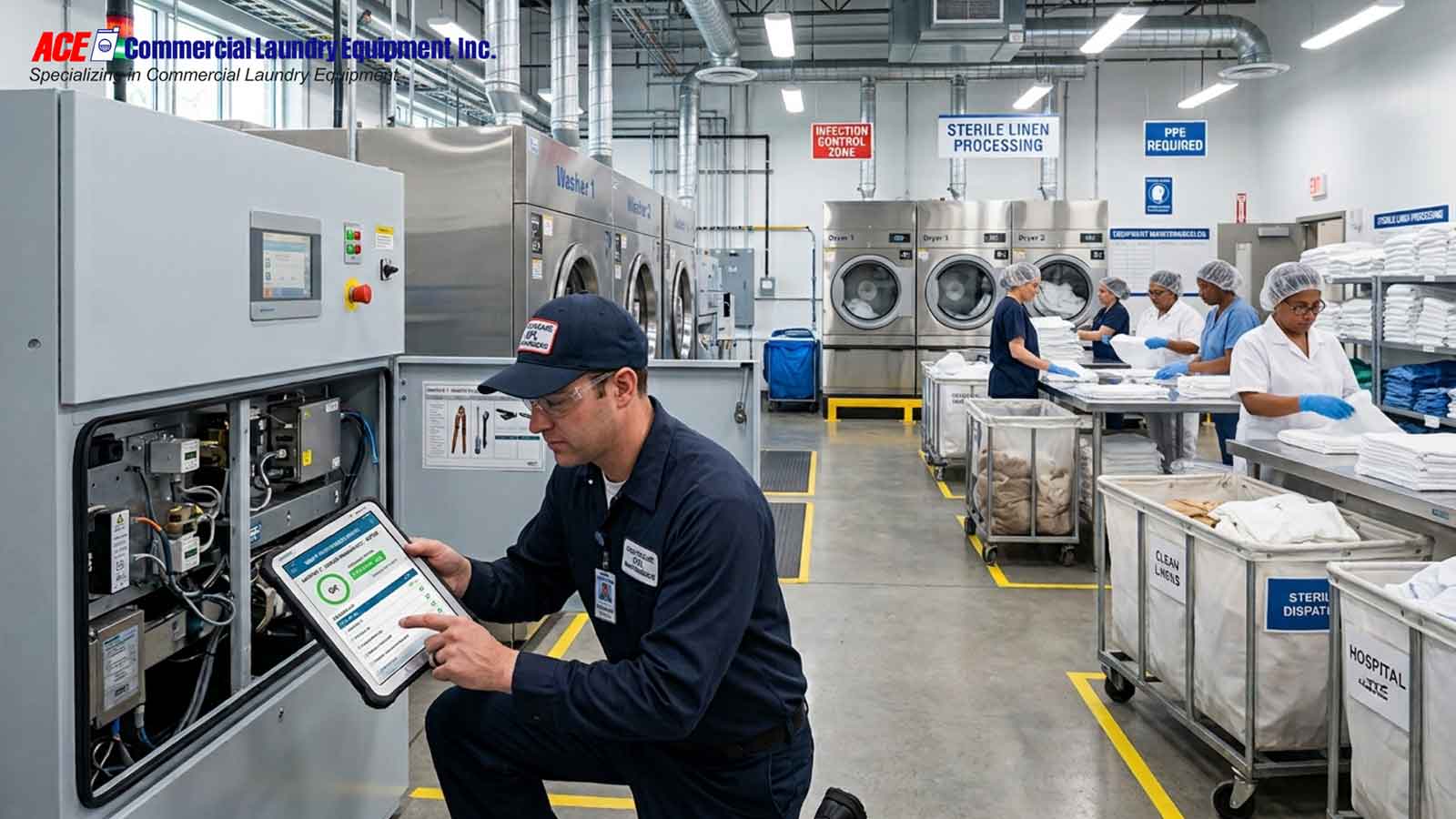
Healthcare laundry equipment failures can disrupt far more than daily laundry operations. When a washer-extractor or other critical machine goes offline, you may face linen shortages, delayed bed turnovers, and added pressure on staff to keep up with demand. By understanding the common causes of downtime and taking preventive steps, you can reduce disruptions, protect workflow efficiency, and maintain the standards your facility depends on.
Why Does Healthcare Laundry Downtime Become a Bigger Operational Risk?
Most facilities don’t realize how quickly a single equipment failure can cascade across departments. When healthcare laundry equipment fails, your facility may experience delays in linen availability, strain on staff, and workflow disruptions across clinical departments.
High-demand areas such as intensive care units, surgical suites, and labor-and-delivery units often feel the impact first. These departments rely on consistent access to clean textiles and typically have limited flexibility when supplies become restricted. A single washer-extractor or dryer failure can reduce available linen inventory faster than many facilities expect.
Facility-wide linen averages do not always reflect the needs of individual departments. Establishing unit-specific par levels gives your team a more accurate understanding of how long each area can operate during a disruption. By tracking consumption patterns, you can prioritize available inventory and distribute linens where they are needed most.
Tracking consumption patterns is only part of the equation. A backup linen plan strengthens your facility’s ability to respond quickly. Pre-established agreements with linen suppliers or rental providers allow your team to secure additional resources quickly instead of searching for solutions after equipment fails. Assigning a downtime coordinator before an outage occurs creates clear responsibility for communication, inventory decisions, and recovery steps.
How One Outage Disrupts Patient Operations
The effects of healthcare laundry downtime often appear first in departments with high linen demand. ICUs, surgical suites, and labor-and-delivery units depend on reliable access to clean textiles to support patient care and daily procedures.
When available linens decline, clinical teams may need to adjust workflows, delay noncritical tasks, or spend additional time locating supplies. Understanding department-specific demand helps your facility protect critical areas and maintain smoother operations during an equipment disruption.
How Healthcare Laundry Downtime Affects Infection Control
Healthcare laundry operations must maintain strict handling and sanitation practices even when equipment problems interrupt normal workflows. The Centers for Disease Control and Prevention (CDC) provides guidance for healthcare linen management, including proper handling of soiled textiles, appropriate containment, and separation between clean and contaminated areas.
During a downtime event, maintaining these controls can become more challenging. Staff may manage increased workloads, temporary storage issues, or changes in normal processing routines. Without established procedures, rushed decisions can create unnecessary risks for linen handling and contamination prevention.
Preparing for disruptions before they occur helps your facility maintain proper textile management practices. A clear process for handling soiled linens, protecting clean inventory, and restoring normal operations supports both safety standards and operational consistency.
What Causes Healthcare Laundry Equipment Downtime?
Most healthcare laundry equipment failures come from issues that show warning signs before a complete breakdown occurs. Mechanical wear, utility disruptions, and workflow mistakes can all affect reliability, but many facilities only address these problems after they interrupt daily operations.
Understanding these common failure points helps your team identify risks earlier and maintain more dependable laundry operations.
Mechanical Wear, Lint Buildup, and Component Failure
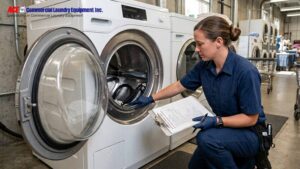
Healthcare laundry equipment operates through thousands of demanding cycles, placing continuous stress on critical components. Washer-extractor bearings, drive belts, door seals, and other parts naturally wear over time. Without routine inspections, these components may fail unexpectedly and remove essential equipment from service.
Dryer lint buildup creates another concern. Restricted exhaust airflow forces dryers to work harder, increases cycle times, raises operating temperatures, and can create safety hazards if left unaddressed. Overloading machines can accelerate these issues by placing additional strain on motors, drums, and internal components.
Chemical, Water, and Utility Supply Issues
Not every laundry disruption starts with a mechanical failure. Utility problems and process issues can affect your operation just as quickly. Incorrect chemical dosing, for example, can create problems in both directions. Excess detergent may cause excessive sudsing and drainage issues, while insufficient chemical levels can reduce cleaning effectiveness and require additional processing.
Water pressure problems, clogged drains, steam interruptions, and temperature-control failures can also prevent laundry equipment for healthcare from completing required cycles. Because these issues involve facility infrastructure rather than the machines themselves, they are often overlooked during equipment planning.
A complete maintenance approach should include both equipment inspections and reviews of supporting utility systems.
ALSO READ: Why Hospital Laundry Falls Behind and How to Fix Drying Bottlenecks
What Workflow Mistakes Make Healthcare Laundry Downtime Worse
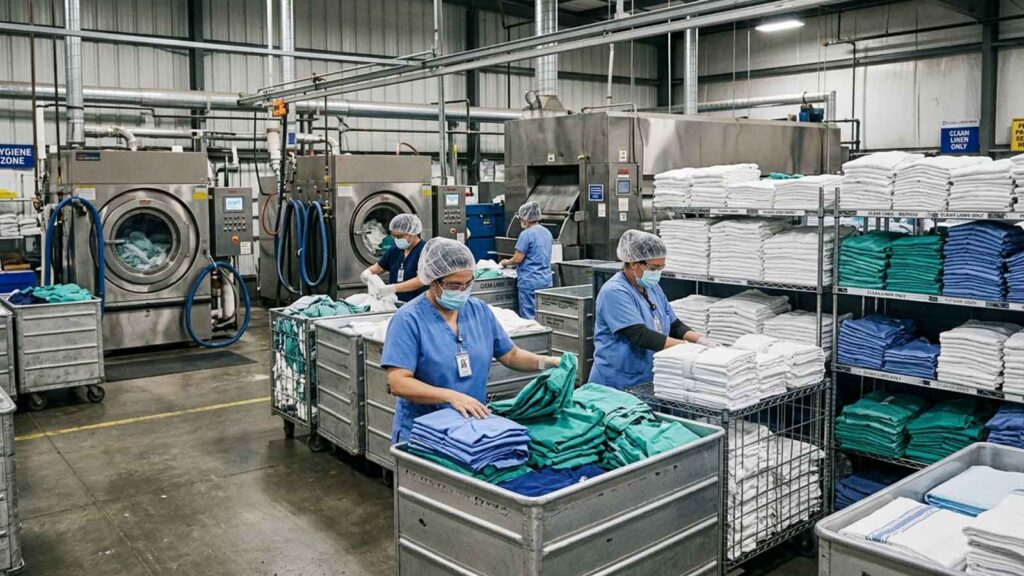
Daily operating practices shape how reliably your laundry system performs. Sorting mistakes, improper loading, and rushed decisions can increase equipment stress, create safety concerns, and extend recovery time when problems occur.
Improper Sorting and Foreign Object Damage
Foreign objects in soiled linen loads remain one of the most preventable causes of equipment damage. Items such as surgical sharps, small instruments, or non-linen debris can damage washer drums, break internal components, or force emergency shutdowns.
Clear sorting procedures and properly labeled containment areas help reduce these risks. Training should continue beyond employee onboarding. Regular reminders, audits, and reinforcement help your team maintain consistent practices and prevent repeat issues.
How Operator Practices Affect Equipment Performance
During a disruption, staff may feel pressure to restore production quickly. This can lead to avoidable mistakes, such as overloading machines, adjusting chemical levels without proper guidance, or ignoring equipment alerts.
Rushing through those steps puts added stress on machines and can extend the original outage. Providing clear operating procedures and regular staff training helps your team respond effectively without creating additional equipment problems.
How Can You Prevent Healthcare Laundry Equipment Downtime?
Preventing downtime requires more than repairing equipment after a failure occurs. A structured maintenance approach helps your facility identify risks early, improve equipment reliability, and maintain consistent laundry operations.
For healthcare facilities, preventive maintenance is especially important because laundry interruptions can affect patient care, staff efficiency, and daily workflows. A proactive program combines routine inspections, technology-based monitoring, staff training, and professional service support.
Maintenance Tasks Your Team Should Perform Regularly
Consistent maintenance does not need to be complicated. Simple checks performed regularly can help your team catch early warning signs before they become larger problems.
Daily maintenance tasks include:
- Cleaning dryer lint traps after each cycle
- Checking door seals and drain connections
- Cleaning equipment surfaces
- Reporting unusual noises, vibration, or visible wear
Weekly and monthly maintenance tasks include:
- Testing barrier door seals and pressure performance
- Inspecting drive belts for wear and proper tension
- Reviewing steam system performance
- Recording completed maintenance activities for tracking and compliance
Maintaining accurate service records gives your facility a clearer equipment history. These records help your team identify recurring issues, plan future maintenance, and support compliance documentation when needed.
Condition Monitoring and Professional Service Support
Condition monitoring tools can help your team identify mechanical concerns before they result in unexpected failures. Technologies such as vibration analysis for high-speed washer-extractors can detect early signs of bearing wear, imbalance, or equipment stress.
Instead of waiting for a complete breakdown, your facility can schedule service during planned maintenance windows. Following manufacturer recommendations and maintaining proper documentation for healthcare facility laundry equipment helps improve reliability and supports long-term equipment performance.
Staff Training and Downtime Preparedness
Reliable laundry operations depend on both equipment condition and proper operation. Staff training helps prevent avoidable issues such as overloading, incorrect chemical use, and ignored error messages.
Regular refresher training ensures your team understands loading requirements, equipment checks, and proper response procedures. Tabletop exercises help staff practice communication steps, linen conservation strategies, and department coordination before an actual disruption occurs.
A prepared team can respond faster, avoid unnecessary equipment stress, and get operations back on track more efficiently.
RELATED ARTICLE: A 5-Minute Commercial Laundry Troubleshooting Guide for Staff
Work with the Right Service Partner
Maintaining reliable laundry operations requires more than having the right machines. An experienced service partner can help your facility select appropriate equipment, plan maintenance schedules, and address issues before they create larger disruptions.
ACE Commercial Laundry Equipment Inc. has supported Southern California healthcare and commercial laundry operations since the late 1950s. As a Premier Huebsch® dealer, ACE Commercial Laundry Equipment Inc. provides support for healthcare laundry equipment selection, preventive maintenance planning, and service needs for on-premise laundry operations. With a service response benchmark of four hours across Southern California, your facility gets the support it needs before a disruption grows into a larger problem.
Working with a knowledgeable provider gives your team access to equipment expertise, maintenance guidance, and ongoing support designed around your facility’s operational requirements. Contact ACE Commercial Laundry Equipment Inc. to develop a service approach that supports your facility’s needs and helps reduce the impact of unexpected equipment issues.
Frequently Asked Questions
How long does healthcare laundry downtime typically last?
Healthcare laundry downtime can last from less than an hour to several days, depending on the cause of the failure and the availability of service support. Simple issues, such as a tripped breaker or clogged drain, may require a short repair. More complex problems, including bearing failures, drum damage, or major component replacements, may take longer if specialized parts are required. Facilities with preventive maintenance plans and established service agreements often restore operations faster.
What temperature does hospital laundry need to reach for proper sanitation?
Healthcare laundry sanitation requirements depend on the wash process, textile type, and facility protocols. Hot-water wash cycles commonly use temperatures around 160°F (71°C) or higher as part of a thermal disinfection process. Some facilities use lower-temperature cycles with EPA-registered laundry disinfectants approved for healthcare applications. Your infection-control team should determine the appropriate process based on your facility’s requirements.
What accreditation standards govern hospital laundry operations?
Hospital laundry operations follow guidance from organizations such as the CDC, The Joint Commission, and the Healthcare Laundry Accreditation Council (HLAC). These standards address areas such as linen handling, infection prevention, equipment documentation, staff practices, and workflow controls. Following these guidelines helps your facility maintain consistent processes and prepare for inspections or accreditation reviews.
When should a hospital repair aging laundry equipment instead of replacing it?
You should evaluate replacement when repair costs become excessive, failures happen frequently, or the equipment no longer meets your facility’s needs. A machine that requires repeated repairs, lacks manufacturer support, or cannot handle current laundry volume may cost more to maintain than replace. However, properly maintained healthcare facility laundry equipment can continue operating reliably when parts and service support remain available.
What is the difference between on-premise laundry and outsourced linen service for hospitals?
On-premise laundry (OPL) means your facility owns and operates its own laundry equipment and processes linens on-site. Outsourced linen service means an external provider handles processing and returns clean textiles based on a delivery schedule.
OPL gives facilities more control over turnaround times, inventory management, and processing standards. Outsourced services can reduce equipment investment and staffing requirements but provide less direct control over daily operations. Some healthcare facilities use a hybrid approach by maintaining on-site capacity and using outside providers for additional support during high-demand periods or equipment disruptions.
How quickly can ACE Commercial Laundry Equipment Inc. respond when laundry equipment fails?
ACE Commercial Laundry Equipment Inc. maintains a four-hour service response benchmark across Southern California. That response time is designed to minimize disruption to your facility’s operations and get your laundry room back online as quickly as possible. Contact ACE Commercial Laundry Equipment Inc. to discuss a service agreement built around your facility’s uptime requirements.