Starting a laundromat requires careful equipment planning, from choosing the right machines to making sure your building can support water, gas, and electrical requirements. Your equipment choices affect customer experience, operating costs, and how efficiently your store handles daily laundry volume.
The right setup helps you manage busy periods, avoid unnecessary expenses, and invest in machines that fit your space and customers. Five steps get you there, starting with your equipment mix and ending with the utility upgrades your building needs before the right commercial laundry equipment arrives.
Step 1: Match Your Equipment Mix to Your Customers and Store Size
You determine the right laundromat equipment mix by matching your machines to your customers, your location, and your expected demand. Before you purchase equipment, study who will use your store, what types of loads they bring, and how often they visit.
Start by identifying your laundromat model. A self-service store may need fewer customer amenities, while an attended or hybrid location may require more folding tables, carts, and seating. Next, review your local market. Renters and students often need small and mid-size washers for regular laundry loads, while families may need larger machines for bedding, comforters, and bulky items. Commercial customers like salons, gyms, and small businesses can also provide consistent weekday demand.
Your equipment plan should match your store size and customer volume. As a general starting point, depending on projected customer volume:
- Small neighborhood store: 6 to 10 washers and 6 to 10 dryers
- Mid-size location: 20 to 30 washers and 20 to 30 dryers
- Large laundromat: 40 to 50 or more total machines
Keep your washer and dryer capacity balanced. Too many washers and not enough dryers can create long wait times during peak hours and affect the customer experience.
Step 2: Choose Washer Sizes Based on Customer Needs
You choose washer sizes by understanding the laundry habits of your target customers. Smaller households may only need 20 to 30 lb washers, while suburban and urban laundromats often benefit from 30 to 50 lb machines that handle weekly laundry loads efficiently. Locations serving more families should consider 60 to 80 lb washers for blankets, comforters, and other oversized items.
Front-load washers are a popular choice for laundromats because they support larger loads and higher customer throughput. Top-load models may work for operators who prefer a simpler setup and lower upfront costs.
When selecting your machines, consider your customer demand, available space, and utility requirements. Choosing the right washer sizes helps you serve different customer groups without taking up valuable floor space with machines your market rarely uses.
Step 3: Calculate Peak-Hour Demand and Dryer Capacity
You calculate peak-hour demand by estimating how many loads your market can produce during your busiest times. Review your local population, nearby businesses, and customer routines to determine when your laundromat will experience the highest traffic.
After estimating washer demand, plan your dryer capacity around your expected volume. Dryer needs do not always match your washer count because extraction performance affects drying time. Machines with stronger extraction spin remove more moisture before the load reaches a dryer, which cuts cycle time.
Your dryer capacity should support your busiest washing periods so customers can move through your store without delays. Planning around real usage patterns allows you to invest in equipment that supports steady traffic instead of paying for machines your customers rarely use.
ALSO READ: Choosing Commercial Laundry Equipment for Your Business and Budget
Step 4: Compare Mechanical Features That Affect Daily Performance
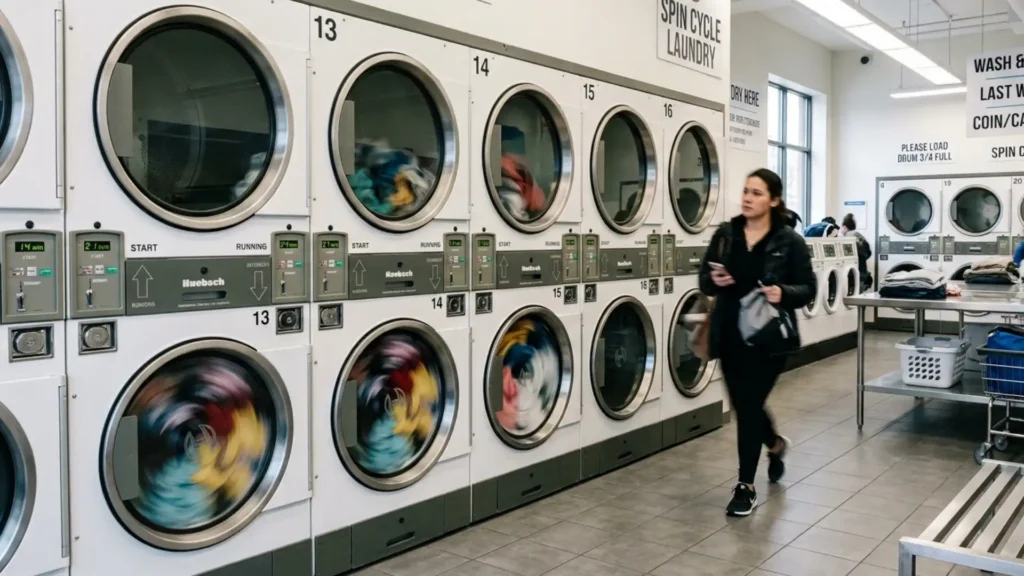
Machine specifications determine how your equipment performs after installation, from extraction speed to energy use. When comparing commercial laundry machines, focus on the features that affect reliability, maintenance, and operating costs.
Important specifications include:
- Washer mounting type: Hard-mount washers require a reinforced concrete foundation to handle high vibration during extraction. Soft-mount extractors use suspension systems with springs and shock absorbers, giving you more installation flexibility but often at a higher upfront cost.
- Extraction performance: Higher extraction speeds remove more water before drying, which can reduce dryer time and improve energy efficiency.
- Water and energy usage: Efficient machines can help lower operating costs over time, especially in high-volume laundromat environments.
- Control options: Programmable cycles and payment system compatibility give you more flexibility as your business grows.
ACE Commercial Laundry Equipment Inc. washer-extractors include features like 200 G-force extraction, programmable water levels, multiple cycle options, and leak protection systems designed for commercial laundry operations. These features help operators manage repeated cycles while protecting equipment performance.
Your dryer setup should match your washer output. Consider these factors when selecting dryers:
- Capacity: Larger dryers handle bulky loads like comforters, blankets, and commercial laundry more efficiently.
- Fuel source: Gas dryers often provide faster drying times when gas service is available, while electric models may work better for locations without gas access.
- Space requirements: Stackable washer and dryer configurations can help you maximize smaller laundromat layouts.
When comparing the best commercial laundry machines, consider durability, parts availability, technician support, warranty coverage, and payment system compatibility. These factors often determine long-term value beyond the machine’s initial price.
Step 5: Upgrade Your Utilities Before Equipment Delivery
Before your laundromat equipment arrives, confirm that your building can handle the water, gas, electrical, and structural demands. Many first-time owners focus on choosing machines but overlook the utility upgrades that keep those machines running safely and efficiently.
Your utility checklist should cover these key areas:
- Water supply and drainage: Your plumbing system must handle multiple washers filling and draining at the same time. High-volume laundromats often use drain troughs to collect wastewater from multiple machines and prevent backups.
- Water heating capacity: Your water heater needs to support your washer count and daily demand. A system designed for a small business may struggle in a larger laundromat with many machines running throughout the day.
- Water treatment: Pressure regulators, filtration systems, and water softeners help reduce mineral buildup that can affect machine performance and shorten equipment life.
- Gas and ventilation: Gas dryers require properly sized gas lines and ventilation systems to operate safely and efficiently.
- Electrical service: Larger machines may require 208 to 240 volt circuits, and some locations may need three-phase power upgrades before installation.
- Floor support: Your building’s foundation must handle the vibration and weight of multiple high-speed washers during extraction cycles.
Utility upgrades often create unexpected costs during a laundromat build. Plan for possible expenses like gas line improvements, electrical panel upgrades, plumbing modifications, water or sewer connection fees, and structural floor reinforcement.
You can avoid costly delays by involving your equipment provider, contractors, engineers, and local building officials before construction begins. Confirm zoning requirements, permit needs, and installation plans early so you do not need to redesign your space after ordering your equipment.
A proper utility review helps you build a laundromat that can handle daily demand from the start. Use a commercial laundry equipment checklist to review important equipment considerations before making a purchase, and explore financing and total project cost guidance to plan your budget.
RELATED ARTICLE: Commercial Laundry Equipment Buying Checklist for Owners and Managers
Start Planning Your Laundromat Today
Once you understand your space, customer demand, and equipment needs, the next step is choosing a partner who can help bring your laundromat plan together. ACE Commercial Laundry Equipment Inc. helps you evaluate your location, layout, budget, and equipment options so you can choose the right setup for your business.
As a Huebsch dealer serving Southern California, ACE pairs equipment sales with on-site location evaluations and Huebsch financing options, so you can plan your machines, layout, and budget with one team.
ACE Commercial Laundry Equipment Inc. offers new and re-manufactured commercial laundry equipment for sale, with options designed for different store sizes and operating needs. You can also choose payment solutions that support coin, digital, and hybrid systems to give customers more convenient ways to pay.
After installation, ongoing service helps protect your investment. Our team supports your equipment with factory-trained technicians, maintenance, repairs, and parts support to reduce downtime and keep your store operating efficiently.
Start your laundromat project with expert guidance from ACE Commercial Laundry Equipment Inc. Contact us for a professional inspection or call 714-640-6674 to discuss your equipment and service needs.
Frequently Asked Questions
How long do commercial laundry machines last in a vended laundromat?
Commercial laundry machines can last for many years when you match equipment usage with proper maintenance. Lifespan depends on factors like daily cycles, water quality, and service schedules. Machines running high volumes on hard water without treatment may experience faster wear on parts like bearings and seals. Plan your maintenance around your expected usage to protect performance and extend equipment life.
Is buying or leasing commercial laundry equipment better for a new laundromat?
The better option depends on your budget, business goals, and how long you plan to operate the location. Buying equipment gives you ownership and may benefit long-term operators. Leasing can preserve cash for other startup costs like renovations, utility upgrades, and store improvements. Review your available capital and expected return before choosing a financing option.
Should you buy new or re-manufactured laundromat equipment?
New equipment provides updated technology, full warranty coverage, and improved efficiency. Re-manufactured equipment can lower upfront costs when you need to manage expenses during the startup phase. Many laundromat owners combine both options by using new machines in high-demand areas and re-manufactured units where demand is lower. Always review warranty coverage, parts availability, and service support before purchasing.
Do laundromats still need coin machines, or should you go cashless?
Many new laundromats use a hybrid payment setup that accepts both traditional and digital payments. Coin systems continue to serve customers who prefer cash, while mobile apps, cards, and other digital payment options provide more convenience. Digital payment systems can also help you manage pricing, track usage, and reduce the time spent collecting coins. Choose a system that fits your local customers and their payment preferences.
Should a new laundromat offer wash-and-fold service?
Wash-and-fold services can create an additional revenue stream by serving customers who prefer convenience over self-service. This option requires additional planning for staffing, workspace, storage, and supplies. Many owners start with self-service operations and add wash-and-fold once they understand customer demand and have the resources to manage the service efficiently.