Keeping athletic gear organized can be a challenge when multiple teams share the same laundry room. A missing jersey, misplaced socks, or mixed-up practice gear can quickly create extra costs and unnecessary stress for coaches and staff. The issue is often not careless athletes, but a laundry process that lacks the right structure.
Modern laundry equipment for schools helps athletic programs create a more reliable wash-and-return process. With durable commercial-grade machines and better organization methods, you can improve how your staff handles uniforms, towels, and equipment while keeping gear ready for every practice and game.
Why Do Athletic Programs Keep Losing Gear?
Lost athletic gear is rarely caused by careless athletes. The bigger issue is usually an outdated laundry process that makes it difficult to track uniforms from the field to the laundry room and back. Shared bins, unmarked garments, and inconsistent handling procedures can create confusion, especially when multiple teams use the same facilities.
The Main Causes of Missing Gear
Several process issues can lead to lost or misplaced athletic items:
- No separation by athlete: When gear from multiple players goes into the same bin, sorting becomes a time-consuming process after every wash cycle.
- Unmarked garments: Similar jerseys, shorts, and practice gear can easily get mixed up when they lack clear identification.
- No consistent return process: Without a defined system for collecting, washing, organizing, and returning gear, staff may handle laundry differently from one day to the next.
These are process issues, not athlete failures. The fix is building a better system before gear ever reaches the machines.
The Hidden Cost of Lost Gear
Athletic uniforms and equipment represent a major investment for schools. Replacing missing jerseys, socks, and practice gear can quickly affect your budget, especially across multiple teams and seasons.
The cost also extends beyond replacement purchases. Coaches and staff spend valuable time searching for items, resolving mix-ups, and placing last-minute orders before important events. A better laundry process helps reduce these disruptions while keeping your teams prepared.
The Four Components of a No-Lost-Gear Laundry System
A reliable athletic laundry system combines equipment and organization methods that improve how your staff handles uniforms and equipment. Each component addresses a specific challenge, from keeping individual gear together to managing large volumes of athletic laundry.
Laundry Loops and Straps for Per-Athlete Gear Tracking
Laundry loops help keep each athlete’s uniform set together throughout the wash and dry cycle. A durable loop secures jerseys, shorts, and matching pieces into one bundle, reducing the chance of items separating during cleaning.
Smaller items such as socks, gloves, and accessories can attach to the loop using clips or drawstring compartments. Each bundle can include a writable ID tag, barcode label, or color-coding system, making it easier for staff to identify which gear belongs to each athlete or team. Programs managing larger rosters can pair these tags with basic barcode scanning or RFID-based tracking tools to confirm every bundle is accounted for before and after each cycle.
This system keeps individual gear sets connected throughout the cycle, creating a simpler way to manage uniforms before and after washing.
Heavy-Duty Mesh Wash Bags for Larger Items
Some athletic equipment cannot fit on a laundry loop. Items such as practice pennies, protective gear, and other bulky accessories need a separate solution to stay organized during washing.
Heavy-duty mesh wash bags keep larger items contained while allowing water and detergent to move through the material. Reinforced zippers and durable construction help prevent bags from opening during cycles, keeping equipment secure during cleaning.
Sorting and Transport Carts That Prevent Mix-Ups
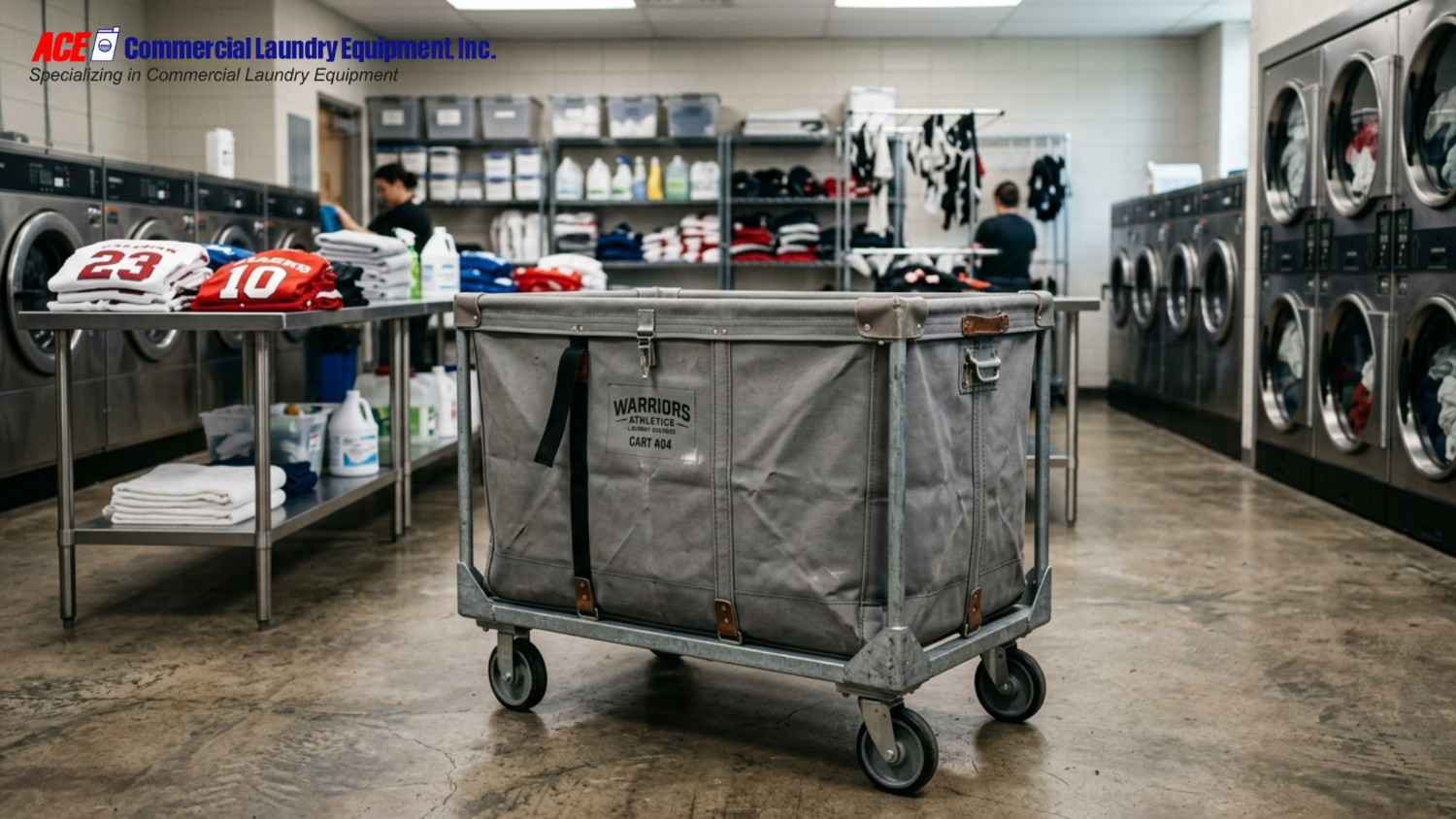
Moving gear between the field, locker room, and laundry area creates another opportunity for items to become misplaced. Divided sorting and transport carts help keep equipment separated during collection and transportation.
Separate compartments allow staff to organize game uniforms, practice gear, and other items before they reach the laundry room. This keeps the organization system consistent from collection through return.
Commercial Athletic Laundry Equipment Built for the Job
Purpose-built school laundry equipment provides the capacity and precision needed for frequent, high-volume athletic washing, designed to handle demanding programs while supporting the care requirements of uniforms and performance fabrics.
Key features include:
- Programmable wash cycles: Customized settings help protect screen-printed numbers, heat-transfer logos, and performance materials from unnecessary wear during repeated washing. Huebsch commercial washers, for example, offer programmable controls that let staff match cycle parameters to specific fabric types across different sports.
- Integrated disinfection options: Some commercial systems include optional disinfection upgrades such as ozone treatment, which can help reduce bacteria on high-contact items like towels, padded gear, and practice jerseys. Confirm specific disinfection options with your equipment provider before selecting a configuration.
- Moisture-sensing dryers: Sports-specific drying programs help prevent over-drying, maintain proper sizing, and extend the usable life of performance fabrics.
Purpose-built laundry equipment for schools managing multiple sports programs creates a more efficient laundry operation while helping staff manage daily demands.
How Does the Closed-Loop Workflow Actually Operate?
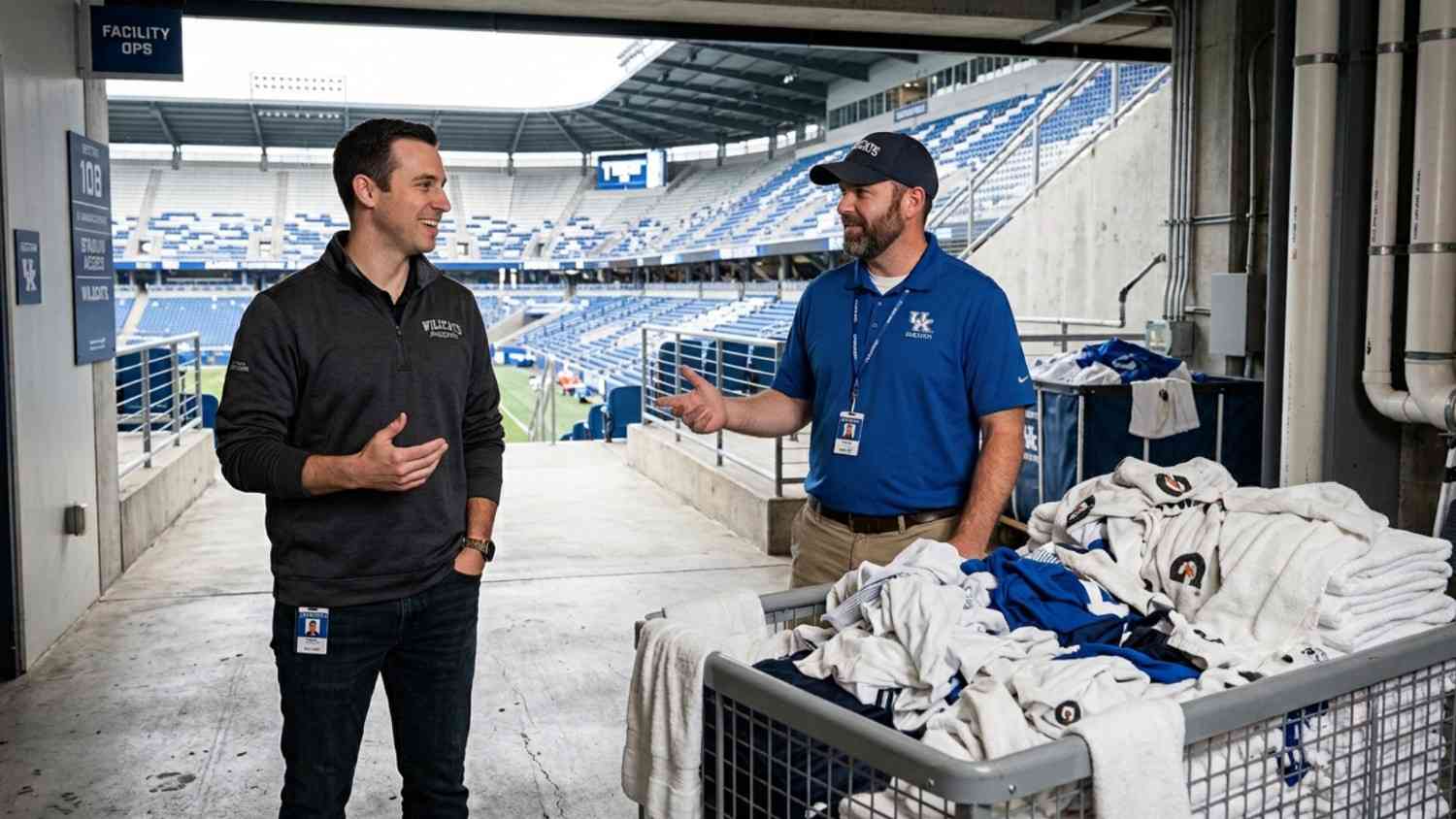
A closed-loop system keeps gear organized from collection through return. Instead of relying on manual sorting after washing, each step creates a clear path for uniforms and equipment.
- Athletes secure their gear before washing: Each athlete places their complete uniform set onto a designated loop or strap, including smaller items such as socks and accessories.
- Gear moves into organized collection bins: Bundled equipment goes into team-specific bins based on sport, squad, or roster group.
- Staff transport organized loads: Sorting and transport carts move the collected gear to the laundry room, where staff can load bundles directly into commercial machines.
- Gear returns as identified sets: After drying, each bundle remains connected, and staff can confirm items using ID tags before returning equipment to athletes.
This process reduces confusion during the wash cycle and creates a more consistent way to manage athletic gear throughout the season.
The Operational Payoff for Athletic Directors and Equipment Managers
A well-organized athletic laundry system provides more than cleaner uniforms. It helps your program improve daily operations, reduce unnecessary costs, and create a more reliable experience for athletes, coaches, and equipment staff.
Where Schools See the Biggest Gains
A structured laundry setup creates measurable improvements across your athletic operations:
- Faster turnaround times: Commercial washer-extractors and dryers can complete wash-and-dry cycles efficiently, helping your teams prepare uniforms and equipment for back-to-back practices, games, and events.
- Reduced labor demands: When staff spend less time searching for misplaced items, they can dedicate more attention to field preparation, equipment management, and athlete support.
- Lower replacement costs: A consistent cleaning and handling process helps schools delay frequent purchases for jerseys, towels, and other athletic supplies.
- A more professional program image: Clean, complete, and matching uniforms at games, tournaments, and recruiting events reflect strong organization and attention to detail.
Why Proper Sanitization Matters
Clean-looking gear does not always mean fully sanitized gear. Athletic uniforms, towels, and padded equipment can hold sweat, moisture, and bacteria that standard laundry processes may not fully remove.
Commercial laundry systems with proper wash settings, cleaning products, and disinfection options help reduce bacteria buildup on frequently used equipment. A documented cleaning process also gives your school a clearer approach to maintaining consistent sanitation standards.
ALSO READ: How to Train Staff for Effective Laundry Room Operations
How Can Schools Build a Better Laundry System?
Creating a reliable athletic laundry system does not require rebuilding your entire facility. The process starts by understanding your current needs, selecting the appropriate equipment, and creating procedures that your staff and athletes can follow.
Assess, Design, Train, and Track
Step 1: Identify your current challenges
Start by finding where gear issues happen most often. Review each stage of the process, including locker room collection, transportation, washing, drying, and redistribution. Understanding your team size, equipment volume, and busiest days helps you create a practical solution.
Step 2: Choose the right equipment
Select equipment based on your team size, daily laundry volume, and operational demands. Look for machines with enough capacity for busy practice and game schedules, with settings that support fabric care and sanitation. Your selection should also account for future growth. A system designed for changing team sizes can help your program avoid unnecessary replacements as athletic demands increase.
Step 3: Create an organized workflow
Plan how gear moves through your facility, from collection areas to washing, drying, storage, and return. Assign clear locations for loops, straps, labeled bins, and drying areas so your physical space supports the process.
Step 4: Train the people involved
Athletes, coaches, and equipment staff all play a role in keeping the system effective. Provide clear instructions on how to secure gear, where to place items, and how the return process works. Consistent training helps maintain organization throughout the season.
Step 5: Monitor and improve
Track missing items, laundry cycle times, and equipment condition over time. This information helps you adjust procedures, improve machine settings, and make informed purchasing decisions as your athletic program grows. Laundry equipment for universities, high schools, and multi-sport programs built with scalability in mind supports that growth without requiring a full system replacement.
LEARN MORE: Laundry Room Management Software That Reduces Common Problems
Build a Better Athletic Laundry Room
Managing athletic laundry can become challenging when your teams handle hundreds of uniforms, towels, and equipment pieces throughout the season. ACE Commercial Laundry Equipment Inc. works with school athletic programs across Southern California to set up organized laundry rooms with commercial-grade machines, disinfection options, and gear-handling methods built for daily athletic use.
The setup does more than clean uniforms. It helps you manage daily laundry demands, protect your equipment investment, and create a process that keeps gear organized for practices, games, and tournaments.
ACE Commercial Laundry Equipment Inc. provides laundry equipment for universities, high schools, and multi-team athletic programs. The team helps you evaluate capacity needs, select appropriate machines, and create a system that supports your program throughout the season.
Contact ACE Commercial Laundry Equipment Inc. to discuss your athletic program’s laundry needs and build a more efficient equipment solution.
Frequently Asked Questions
How often should school athletic uniforms be washed?
School athletic uniforms should be washed after every practice, game, or use. Sweat, bacteria, and body oils can build up quickly on athletic fabrics, creating odors and affecting fabric performance over time. For programs with daily practices and multiple teams, you need a laundry process that can clean and return gear quickly to keep athletes prepared for upcoming events.
What is the difference between a washer-extractor and a standard commercial washer?
A washer-extractor removes more moisture from fabrics during the spin cycle than a standard commercial washer. This reduces drying time, lowers energy use, and limits unnecessary heat exposure on athletic materials. For programs managing large volumes of uniforms, this faster turnaround helps you keep up with demanding practice and game schedules.
Can the same commercial laundry equipment handle athletic uniforms and everyday institutional laundry?
Yes, commercial laundry equipment can handle both athletic uniforms and other institutional items such as towels and bedding when you use the correct settings. Athletic gear requires specific wash cycles, temperatures, and cleaning products to maintain materials like polyester, nylon, and moisture-wicking fabrics. Using separate presets for each load type helps prevent unnecessary wear, fading, and damage.
How do schools manage laundry for multiple sports teams running at the same time?
Schools manage multiple sports laundry demands by combining proper scheduling, enough machine capacity, and organized collection methods. Separate bins, labeled gear bundles, and designated wash schedules help prevent teams from mixing loads. When your program has a clear system, staff can process more equipment efficiently during busy periods.
What laundry detergents and chemicals work best for athletic gear?
The best detergents for athletic gear are designed for synthetic performance fabrics. Low-sudsing, enzyme-based formulas help remove sweat, odor, and buildup without damaging moisture-wicking materials. For programs that need additional sanitation support, properly measured chemical injection systems and approved disinfection solutions provide more consistent cleaning results than manual product additions.