Card-operated machines give you more control over pricing, payment tracking, and daily operations as your laundromat grows. Coin-operated machines still make sense for smaller locations, customers who prefer cash payments, or owners who want a simple payment setup. The best choice depends on your machine count, customer preferences, and how you manage your business.
Your payment system affects how customers use your machines and how you handle daily operations. Choosing the right commercial laundry equipment setup can help you create a smoother experience for customers while making management easier. A third option, a hybrid payment system, combines coin acceptance with card or mobile payments so customers can choose how they pay. This blog explains how coin and card systems work, the costs to consider, and which option fits different laundromat needs.
Are Card-Operated Washers and Dryers Better Than Coin Systems?
Machine count and transaction volume usually decide this comparison. A busy laundromat with dozens of machines can benefit from digital payment systems because they provide detailed usage data and simplify price adjustments. Smaller locations may not need advanced reporting features and may find coin systems easier to manage.
| Feature | Coin-Operated Machines | Card-Operated Machines |
| Payment Method | Customers pay by inserting coins into the machine | Customers pay through laundry cards, credit or debit cards, mobile wallets, or apps |
| Upfront Cost | Requires less investment because it uses a simpler payment system | Requires additional hardware, software, and payment processing setup |
| Revenue Tracking | Requires manual coin collection and record keeping | Records payments, machine usage, and transactions through digital systems |
| Pricing Control | Requires manual price changes on individual machines | Allows you to update pricing settings through a digital system |
| Customer Convenience | Simple and familiar for customers who prefer cash | Provides more payment options without requiring coins |
| Maintenance Needs | Uses fewer electronic components and has fewer technology requirements | Requires payment system maintenance and software support |
| Best Fit | Smaller laundromats, low-volume locations, or cash-focused customers | Growing laundromats that need more control and payment flexibility |
Coin-operated machines use a mechanical coin slide that accepts payment and starts the wash or dry cycle. Since they do not rely on internet connections or software systems, they can continue operating during network issues or digital service interruptions. This makes them a practical option for owners who prefer a straightforward setup.
Card-operated and cashless machines use payment technology such as EMV chip readers, NFC tap-to-pay, mobile wallets, apps, or stored-value laundry cards. Each transaction creates a digital record, helping you understand machine usage and customer payment patterns.
What Is the Total Cost of Ownership for Coin vs. Card Laundry Systems?
The purchase price of a payment system only shows part of the total investment. When comparing coin-operated and card-operated commercial laundry machines, you need to consider equipment, installation, software fees, payment processing costs, connectivity, labor, maintenance, and security.
Coin systems usually require less upfront investment because they use simpler mechanical components and do not include digital payment fees. However, they still require time for coin collection, counting, deposits, and cash-handling tasks.
Card and hybrid systems require more investment upfront, but they provide tools that can improve daily operations. You can adjust pricing, reduce manual payment handling, and monitor machine activity through digital systems. For many laundromat owners, the decision comes down to whether the added control and efficiency support the long-term needs of the business.
| Cost Factor | Coin-Operated Systems | Card-Operated Systems |
| Initial Investment | Lower upfront cost with simpler payment hardware | Higher upfront cost due to readers, software, kiosks, and network setup |
| Payment Processing Fees | No transaction fees | May include processing fees and software or connectivity costs |
| Labor Requirements | Requires manual coin collection, counting, and bank deposits | Reduces cash handling through automated digital payments |
| Revenue Tracking | Requires manual reporting and record keeping | Provides digital transaction records and usage data |
| Pricing Changes | Requires manual adjustments on each machine | Allows faster price updates through digital systems |
| Security | Requires managing and protecting physical cash | Reduces the amount of cash stored on-site |
| Long-Term Management | Simple system but requires more hands-on work | Provides more operational control with additional technology support |
How Much Do Hardware and Retrofit Installation Cost?
Coin-operated machines use simple mechanical components that are easier to maintain. Card systems require additional technology, including payment readers, software connections, and sometimes kiosks or network equipment. This makes retrofitting older equipment a larger project compared to installing payment systems during a new laundromat build.
Your total cost depends on your current machines, payment system requirements, installation needs, and whether you are upgrading existing equipment or purchasing new commercial laundry equipment for sale.
The ranges below are general industry planning estimates, not ACE pricing or quotes. Actual costs vary by machine model, payment provider, and site conditions, so confirm figures with a formal quote before you set a budget.
| Project Scope | Typical Planning Range |
|---|---|
| Card-reader retrofit per machine | $150 to $500 |
| Installation per machine | $100 to $400 |
| Small retrofit with about 10 machines | $3,000 to $9,000 |
| Larger cashless setup with kiosks and networking | $15,000 to $50,000+ |
A smaller laundromat may only need a basic payment upgrade, while a larger operation may require a full cashless system with additional reporting features. Reviewing your equipment, customer habits, and business goals can help you choose the right setup.
How Do Payment Processing Fees Compare to Cash Handling Labor?
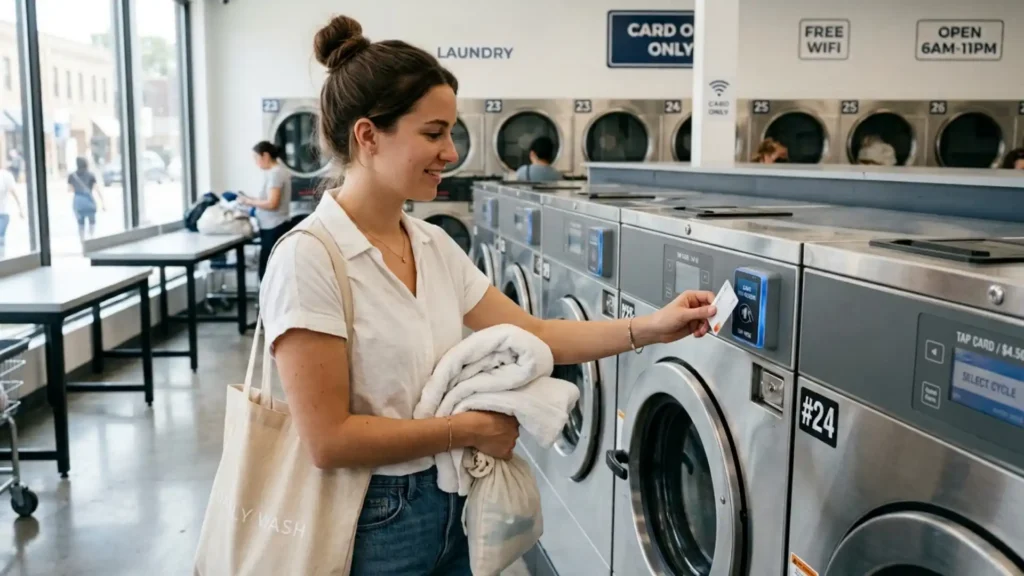
Card systems often include payment processing fees that can vary based on the provider, payment method, and contract terms. Some systems may also include software or connectivity costs, so review the full pricing structure before making a decision.
Coin systems avoid digital transaction fees, but they still require ongoing labor. Someone needs to collect coins, count revenue, transport deposits, maintain bill changers, and follow cash security procedures. These tasks may not appear as a monthly charge, but they still affect your operating costs.
Digital payment systems provide more than payment collection. Each transaction creates a record that helps you understand machine performance, identify usage trends, and make better operating decisions. Remote monitoring can also help you spot issues faster and reduce unnecessary service visits.
When comparing commercial laundry machines, look beyond the initial equipment price. Consider how each payment system affects your labor, maintenance needs, and ability to manage your laundry operation over time.
How Can Security Affect Your Payment System Decision?
Every laundromat payment system comes with different security considerations. Coin-operated machines store physical cash on-site, which requires regular collection routines, secure storage, and careful handling during deposits.
Card and hybrid systems reduce the amount of cash kept inside your machines. Digital payments also create transaction records that help you review activity and improve accountability.
A digital payment system can help you:
- Review payment activity for individual machines
- Identify unusual transaction patterns
- Track refunds and payment issues
- Maintain clearer records for daily operations
Coin systems can still operate securely with proper controls, including regular collections, quality locks, and security monitoring. The right approach depends on your facility, customer volume, and how much cash your operation handles.
What Payment System Maintenance Should You Expect?
Every payment system requires regular maintenance, but the type of work depends on the technology you use.
Coin-operated systems rely on mechanical components. Coin slides, acceptors, and bill changers need routine cleaning and inspections to prevent jams and payment issues. Regular maintenance helps keep your commercial laundry machines available for customers.
Card and cashless systems require technology support. Common maintenance needs include:
- Reader updates: Payment readers and software may need updates to maintain security and compatibility.
- Network troubleshooting: Internet or connection issues can affect digital payment processing.
- Software support: Providers may assist with reporting issues, account settings, and system errors.
- Hardware checks: Readers, kiosks, and payment devices may need repairs or replacement over time.
Hybrid systems require maintenance for both payment methods. Before choosing a system, ask about service support, response times, and ongoing costs so you know what to expect after installation.
Which Payment Architecture Fits Your Facility Type and Demographics?
Your payment architecture should match how your facility operates, who uses your machines, and how you manage daily tasks. Smaller apartment laundry rooms, low-volume locations, and cash-focused customers may not need advanced digital features, making coin systems a practical option.
Card and cashless payment architectures work well for new builds, major renovations, busy laundromats, and multi-location operators. Beyond the reporting covered above, these systems open up loyalty features and dynamic cycle pricing that helps you adjust rates based on demand.
A hybrid setup lets you modernize gradually without replacing every machine at once.
Different facilities may need different payment approaches:
- Hotels and motels: Guest laundry areas may benefit from convenient payment options, while staff laundry areas may require separate controls.
- Healthcare facilities: High-volume linen operations need reliable systems that support consistent workflows and equipment tracking.
- Schools and colleges: Students may prefer card payments, mobile wallets, or app-based payment options.
- Health clubs and country clubs: Members often expect a smooth payment experience that matches the facility’s overall service.
- Fire departments and correctional facilities: These locations may prioritize controlled access and staff oversight instead of public payment kiosks.
- Food processing plants: On-site uniform and towel processing requires systems that support operational management.
- Salons and vended laundries: Walk-in customers may have different payment preferences, making flexible payment options valuable.
For Southern California operators, ACE Commercial Laundry Equipment Inc. pairs payment planning with Huebsch equipment selection, such as Galaxy series machines for laundromats and Quantum Gold machines for multi-housing laundry rooms, so your payment setup and machine lineup work together from installation day.
Your payment architecture should make your commercial laundry easier to manage while giving customers payment options that fit their habits. Reviewing your facility needs, equipment setup, and customer preferences can help you choose a system that supports your long-term goals.
How Do Payment Options Affect Customer Experience?
Your payment system is one of the first things customers interact with, and it can affect how easy your laundromat feels to use. A slow or confusing payment process can create frustration before a wash cycle even begins.
Cashless options can improve the customer experience by making payments faster and more convenient.
- Faster checkout: Tap-to-pay, mobile wallets, and app payments allow customers to start cycles without searching for coins or using a bill changer.
- No need to carry quarters: Many customers no longer keep coins available, and cashless options remove the need to find exact change.
- More payment convenience: Some systems allow customers to check machine availability, manage stored balances, or receive cycle notifications.
- Accessibility for different customers: A hybrid setup means no customer gets turned away because of how they pay.
The best commercial laundry machines support both operational needs and customer expectations. Understanding how your customers prefer to pay can help you decide which payment options make the most sense for your location.
Contact ACE Commercial Laundry Equipment to Modernize Your Payment Systems
The right payment system depends on your customers, your operations, and your budget. A small apartment laundry room and a large laundromat with dozens of machines may need completely different solutions.
A small apartment laundry room and a large laundromat with dozens of machines may need completely different solutions. Start with three numbers: your machine count, the hours your team spends on coin collection each month, and how often customers ask to pay by card.
ACE Commercial Laundry Equipment Inc., Southern California’s Premier Huebsch® Dealer, supports coin-operated, card-ready, digital, and hybrid commercial laundry equipment solutions for new installations and upgrades. Our service team responds to service calls within 4 hours, so payment or machine issues don’t keep your equipment down for long. Contact us for a payment system review that covers equipment compatibility, operating costs, and the right setup for your facility.
Frequently Asked Questions
How do card-operated laundry machines work during internet outages?
Most card-operated machines cannot process new digital payments during an internet outage. Some systems can continue using stored settings or balances, but remote reporting and management features usually stop until the connection returns.
Keeping coin payment options available can provide a backup during temporary service interruptions. The best setup depends on your facility needs and how much flexibility you want during connectivity issues.
Can older coin laundry machines be converted to card readers?
Yes, many older machines can support card-reader retrofits. The upgrade adds digital payment options without replacing the main washing or drying components.
Compatibility depends on your machine model, control system, and equipment age. Before upgrading, review your current setup to determine if a retrofit or equipment replacement makes more sense for your operation.
Do commercial banks charge fees for large coin deposits?
Some banks charge coin-handling or deposit fees for large volumes of coins. These fees vary based on the bank, account type, and deposit amount.
If your laundromat handles a high volume of coins, check your bank’s current policies so you can include these costs when comparing payment systems.
Do customers prefer quarters or cashless payment?
Customer preferences depend on your location, audience, and facility type. Some customers prefer coins because they are familiar, while others prefer card payments, mobile wallets, or apps for convenience.
A hybrid payment system lets you serve both groups at the same location.
Which payment type works best for multi-location operators?
Card and hybrid systems often work well for multi-location operators because they allow remote management, easier price updates, and better oversight across locations.
Coin-only systems require more hands-on management because owners or staff need to visit each location for collections, adjustments, and equipment checks.