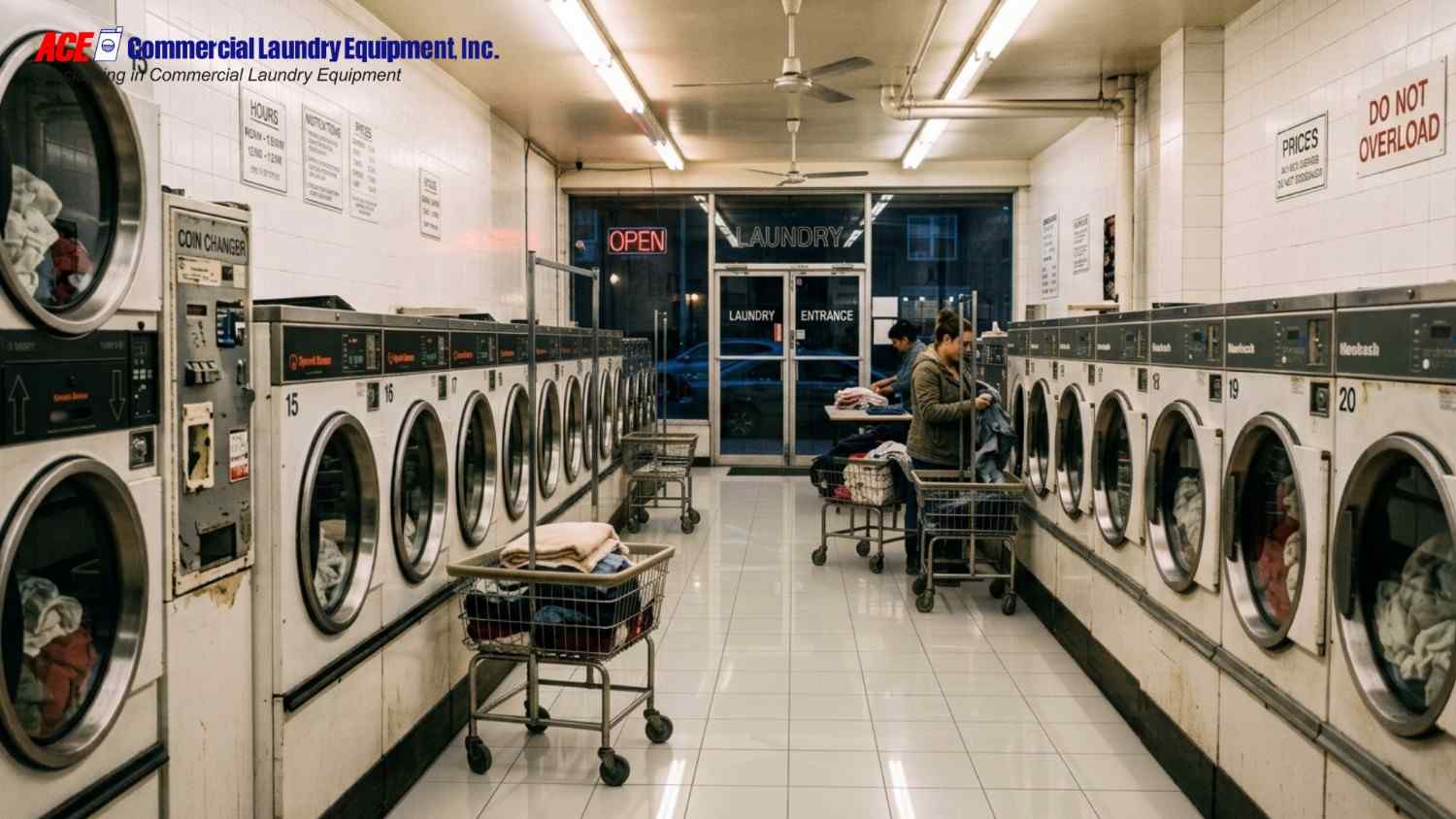
Opening a laundromat in 2026 can cost anywhere between $50,000 and more than $1.2 million. Taking over a closed location and installing used machines keeps costs near the lower end. Building a large, full-service coin or card vended store with new high-capacity commercial laundry equipment pushes the investment much higher.
Your final cost depends on how you enter the business, the size and condition of your location and the equipment you choose. In Southern California, higher lease rates and utility connection costs can push projects toward the upper end of national estimates. The figures below serve as planning ranges based on equipment, construction, lease, permit and financing assumptions for 2026.
How Much Does It Cost to Open Different Types of Laundromats?
Four common project types account for most laundromat startups, with costs varying based on how much infrastructure, equipment and build-out work the location already has.
Small Retrofit or Zombiemat Takeover
Plan on $50,000 to $150,000 for a coin laundry with fewer than 20 machines. This route usually means taking over a closed laundromat or a “zombiemat,” an underperforming or neglected store with existing laundry infrastructure that a new owner plans to rehabilitate.
Older infrastructure may need repairs or upgrades, so have the existing systems professionally inspected before you commit to the property.
Mid-Size New Build Budgets
Budget about $200,000 to $500,000 for a 1,500- to 4,000-square-foot leased space with 20 to 30 machines. This range assumes the space already has usable laundry infrastructure or that you mix new and used equipment, which is the most common starting point for first-time owners.
A new build requires you to budget for both equipment and the infrastructure needed to support it. The condition of the leased space largely determines where your project falls within this range, and a ground-up build with all-new machines runs higher, as the category totals below show.
Large Full-Service Location Costs
Large stores start near $500,000 and can exceed $1.2 million. These laundromats typically include 30 or more machines, high-capacity washers, card or app payment systems, customer seating, vending and services such as wash-and-fold or pickup and delivery.
Larger locations require more equipment, greater utility capacity and a more extensive build-out, which can push the total investment well beyond that of a standard self-service store.
Buying an Operating Laundromat
An existing laundromat can sell for less than $100,000 or more than $1 million. Buyers typically value these businesses based on earnings, equipment condition, lease terms, location and revenue history.
Buying an established store gives you an existing customer base, but older machines can create a large expense soon after closing. Before you price replacement commercial laundry equipment for sale, have a licensed laundromat broker review the store’s financials, lease and equipment condition with you.
ALSO READ: Choosing the Right Washer & Dryer Capacity for Your Business
What Are the Five Main Costs of Opening a Laundromat?
No matter how you enter the laundromat business, your startup budget usually falls into five categories. Commercial laundry equipment will likely take the largest share, but infrastructure can create the biggest surprises if you do not plan for it early.
Equipment Is the Largest Line Item
A package of 20 to 40 machines can cost $150,000 to $500,000 in 2026. Individual washers may run $1,500 to $15,000 depending on capacity and brand, and dryers can cost $2,500 to $10,000. Payment systems, change machines and security equipment can add another $30,000 to $75,000.
Your machine mix often affects the total more than the number of machines you install. High-capacity 60- to 80-pound washers cost more upfront and require more utility capacity, but they can also generate more revenue per cycle. The best commercial laundry machines for your store match your customer demand, pricing strategy and projected usage rather than simply being the largest or most expensive models. You can also prepare the space for future expansion without installing every machine or amenity on opening day, then add capacity as revenue supports it.
Used or refurbished commercial laundry machines may reduce upfront costs by 30% to 50%, but older units can bring higher repair costs and a shorter useful life. That tradeoff matters when you compare lower-priced equipment with the cost of long-term maintenance and replacement.
Build-Out, Plumbing, and Electrical
Expect to spend about $115,000 to $305,000 to build out a 2,000- to 3,000-square-foot laundromat.
- Plumbing, drains and gas: $30,000 to $80,000
- Electrical service and high-amp circuits: $25,000 to $60,000
- Commercial water heating: $15,000 to $50,000
- HVAC and dryer ventilation: $20,000 to $50,000
- Flooring, lighting, finishes and signage: $25,000 to $65,000
Many costly change orders happen because owners sign a lease before confirming the utility requirements of their equipment. Choose your commercial laundry machine lineup first, then verify that the property has enough water, gas and electrical capacity to support it.
A space designed around 20 older top-loaders may not support 30 modern front-load machines without utility upgrades. Taking over a former laundromat can reduce this cost category by $50,000 or more if the existing infrastructure can support your planned equipment.
Lease Deposits and Occupancy Costs
Retail lease rates can range from $15 to $40 per square foot per year in many commercial areas. Once you include the first month’s rent, last month’s rent and a security deposit, you may need $10,000 to $60,000 or more before construction begins.
Laundromat leases commonly run 10 to 25 years because you need enough time to recover your build-out investment. Putting $250,000 into a build-out under a five-year lease creates significant financial risk.
Negotiate a longer initial term, renewal options and a tenant improvement allowance whenever possible. Strong lease terms protect that outlay and can reduce the amount of construction you fund yourself.
Permits, Licenses, and Insurance
Plan for roughly $5,000 to $15,000 in business licenses, zoning approvals, building permits, fire requirements and wastewater permits. Entity formation and legal review may add $300 to $1,000 or more. Liability and property insurance can cost another $1,000 to $3,000 per year, and lenders typically require coverage.
Southern California cities may also charge utility connection or wastewater impact fees. Contact the local planning and utility departments for your specific property before you finalize your budget.
Working Capital and Launch Reserve
Keep enough working capital to cover 3 to 6 months of operating expenses. That may mean $20,000 to $60,000 or more for a smaller laundromat, with larger stores requiring a bigger reserve.
Set aside $2,500 to $20,000 for marketing and launch promotion, plus about $800 to $3,100 for detergent, vending inventory, coin rolls and other opening supplies. A strong cash reserve gives your business time to build repeat traffic without putting immediate pressure on monthly cash flow.
Adding Up the Five Categories
Add the five categories together, and a ground-up build with 20 to 40 all-new machines totals roughly $335,000 to $1.04 million before contingency. That total explains why the $200,000 to $500,000 mid-size range depends on inherited infrastructure or a mix of new and used equipment.
A few expenses fall outside those categories and tend to surface at closing. Add these lines to your budget before you approach a lender:
- Rent paid during construction, since most leases start charging before the first machine runs
- Utility deposits that water, gas and electric providers require on new commercial accounts
- ADA and accessibility upgrades to entrances, restrooms and folding areas
- Installation and programming for coin/card payment systems and change machines
- A contingency reserve for change orders and inspection findings
How Should You Finance Laundromat Startup Costs?
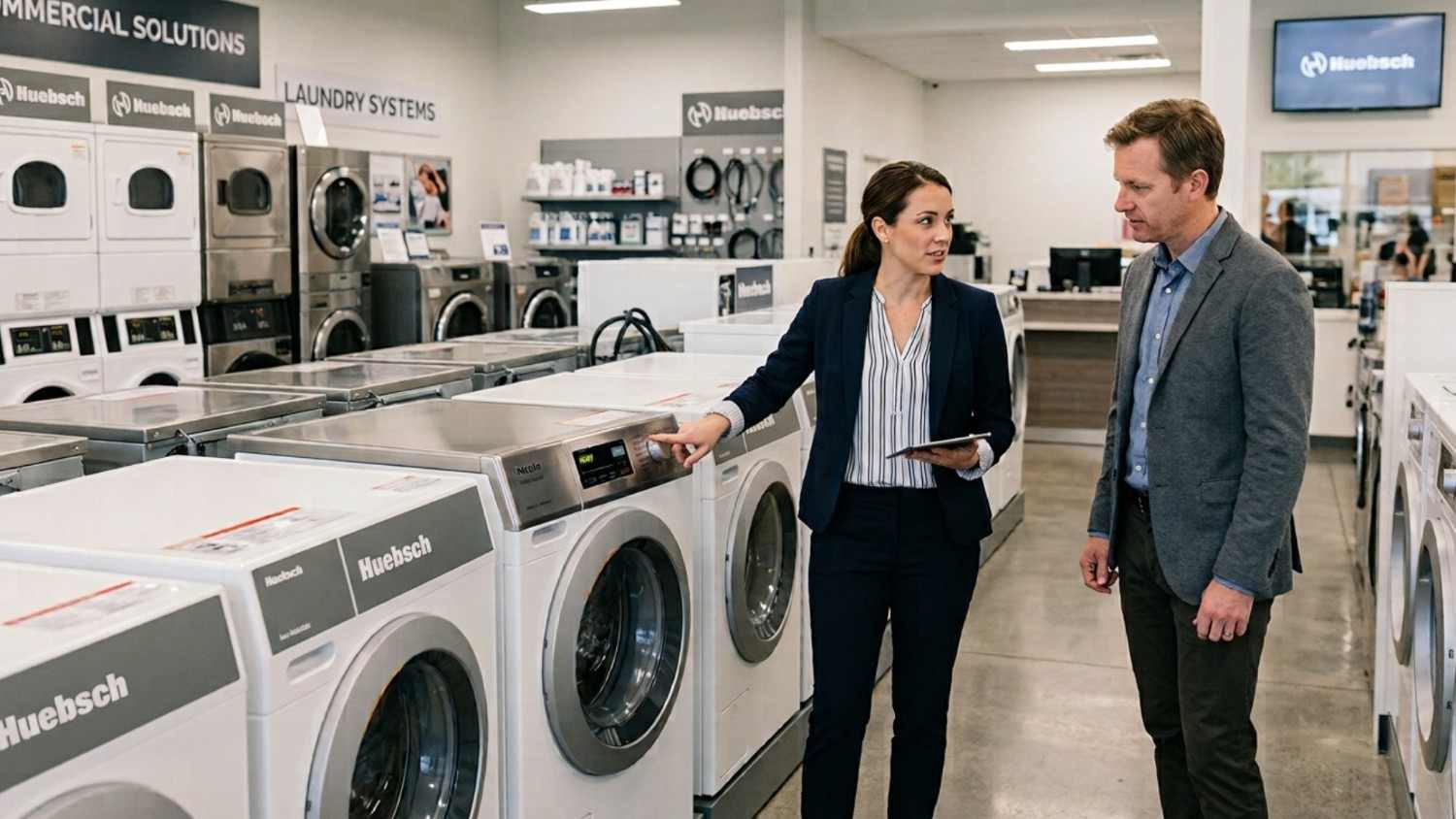
Most laundromat owners use several funding sources instead of relying on a single loan. The key is matching each expense with financing that fits how you will use the money and how long the asset should last.
Which Loan Fits Which Expense
- Washers, dryers and eligible related equipment: Equipment financing or leasing
- Build-out, plumbing and electrical: SBA 7(a) or 504 financing for eligible leasehold improvements, a conventional construction loan or a tenant improvement allowance negotiated into the lease
- Lease deposits, permits and insurance: Owner equity or a business line of credit, because these come due before most loans fund
- SBA 7(a): Business acquisitions, eligible improvements, machinery and equipment and working capital
- SBA 504: Qualifying long-term fixed assets such as real estate, significant improvements and eligible long-life equipment; 504 funds cannot cover working capital or inventory
- Working capital: A business line of credit, SBA 7(a) financing or owner equity
- Purchase of an existing laundromat: SBA 7(a), conventional financing or seller financing, depending on the transaction
SBA-backed financing generally requires more documentation and planning time than many short-term financing options. Factor the financing timeline into your lease negotiations so you do not start paying rent long before construction or equipment installation begins.
Review the commercial laundry equipment financing options available before choosing a loan. For the lease-versus-buy decision, weigh the upfront cost, monthly payment, ownership terms and long-term replacement plans.
How Much Cash You Need Upfront
The amount of cash you need to contribute depends on the loan program, your financial profile, the lender’s underwriting requirements and the type of project, since startups and acquisitions follow different rules.
In the SBA 504 program, a Certified Development Company (CDC) funds part of the project alongside a bank, and the borrower contributes at least 10% of total project cost. A new business, defined as one operating for two years or less, must contribute at least 15%, and a new business buying a special-purpose property must contribute at least 20%. A startup laundromat falls into at least the 15% tier.
Here is an illustrative example using a $400,000 total project cost: a 10% contribution is $40,000, 15% is $60,000, and 20% is $80,000, before closing costs and your operating reserve. These figures show the math only; your lender sets the actual requirement.
Acquisition financing through Huebsch® Financial, outlined on our financing page, covers up to 65% of a target store’s value, which leaves the buyer to fund the remaining 35% plus closing costs and reserves.
Do not assume that one equity percentage applies to every laundromat project. Review the complete financing structure early so you know how much cash you need for the down payment, costs that financing will not cover and your operating reserve.
LEARN MORE: Why Cheap Commercial Laundry Equipment Can Cost You More
How Long Can It Take to Recover Your Laundromat Investment?
Your startup cost only tells part of the story. You also need to estimate how much revenue your laundromat can produce, how much it costs to operate and how quickly those numbers return your startup cost.
Revenue and Margin Considerations
Start your revenue estimate with the number of machines, average vend price and expected turns per day. Subtract rent, utilities, labor, repairs, insurance and debt service to find your annual net cash flow. Divide your total startup cost by that annual net cash flow after debt service, and the result is your estimated payback period in years. Industry sources commonly place that window at 3 to 5 years for well-run stores, so treat anything shorter as optimistic and anything longer as a signal to revisit your lease, pricing or machine mix.
These numbers can vary significantly between stores, even when two laundromats have similar square footage or machine counts. Use revenue and margin estimates as planning tools rather than assuming that a particular store size will automatically produce a certain monthly return.
What Affects Your Payback Period
Location drives your return more than any other factor. Areas with a high concentration of renters and apartment communities can support stronger customer demand. Machine utilization and cycle pricing also shorten or stretch that timeline.
Wash-and-fold, vending and pickup or delivery can create added revenue, but each service brings its own costs. Self-service laundromats require less staffing; attended services add payroll, scheduling and operational oversight.
Your equipment controls also move the numbers. Huebsch® Galaxy controls on vended washers support Multi-Level Vend Pricing, which charges more for warm or hot water, Time-of-Day Pricing to manage peak demand, and Cycle Modifiers that sell customers extra options per load. Galaxy washer-extractors with eBoost™ and 200 G-force extraction cut water use and dry times, which lowers the utility costs that sit between gross revenue and payback.
Plan Your Southern California Laundromat Budget
ACE Commercial Laundry Equipment Inc. has served local laundromat owners since the late 1950s and supports more than 500 managed locations. The team provides coin laundry consulting for site selection, demographics, laundromat design, construction and business sales through licensed real estate professionals. ACE also partners with several lenders, including Huebsch® Financial, to help laundromat owners explore equipment financing for startup, acquisition and equipment projects.
Ready to look at commercial laundry equipment for sale? We can help you evaluate equipment based on your project budget and operating goals. The Huebsch® lineup includes vended washers and dryers designed for laundromat use across different capacities.
Our team works with coin laundries and other commercial laundry operators across the region. Call (877) 630-7278, visit us at 14404 Hoover St, Westminster, CA 92683, or request a quote online to build your 2026 laundromat budget around the commercial laundry equipment your project requires.