You expected your laundry room to run smoothly. Instead, you’re handling tenant complaints, paying unexpected repair bills, and waiting days for out-of-service machines to get fixed. When the facility depends on self-management, small issues can quickly turn into recurring problems that affect your time, budget, and residents.
Self-managed setups usually fail in five predictable areas: costs, breakdowns, safety, visibility, and resident satisfaction. In this blog, you’ll see how the wrong setup creates these problems and where commercial laundry equipment can make the biggest difference.
Unpredictable Maintenance Costs Drain Your Budget
Self-managed laundry rooms may look cheaper at first. But once your machines handle real daily use, the hidden costs start showing up. Repairs, wasted utilities, emergency service calls, and staff time can quickly wipe out your initial savings.
Residential-Grade Equipment Cannot Handle Commercial Volume
Many property owners install discounted or repurposed residential washers and dryers to save money upfront. That decision usually costs more over time. Residential machines are built for a few loads per week, not 20 or more loads per day.
When your equipment cannot handle the demand, you shorten the life of your equipment and increase the number of service calls your team has to manage. Purpose-built commercial laundry machines perform better because manufacturers design them for heavy daily use, stronger components, and longer operating life.
Small Issues Turn Into Major Annual Repair Bills
A leak may seem minor. So can a control-board fault, an off-balance load, or a clogged drain. But when those problems happen again and again, they become a serious annual expense.
Emergency parts, rushed service calls, repeat labor, and downtime all add up. Many property teams do not see the real cost until they review a full year of repair bills.
Utility and Consumable Waste You Are Not Tracking
Older or non-commercial machines often run the same water and energy cycle when the washer is full or half empty. That waste adds up quickly in a high-traffic facility.
Overuse also drives up supply costs and creates more cleanup for your staff. The best commercial laundry machines use efficiency controls that adjust water and energy based on load size. That means your property saves money every cycle, not just when something breaks.
ALSO READ: When to Outsource Commercial Laundry Room Management Instead of Self-Managing
Equipment Breakdowns and Recurring Downtime
Breakdowns are the first problem residents notice, but they usually start long before a machine stops working. When machines fail often, the space becomes a daily source of friction for residents and staff. Fast service response is the only thing that keeps that friction from turning into resident loss.
Drain Clogs, Door Switch Failures, and Heating Problems
Drain clogs are one of the most common service calls. Coins, hairpins, lint, and excess suds can block pumps and hoses, leaving water in the machine and triggering error codes.
Door and lid latches also wear down under heavy use. Once alignment fails, machines may refuse to start or stop mid-cycle. Dryers face their own issues when heating elements burn out from constant strain, leaving residents with damp clothes after a full cycle.
Overloading and Chemical Misuse Strain Your Machines
Residents often overload washers to save time or money. That prevents proper agitation, keeps detergent from spreading evenly, and puts extra stress on motors, bearings, and drums.
Chemical misuse makes the problem worse. Too much soap can cause overflow errors. The wrong detergent can leave residue inside the machine and on fabrics. Both problems shorten equipment life and create avoidable repairs.
Wrong Machine Sizing and Poor Room Layout
Your facility needs the right mix of machines. Too many small units and no heavy-duty options create bottlenecks, especially when residents need to wash blankets, comforters, uniforms, or bulky items.
Poor layout also hurts performance. Crowded rooms, weak ventilation, and excess heat can lead to corrosion, equipment strain, and shorter machine life. When the space itself works against the equipment, breakdowns become part of the routine.
RELATED ARTICLE: How Commercial Laundry Room Management Can Increase Property NOI
Safety Hazards and Compliance Exposure
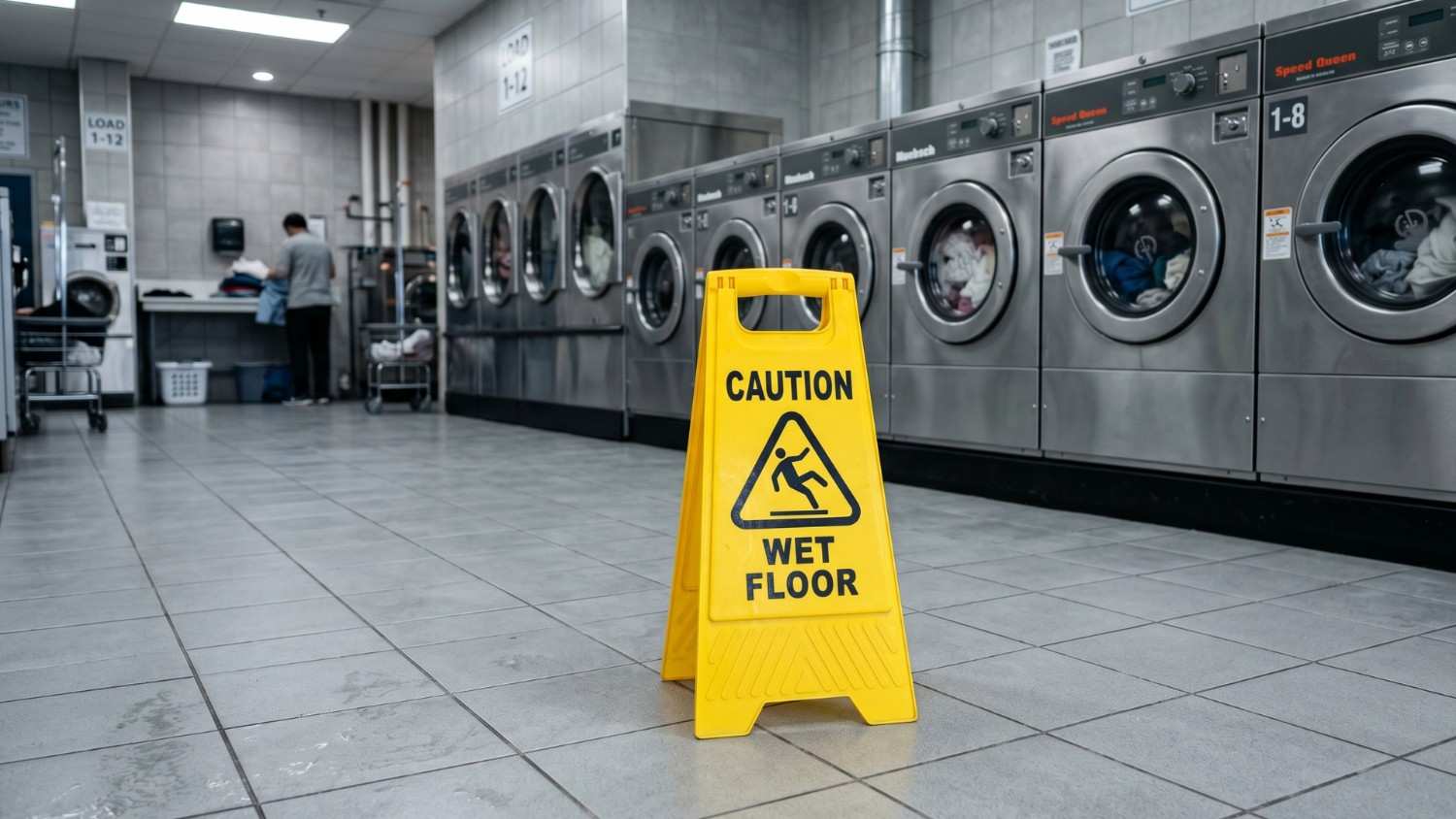
Self-managed laundry rooms can create serious safety hazards. Many owners do not see the exposure until a resident gets hurt, an inspector flags the room, or a major incident happens.
Lint Buildup and Dryer Vent Fire Risk
Dryer vents need regular cleaning and inspection. When lint builds up, airflow drops, heat rises, and blocked airflow can create a fire hazard.
Your setup should follow a consistent dryer vent maintenance schedule. For any commercial laundry facility serving residents, staff, seniors, students, or patients, vent maintenance is not optional.
Slip-and-Fall Liability from Leaks and Spills
Water pooling on the floor creates an immediate floor hazard. A resident, employee, or visitor can slip, fall, and hold your property responsible.
Leaks also damage your equipment. Standing water can reach wiring, control boards, and floor-mounted components. In a self-managed room, these issues often sit too long before anyone fixes them.
Hygiene Standards for Senior Living, Healthcare, and Group Housing
Facilities that handle large amounts of linens need consistent cleaning, sanitization, and documentation. Senior living, healthcare, student housing, and group housing environments must follow strict guidelines, including CDC recommendations for healthcare laundry handling, OSHA Bloodborne Pathogens requirements for soiled patient linens, and state and local health department inspection criteria.
Dirty lint traps, moldy door seals, and poorly maintained dryers can raise inspection concerns. For properties that handle patient linens, uniforms, or shared laundry, poor maintenance creates legal exposure, operational disruption, and reputation damage.
Operational Blind Spots Without Real-Time Monitoring
You cannot fix what you cannot see. Without usage data, your team has to rely on complaints, guesswork, and visible failures.
You Lack Usage Data and Performance Visibility
Remote monitoring closes the gap between what your equipment is doing and what your team knows about it. A Huebsch-connected commercial laundry machine can report cycle counts, error codes, drain alerts, and vibration changes to a mobile dashboard. Your team sees a worn part or a slow drain before residents do.
Without that visibility, you miss vandalism, poor lighting, repeated user errors, and capacity problems. Preventive service decisions get made on complaint volume instead of real data, and small issues escalate before anyone catches them.
Coin-Only Setups Hide Revenue Loss and Theft Exposure
Cash and coin-only rooms create three problems at once. You have no real-time revenue data, so you cannot see when collections drop. You expose the space to theft and vandalism every collection cycle. And refund disputes turn into a manual back-and-forth with residents.
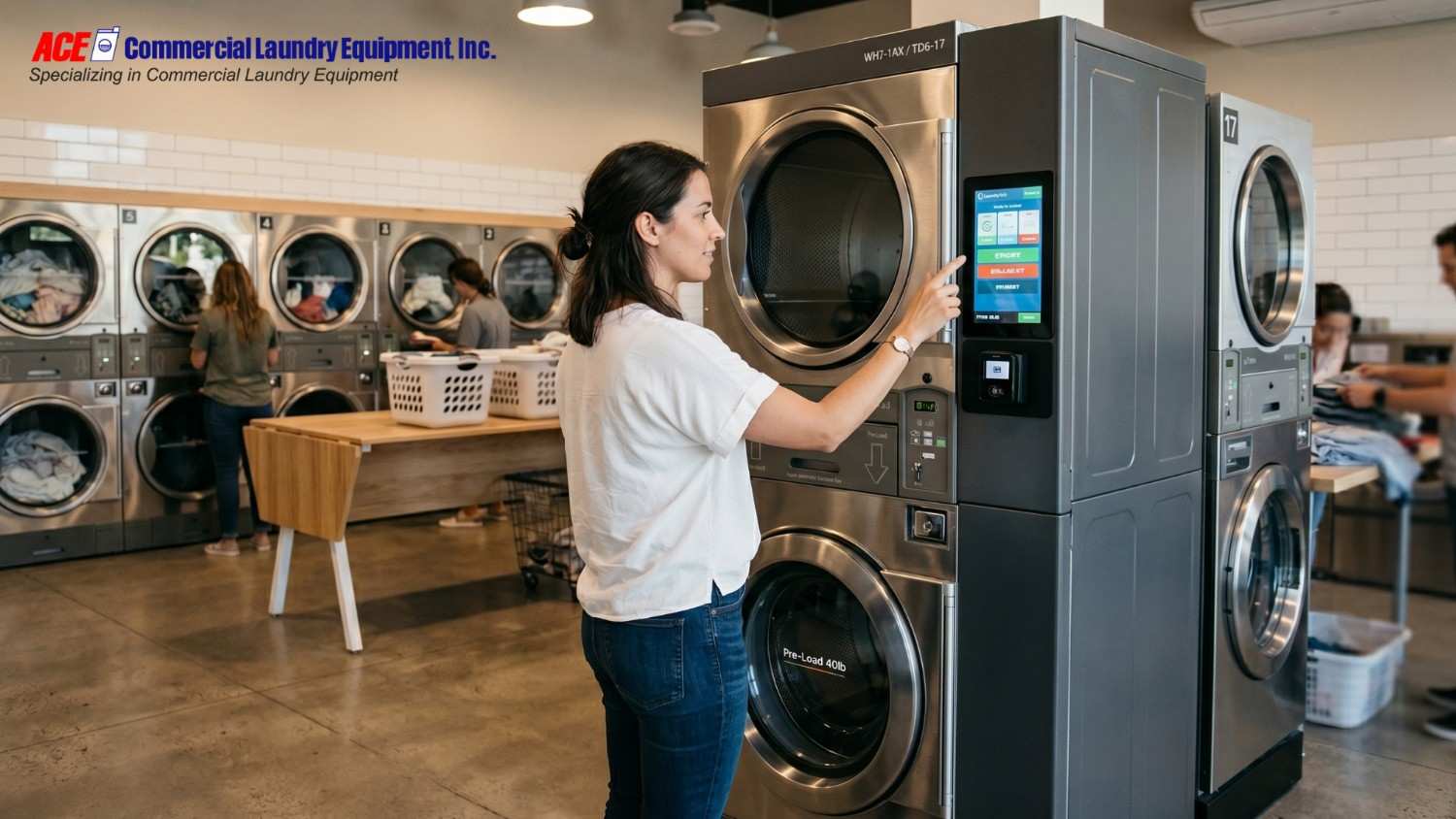
Digital payment platforms remove that friction. Card readers, mobile app payments, and remote refund tools give you usage data, payment data, and a cleaner experience for residents. Strong laundry room management depends on this kind of structured oversight, not on hoping the machines and the cash box both stay intact.
Resident Frustration and Reputation Damage
Your facility’s laundry room may seem like a small amenity, but residents notice when it fails. A poorly managed setup can hurt renewals, reviews, and leasing performance.
Broken Laundry Rooms Hurt Renewals, Reviews, and Leasing
High-occupancy buildings compete on reliable, low-hassle laundry. Frequent breakdowns and long waits push residents to seek external laundromats, and that friction can influence lease renewal decisions. Prospects also notice during a tour, especially when machines are marked out of service, or the space looks crowded.
In senior living, student housing, and worker dorms, the impact is amplified. Residents in these communities depend more heavily on on-site laundry, and they have less tolerance for failure.
Complaints about broken dryers, constant repairs, and unreliable equipment show up in online reviews. Once those reviews build up, they can slow leasing and force your property to compete on price instead of quality.
Schedule a Walkthrough Today
Self-managed laundry problems rarely start with one major failure. They build through small repair issues, inefficient machines, missed warning signs, and resident frustration. A walkthrough helps you see where your setup is losing time, money, and reliability.
ACE Commercial Laundry Equipment Inc. provides Huebsch machines built for daily use, including the Quantum Gold platform for multi-housing properties and the Galaxy series for laundromat and vended environments. Each installation comes with a compliant setup, preventive maintenance, parts support, and digital payment and monitoring options built for busy facilities.
As a Premier Huebsch® Dealer and third-generation family business, we help your property replace guesswork with a laundry operation built for daily demand. Schedule a walkthrough today or browse our full lineup of commercial laundry equipment for sale to find the right fit for your facility. Contact ACE Commercial Laundry Equipment Inc at 14404 Hoover St, Westminster, CA 92683, or call 877-630-7278 to get started.
Frequently Asked Questions
How often should a commercial laundry room be inspected for maintenance issues?
Most facilities benefit from a quarterly preventive maintenance schedule, with dryer vent inspections at least every six months. High-volume properties with heavy daily use may need monthly checks on drains, door switches, and lint traps.
Are residential washers and dryers safe for multi-housing laundry rooms?
Residential units are not engineered for commercial cycle volume. They wear out quickly, fail more often, and create higher long-term costs than purpose-built commercial laundry equipment. For any property serving daily resident use, commercial-grade machines are the right choice.
What are the warning signs that a self-managed laundry room needs an upgrade?
Watch for rising annual repair bills, frequent out-of-service machines, increasing resident complaints, slow drains, vibration changes, damp clothes after full dry cycles, and visible water on the floor. Any one of these on its own is manageable. Several at once means the equipment, the layout, or the management approach needs to change.
How does digital payment monitoring reduce laundry room problems?
Digital payment platforms give you live revenue data, mobile app access for residents, and remote refund handling. Paired with machine monitoring, they surface usage patterns, error codes, and revenue dips in real time, so your team catches problems before residents do.