Your high-volume laundry operation needs more than reliable machines. You need the right detergents, disinfectants, and dosing process to get consistent results, control costs, protect linens, and support your commercial laundry equipment. This blog helps you choose the right supplies, understand how disinfection works, and use dosing systems more effectively.
How Commercial Laundry Chemistry Actually Works
Most facilities do not rely on one all-in-one detergent. They use a multi-component system because no single product handles every soil type well. When you understand how each component works, you can build a wash process that removes heavier soils, supports health standards, and gets better results from every load.
The Core Chemical System
A strong commercial laundry process usually includes five chemical types, each with a clear purpose:
- Alkaline builders: Raise the pH of the wash water, open fibers, and help release grease, oils, and ground-in soil.
- Emulsifiers: Break down heavy oils and keep them suspended in the water so they rinse away. These matter most for hospitality linens, food-service aprons, and tablecloths.
- Enzymatic (bio) detergents: Target biological stains. Proteases break down protein soils like blood and food, while amylases break down starches.
- Laundry sours: Neutralize leftover alkali in the final rinse, prevent fabric yellowing, and balance pH so textiles feel better against skin.
- Fabric softeners: Add lubricating agents that reduce friction, cut static cling, and leave the finished load softer.
Why the Right Chemistry Protects Fabric and Meets Health Standards
Balanced chemistry gives your laundry process two advantages: it cleans tough commercial soil and protects textiles from unnecessary wear. Without a sour, leftover alkali can yellow linens and irritate skin. With too much bleach, you can shorten fabric life and increase replacement costs.
Cleaning and sanitizing are also not the same. A load can look clean and still carry bacteria, so high-contact facilities should treat disinfection as a separate, intentional step.
Choose the Right Detergent Formula for Your Facility Type
Your detergent choice should match the soils you process and the people who use the textiles afterward. A formula that removes kitchen grease may not be the right choice for hospital bedding, so your facility type should guide your detergent selection.
Bio Detergents for Food, Grease, and Athletic Soils
Bio detergents use enzymes to break down fatty, greasy, and starchy stains such as pasta sauce, cooking oil, burger grease, sweat, and food residue. They work well for laundries that handle kitchen linens, gym towels, restaurant uniforms, and hospitality items. Because enzymes can clean effectively at lower temperatures, they also support cold-water washing.
Non-Bio Detergents for Sensitive-Skin Environments
Non-bio detergents leave out enzymes, which can reduce the risk of mild skin reactions for people with eczema, allergies, or sensitive skin. Hospitals, nursing homes, and elder-care facilities often use non-bio formulas for bed linens, gowns, and other textiles that stay in close contact with skin.
Detergent Forms: Liquid, Powder, and Concentrates
Detergent form matters as much as formula. Each option fits a different setup:
- Liquid: Dissolves cleanly and moves easily through pump systems, which makes it the standard pairing for automated dosing.
- Powder: A cost-effective choice for facilities that dose by hand, though it can clog dosing lines and leave undissolved grit in cold water.
- Pods and sheets: Pre-measured convenience for small-scale or specialty cycles, but they offer little control over dose size in high-volume work.
- Concentrates: High-strength liquids designed for drum feeding and dilution, favored by larger operations for lower cost per load.
If you plan to automate, liquid and concentrated liquids give your team the cleanest, most reliable feed.
ALSO READ: How to Make Your Laundry Room More Eco-Friendly
Cut Costs and Errors With Automated Dosing
Dosing is where many laundry operations lose money without realizing it. Hand measuring invites guesswork, wasted product, and uneven loads. Automated dosing gives your team a controlled, repeatable way to manage chemistry and protect a commercial laundry machine from chemical damage over time.
How Peristaltic Pumps Deliver Precise Chemistry Per Load
Peristaltic pumps pull concentrated chemicals from large containers and inject the right amount at the right stage of the wash cycle. When paired with the right controls, the system adjusts dosing based on load size, soil level, and water temperature.
That precision helps your team avoid two common problems: overdosing, which causes film buildup and odors, and under-dosing, which sends loads back through the wash.
Labor Savings and Consistency in High-Volume Operations
Automated dosing reduces manual measuring, drawer cleaning, and staff-to-staff variation. Your team gets more consistent results because each load receives the same controlled process, shift after shift. For high-volume laundries, that reliability keeps production moving.
IoT Dosing for Remote Monitoring and Predictive Maintenance
Smart dosing systems give your managers better visibility. They can send alerts for low chemical levels, unusual usage, or pump issues before a problem stops production. If you manage several locations, IoT dosing also helps you compare performance, find unusual usage patterns, and fine-tune your laundry workflow across sites.
Select EPA-Registered Disinfectants for Infection Control
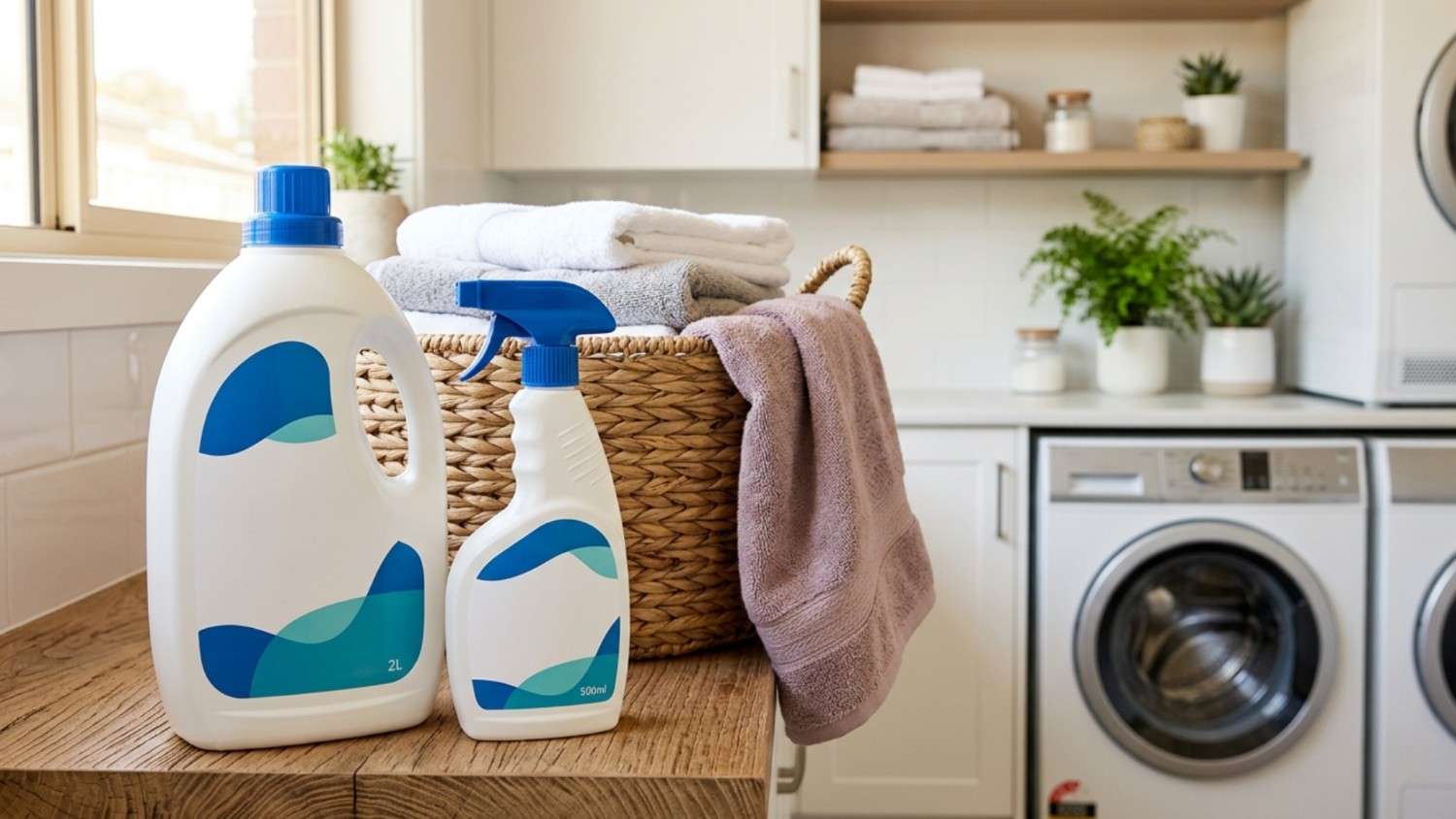
In high-contact environments, sanitization matters. General-purpose cleaners are not enough when your facility needs verified pathogen kill claims. EPA-registered disinfectants prove performance against specific organisms, which gives your team a stronger, more documented process.
Target Pathogens: MRSA, C. diff, and SARS-CoV-2
Some pathogens can survive ordinary washing. C. diff spores can remain on linens, MRSA (which stands for Methicillin-resistant Staphylococcus aureus), a drug-resistant staph infection, spreads easily in shared spaces, and respiratory viruses require verified kill claims. EPA-registered disinfectants give your team documentation for the specific pathogens your laundry process needs to address.
Chemical, Thermal, and Ozone Disinfection Compared
You have several options for disinfection, and many facilities use more than one method:
- Chlorine bleach (sodium hypochlorite): Delivers strong disinfection against bacteria, viruses, and fungi, but works best on white cotton because it can permanently discolor dyed fabrics.
- Oxygen bleach (hydrogen peroxide): Offers a color-safe option that brightens textiles and provides milder sanitizing power without damaging dyes as aggressively.
- Thermal disinfection: Uses a hot wash cycle to kill pathogens with heat instead of relying only on added chemicals.
- Ozone systems: Inject ozone into the wash to disinfect with a lower chemical footprint, often helping reduce energy and water use.
Water Temperature and How It Works With Your Chemistry
Temperature and chemistry work as a team. Hot water remains the standard when you need thermal disinfection or when you process heavily greased linens, since heat helps melt and release oils. Enzyme-based detergents change that math, because proteases and amylases stay active in cooler water and can clean many loads without a hot cycle. The practical rule: reserve hot water for sanitizing and heavy grease, and lean on cold-water enzymes for routine soils to save energy.
Handling Protocols That Prevent Cross-Contamination
Even the best chemistry cannot fix poor handling. Your team should keep soiled linen away from clean stock, separate body-fluid-soiled items, and process contaminated textiles according to your facility’s protocol. Keep dirty and clean areas physically separate, limit laundry access to trained staff, and treat handling as a required safety step.
Compliance Standards That Drive Chemical Choice
Your facility type often dictates which products you can use. Healthcare laundries follow CDC and CMS guidance on handling and processing soiled textiles, which shapes disinfectant selection and documentation. Hotels, restaurants, and athletic facilities answer to local health-department expectations for sanitized linens. Knowing the framework that governs your operation helps you choose products that meet inspection requirements rather than scrambling to qualify them later.
Target Stains With the Right Spotting Agents
Core detergents handle general soil, but stubborn marks need targeted treatment. Pre-spotting agents and specialty removers tackle stains that a standard wash leaves behind. Match the agent to the stain class:
- Protein removers: For blood, food, and bodily fluids.
- Tannin removers: For coffee, wine, and tea.
- Rust and ink removers: For industrial and uniform marks.
- Solvent-based spotters: For grease and adhesive residue.
Treating spots before the main wash reduces rewash rates and protects high-value linens in hotels, clinics, and restaurants.
Lower Total Cost of Ownership With Efficient Formulas
Your supply choices affect more than detergent spend. They influence energy use, water use, rewash rates, linen life, and replacement costs. The cheapest detergent per gallon rarely delivers the lowest total cost if it causes buildup, fabric damage, or inconsistent results.
Cold-Water HE Detergents Reduce Heating Costs
High-efficiency cold-water detergents clean effectively without relying as heavily on hot water. Since water heating drives a major share of laundry energy costs, cold-water formulas can help your facility reduce utility expenses, especially if you wash thousands of pounds each week.
Concentrates and Dilution Ratios Lower Cost Per Load
Concentrated chemistry often wins on total cost because you pay for active ingredients, not water and shipping weight. A concentrate mixed at a high dilution ratio yields far more usable detergent per container than a ready-to-use product, which means fewer drum changes and a lower cost per load. Automated systems meter that dilution precisely, so you capture the savings without sacrificing cleaning power.
Hard-Water Adjustments That Improve Detergent Performance
Hard water can work against your detergent because calcium and magnesium reduce cleaning power and can leave fabrics gray or yellow. If your facility operates in a hard-water area, you may need adjusted dosing or a softening additive to prevent mineral-related dullness, stiffness, and detergent waste.
Correct Dosing Reduces Linen Replacement Cycles
More detergent does not mean cleaner laundry. Correct dosing prevents chemical buildup that stiffens towels, traps odors, and increases replacement cycles. When your team controls dosing closely, linens stay cleaner and more usable through more washes.
Store and Handle Chemicals Safely
Chemical safety protects your staff and your facility. Commercial detergents, sours, and bleaches are concentrated industrial products, so storage matters as much as use. Keep Safety Data Sheets (SDS) accessible for every product, store containers in a ventilated area, and never store acids and chlorine products together, since mixing them can release toxic gas. Use secondary containment under drums to catch leaks, label all decanted containers, and follow OSHA hazard communication basics so trained staff know how to handle and respond to spills.
Match Supplies to Your Huebsch® Equipment
Chemistry works best when your commercial laundry machines control water levels, cycle timing, and dosing accurately. When you match your chemical mix to your Huebsch® commercial laundry equipment, you turn good chemicals into more predictable cycle performance.
Load-Sensing Machines Built for Auto-Dosing Compatibility
Modern Huebsch® machines can read each load and adjust water levels and cycle timing to match. That load-sensing technology works well with automated dosing because it keeps chemistry, water, and soil levels aligned. The best commercial laundry machines support integrated dosing, helping your team reduce human error and avoid costly rework.
Pairing the Right Supply Program to Your Facility
Different facilities need different mixes of detergents, softeners, stain removers, and bleaches. Commercial-grade products handle heavier soil with less waste, while color-safe stain removers help hotels process whites, colors, towels, and uniforms without using one harsh formula on every load. When your chemical mix reflects your actual soil load and textile mix, your laundry process performs better under real operating conditions.
RELATED ARTICLE: How to Prevent Mold and Mildew in Laundry Machines
Get the Right Supply Program for Your Facility
You do not have to manage laundry chemistry, dosing, and maintenance on your own. As a Premier Huebsch® Dealer with more than 20 years serving Southern California, ACE Commercial Laundry Equipment Inc. helps you evaluate your chemical needs based on daily poundage, soil type, auto-dosing options, and facility demands.
We build supply plans for hotels, gyms, healthcare facilities, and other high-volume operations. If you are shopping for commercial laundry equipment for sale, we also help you choose machines that fit your chemical mix, dosing setup, and production goals.
Ready to improve your laundry operation? Contact ACE Commercial Laundry Equipment Inc at 14404 Hoover St, Westminster, CA 92683, or call 877-630-7278 for a free consultation, or explore our full range of commercial laundry supplies and laundry room management services.
Frequently Asked Questions
What chemicals do commercial laundries use?
Commercial laundries typically use alkaline builders, emulsifiers, enzymatic detergents, laundry sours, fabric softeners, and disinfectants. Together, they lift soil, break down oils, neutralize residue, soften textiles, and support sanitization.
Is bio or non-bio detergent better for commercial use?
Bio detergent is better for food, grease, sweat, and athletic soils. Non-bio detergent is better for sensitive-skin settings, such as healthcare and elder care, because it does not contain enzymes.
How does automated laundry dosing save money?
Automated laundry dosing saves money by preventing chemical waste and reducing rewashes. It measures the right amount for each load, so your team avoids both overuse and under-cleaning.
What disinfectant kills C. diff and MRSA in laundry?
Use EPA-registered laundry disinfectants with verified claims against C. diff and MRSA. For higher-risk facilities, pair chemical disinfection with approved thermal or ozone processes when appropriate.
Does hard water affect commercial laundry results?
Yes. In areas with high mineral content, detergent struggles to lather and rinse fully, which leaves towels feeling rough and whites looking dingy. A water-softening additive or revised dose restores cleaning performance.