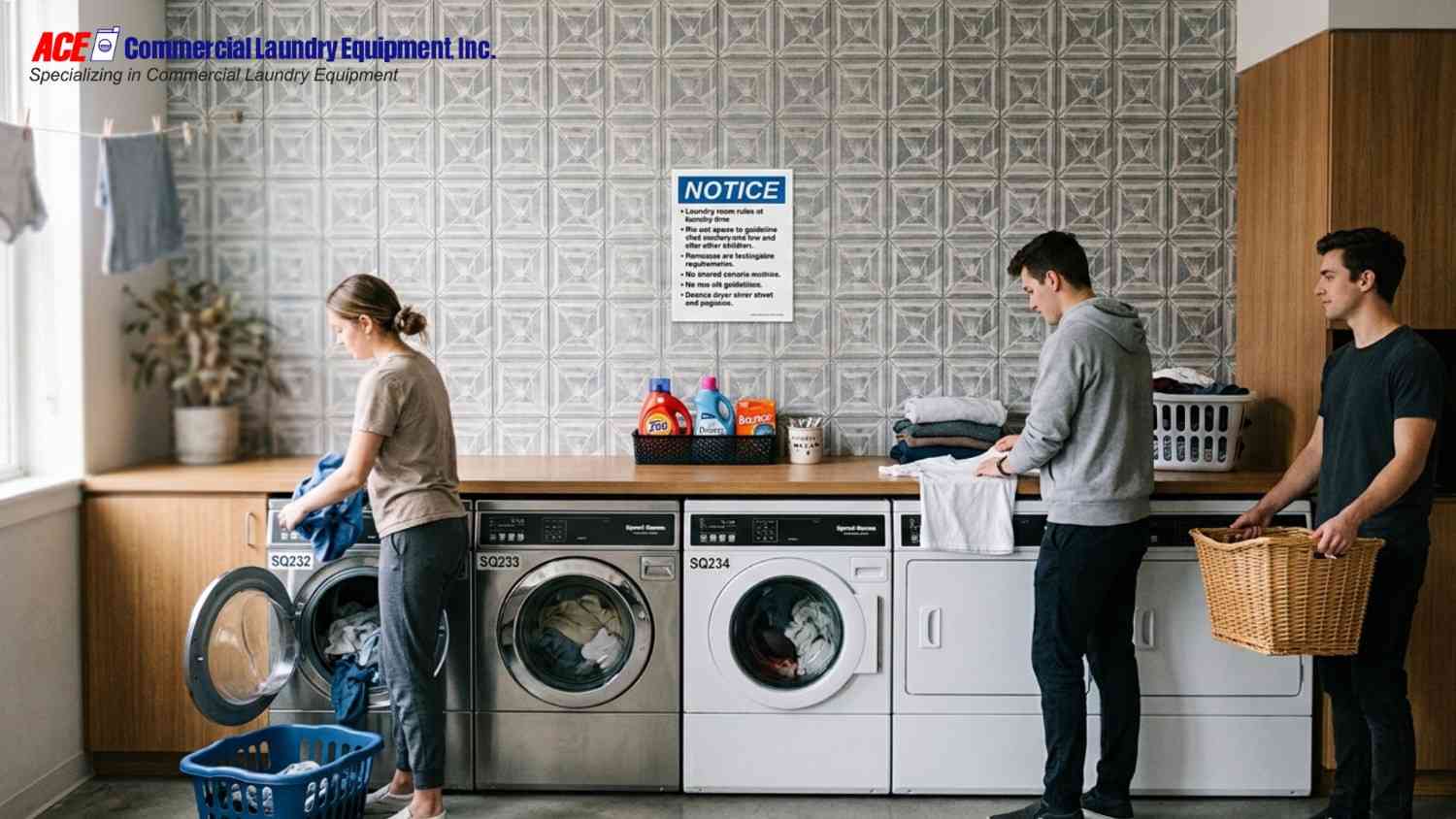
Residents are more likely to follow laundry room rules when they are simple, visible, and tied to common shared-space issues like machine use, cleanup, timing, and respect for others. Clear posted rules help property managers protect commercial laundry equipment, reduce delays, prevent cleanup issues, and cut down the neighbor complaints that end up in your inbox. The most effective approach is to post short, direct rules where residents can see them before they start a load.
The Core Policy Behind Every Rule
Every laundry room rule should connect back to one shared purpose: keeping the commercial laundry room clean, keeping machines available, and helping residents use the space without conflict. When residents understand that purpose, the rules feel less like restrictions and more like shared expectations.
Why Shared Laundry Breaks Down
Three problems drive nearly every shared-laundry conflict: forgotten loads, messy spills, and machine misuse. A forgotten load blocks the next resident. Unwiped detergent and softener residue create messes and odors. Overloaded drums and wrong products strain machines, trigger service issues, and create arguments that management then has to referee.
When you name these root causes up front, residents see the rules as shared protection rather than arbitrary restrictions. That framing changes how people respond to them.
One Sentence That Sets the Tone
Lead your rule set with a single, purpose-driven line. Something like: “These rules keep our machines running, protect your laundry time, and keep the room safe and clean for everyone.”
That sentence gives every rule a clear purpose. It signals fairness, explains intent, and gives residents a practical reason to follow the policy. Residents respond better to rules they understand than to rules that simply appear on a wall.
Short rules also outperform long ones. Residents skim during a busy visit, so a dense block of policy text gets tuned out while a tight, scannable list gets read and followed.
Practical Expectations for Residents
Effective laundry room rules name the exact behaviors residents need to follow. Keep each expectation concrete so residents can act without guessing.
Timers and Prompt Removal
Prompt removal is one of the most important laundry room rules because it keeps machines cycling for everyone waiting. Ask residents to remove laundry within 15 to 30 minutes after the cycle ends.
- Set a phone timer: Encourage residents to set an alarm the moment they start a load, so they return on time. Card and app-based payment systems often send cycle-complete alerts to a resident’s phone, which supports prompt removal without anyone watching the clock.
- Follow the grace period: If your property allows it, state that laundry left past the grace period may be moved to a clean basket or folding surface. A 10 to 20 minute grace period gives residents a reasonable buffer without letting one load tie up the room.
A clear grace period prevents the awkward standoffs that happen when someone’s clothes block the only open dryer.
Clean-As-You-Go Habits
Routine cleaning prevents damage, odors, slow dryer cycles, and fire risk. These small habits help keep the room safer and reduce avoidable service calls.
- Empty the lint trap after every dry cycle: A clogged lint screen is a genuine fire hazard and slows drying performance.
- Wipe up spills: Clean detergent, bleach, or softener off machine tops and out of dispenser drawers.
- Leave washer doors open: An open door lets the drum dry out and prevents mildew and odor.
- Dispose of lint and used sheets properly: Trash receptacles are for lint and dryer sheets, not household garbage.
Correct Product Use and Load Limits
A commercial laundry machine needs the right detergent, amount, and load size to run properly. Post the detergent type, amount, and load limit near the machines.
High-efficiency machines require HE detergent, and pods or measured liquid can help prevent oversudsing that leaves residue behind. Just as important, residents need to respect load limits. Stuffing a machine too full strains the motor, damages bearings, and leaves clothes poorly cleaned, so people end up rewashing and putting more wear on the machine.
Hours, Noise, and Health Exclusions
Set reasonable operating hours to keep noise from disturbing neighbors. Many properties set quiet-hour laundry limits around 9 or 10 p.m., especially when the laundry room sits near living spaces.
Prohibit heavily soiled or biohazardous items and give residents a clear way to notify management when something needs special handling.
ALSO READ: What Commercial Laundry Room Management Means for Multifamily Properties
How Do You Post Laundry Rules So People Actually Read Them?
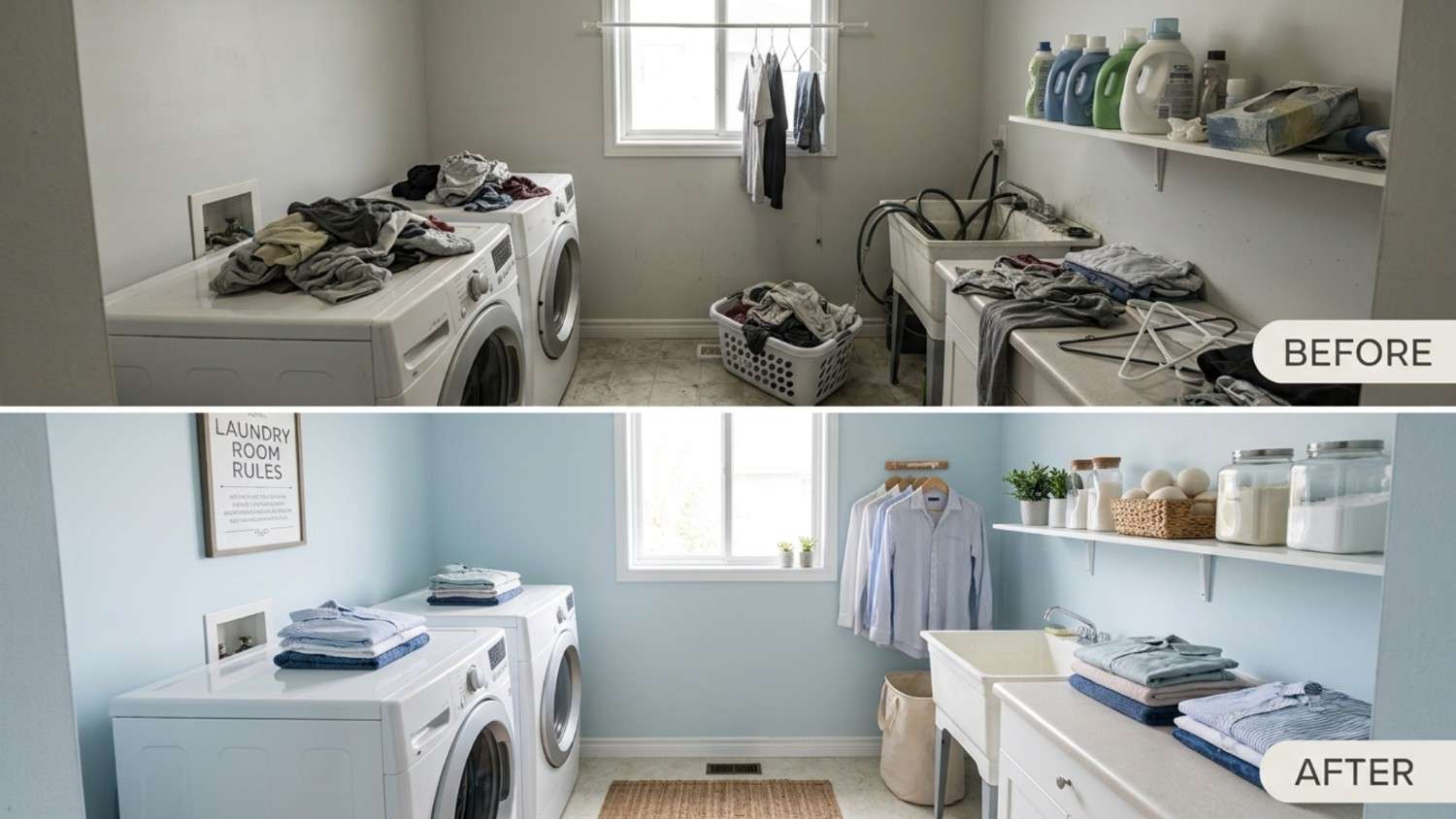
Residents read laundry room rules when they see them at the moment they need them: before starting a load, moving laundry, paying for a cycle, or reporting a machine issue. A rule buried in a lease addendum rarely changes behavior. A well-placed sign turns your policy into a practical reminder residents can use in real time.
Build One High-Visibility Sign
Use one clean, laminated sign instead of several separate notices. Too many signs compete for attention, while one focused sign keeps the message easy to scan.
Include only the essentials:
- A short policy statement explaining why the rules matter
- The prompt removal window
- Basic cleanup expectations
- Operating hours
- A contact number or QR code for reporting machine issues
Use bold headings such as “Remove Laundry,” “Clean Up,” and “Report Problems” so residents can scan the sign quickly. Add short action prompts like “Set a timer,” “Empty the lint trap,” and “Wipe spills immediately” so each rule feels easy to follow.
Placement, Formats, and Accessibility
Place the sign where residents need the information most. Mount one at eye level near the entrance, place another near the washers and dryers, and add a copy by the payment station or detergent area. This puts the rules in front of residents before they start a load, move clothes, or report a problem.
Support the posted sign with a digital reminder through your resident portal, email, or building update. Use large, high-contrast fonts, simple icons, and translations for the main languages spoken in the property. Accessible formatting reduces missed instructions and makes the policy easier to apply across the property.
LEARN MORE: Apartment Laundry Room Management: What Residents Expect
What Happens If Residents Don’t Follow Laundry Room Rules
Your laundry room rules only work when residents know what happens if someone ignores them. Without a clear process, enforcement can feel personal and lead to more disputes. A published escalation policy helps you apply rules predictably and protect residents’ access to the laundry room.
Before you enforce penalties, make sure your laundry room policy aligns with your lease terms, posted community rules, and local requirements.
A Simple Graduated Response
Post your enforcement steps near the rules so residents understand the process before problems happen. Keep the response firm and practical.
- Start with a polite reminder for a first or minor issue
- Send a written notice if the behavior continues
- Temporarily suspend laundry privileges for repeated violations when your lease terms or community rules allow it
Most residents correct the behavior after the first reminder when they see that your policy applies to everyone. Clear steps also help you avoid one-off decisions that can look unfair or difficult to defend.
Reporting, Refunds, and Record-Keeping
Residents should know exactly how to report a broken machine, request a refund, or flag an unsafe condition. List one reporting path for refunds, repairs, and safety issues so residents know where to send the problem.
Keep simple records for repeat problems, including the date, time, machine number, and a photo when needed. This protects your team if a dispute comes up and helps you spot maintenance patterns before a small issue becomes a full outage. If you work with a laundry vendor, make sure the posted reporting process matches the service agreement so residents do not send repair issues to the wrong place.
Keep Your Laundry Room Running Smoothly
Clear rules work best when your commercial laundry machines support them. Residents can follow posted expectations more easily when washers and dryers run reliably, finish cycles on time, and do not create constant service issues.
ACE Commercial Laundry Equipment Inc. has supplied and serviced laundry rooms across Southern California since the late 1950s. If your laundry room still creates complaints because of breakdowns, slow cycles, or outdated machines, our team can help you compare commercial laundry equipment for sale and choose the best commercial laundry machines for your resident volume, room layout, and long-term maintenance needs.
Contact ACE Commercial Laundry Equipment Inc. at 14404 Hoover St, Westminster, CA 92683, or call 714-640-6674 to discuss your commercial laundry equipment options and find the right fit for your property.
Frequently Asked Questions
How many washers and dryers should an apartment laundry room have?
A general starting point many property managers use is one washer and one dryer per 10 to 15 units, though your actual needs depend on resident count, unit size, laundry habits, and peak usage. Properties with more families may need a higher machine ratio than buildings with mostly single occupants.
Can a landlord charge residents for using shared laundry machines?
Yes. Many shared laundry rooms use coin, card, or app-based payment systems. Landlords may charge for laundry use as long as the setup follows local rental laws and lease terms. Post rates clearly on or near the machines so residents know the cost before they start a load.
Who repairs broken laundry machines in an apartment building?
The property owner, management team, or laundry equipment vendor usually handles repairs, depending on the service agreement. Residents should use the posted reporting process for broken machines, lost payments, leaks, or safety concerns.
Is it safe to leave a dryer running when you leave the laundry room?
Residents should stay nearby or at least remain in the building while dryers run. Lint buildup can create a fire risk, and unattended machines can lead to delays, blocked access, or damaged clothing. Laundry room rules should remind residents to empty the lint trap and return before the cycle ends.
How do you handle a resident who repeatedly ignores laundry room rules?
Apply a documented, step-by-step response. A first offense earns a courtesy reminder, a repeat issue moves to a formal written notice, and ongoing violations can cost the resident laundry access when your policy permits. Dated records at each stage keep your decisions consistent and easy to defend.