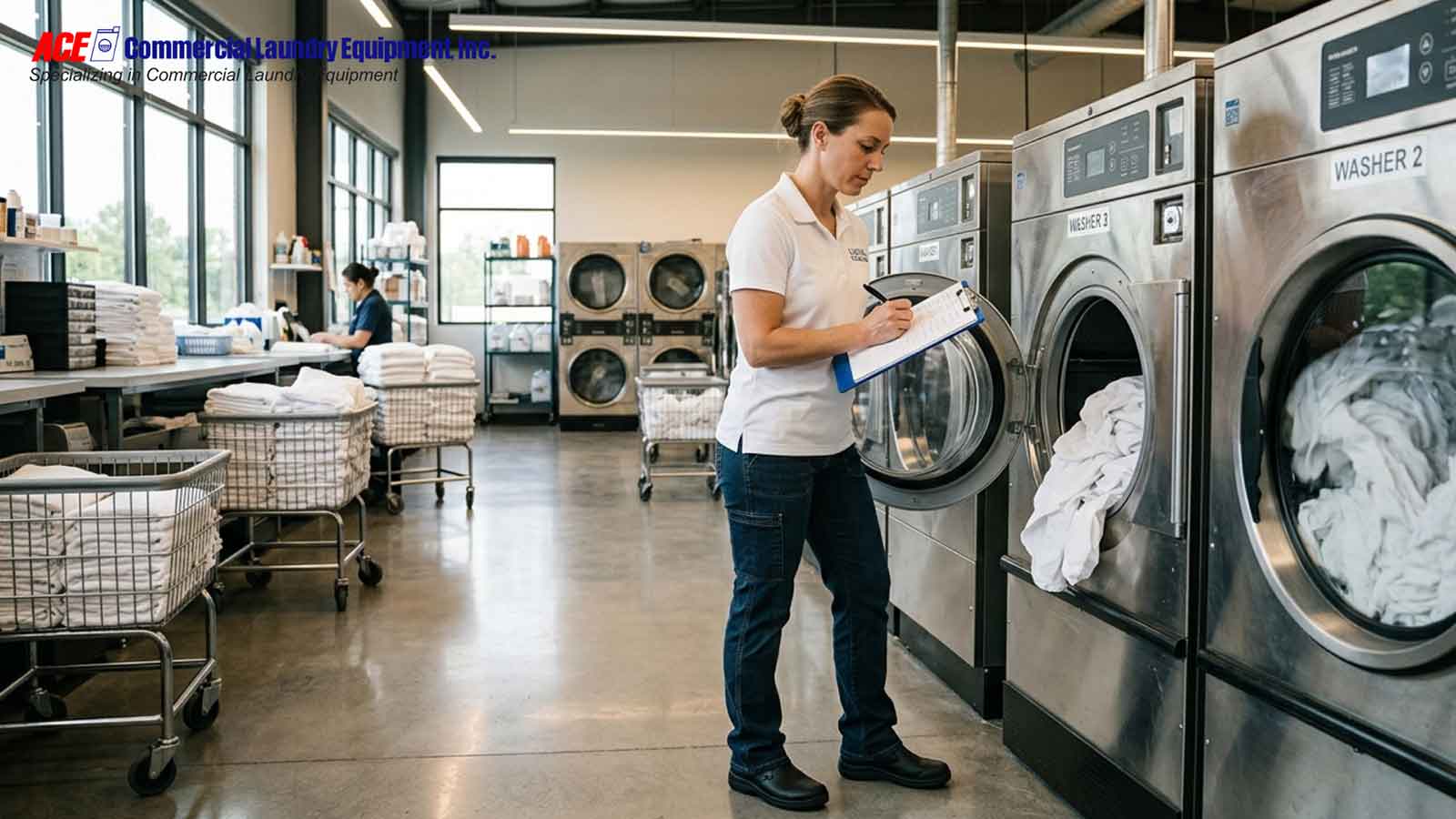
Buying commercial laundry equipment is one of the biggest investments an owner or manager will make, and the wrong call shows up fast. Machines that are too small create bottlenecks, missed site requirements can delay installation, and unreliable service support can leave you dealing with costly downtime. Before you commit, make sure you know exactly what to look for. Use this checklist to evaluate your needs, compare total cost, choose the right equipment, assess your supplier, and verify the details before you sign.
Start With a Pre-Purchase Needs Assessment
Put specs before shopping. When you define your facility’s exact needs first, you avoid mismatches that lead to poor performance, installation delays, or wasted capacity.
Calculate Your True Laundry Volume
Measure volume in pounds, not loads. A “load” changes depending on machine size, but weekly poundage gives you a reliable number to size your equipment around. In hospitality, you can start with a rough estimate of one pound of laundry per occupied room per day.
Build your calculation around real demand:
- Track your actual weekly pounds processed, not rough load counts
- Identify your peak-day volume so you size for your busiest day, not your average day
- Add a growth projection for the next three to five years
- Plan a mix of small, medium, and large machines so every load runs efficiently
Oversized machines waste water and energy on half-empty cycles. Undersized machines create delays that your staff or customers feel every day. The right capacity helps you avoid both problems.
Audit Space and Utility Infrastructure
Your space and utilities often narrow your options before your budget does. Measure first, then shop.
Document your floor space, including door clearance and room for service access. Dryers release significant heat and need properly sized exhaust ducting, usually routed to an exterior wall. Long duct runs may require booster fans. Confirm that your electrical, gas, and water supply can support the equipment you want. Smaller washers commonly run on 208 to 240V, while larger units may require three-phase power. Gas dryers need enough BTU capacity, and your water lines and drains must handle commercial wastewater volume.
Do not overlook the floor structure. If your laundry room sits on an upper floor or lacks a concrete slab for bolting, consider soft-mount washers with built-in suspension. They absorb spin force instead of transferring it into the building.
READ MORE: Choosing Commercial Laundry Equipment for Your Business and Budget
What Is the Total Cost of Owning Commercial Laundry Equipment?
The lowest sticker price can become the most expensive choice over ten years. Total cost of ownership includes utilities, repairs, service access, and equipment lifespan, not just the invoice.
Weigh Efficiency and Build Durability
Efficiency affects your monthly operating costs. Look for ENERGY STAR-certified commercial laundry machines and compare water and energy consumption side by side. For washers, a Modified Energy Factor above 2.0 signals strong efficiency. Higher G-force extraction also matters because faster spin removes more water from fabric, shortens dryer time, and lowers your gas or electric costs on every cycle.
Build quality determines how often you call for repairs. Heavy-gauge steel frames and stainless steel drums help well-made machines handle continuous high-volume use. If you are considering a used commercial laundry machine, inspect it for rust, dents, leaks, and faulty controls before you commit. A cheap, worn-out machine is not a bargain.
Factor in Maintenance and Service Costs
Service costs can quietly exceed the purchase price over 5 to 10 years, so evaluate the support behind the machine. When a unit goes down, fast local service protects your revenue, staff productivity, and customer experience, which is why nearby technicians and parts often matter more than a lower upfront price.
- Confirm that replacement parts are stocked locally
- Check exactly what the warranty covers, including bearings, motors, electronic boards, and labor
- Review exclusions and required maintenance steps
- Ask for a concrete response-time commitment, not a vague promise
ACE Commercial Laundry Equipment Inc. backs its Southern California customers with an emergency service response benchmark, supported by local technicians and locally stocked Huebsch® parts. That kind of guaranteed response is the difference between a brief interruption and a lost day of production.
What Type of Commercial Laundry Equipment Does My Business Need?
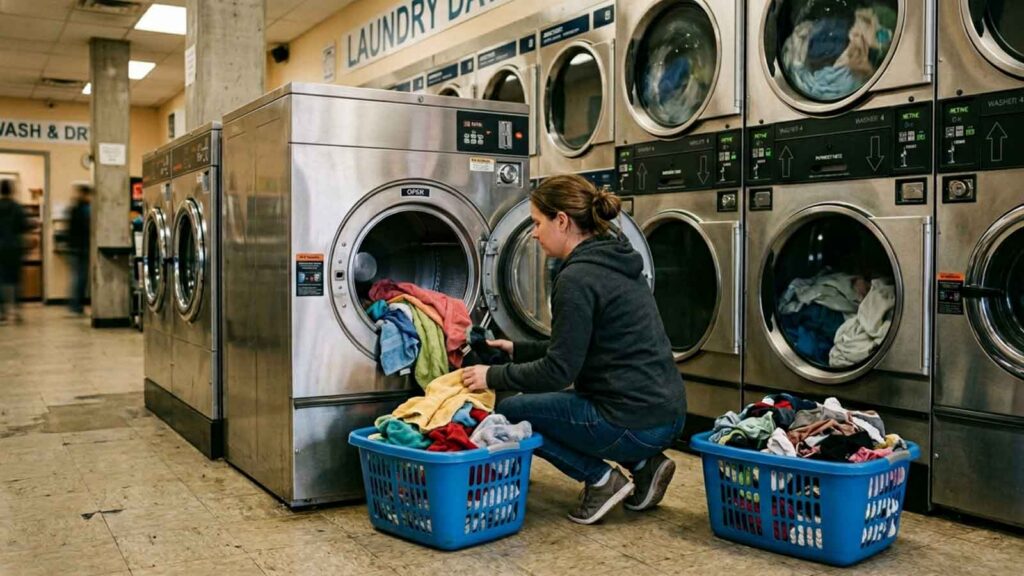
Your business model should drive your equipment choice. A laundromat, hotel, healthcare facility, and apartment property all place different demands on commercial laundry equipment.
Choose Machines by Business Model
Start with how your operation uses commercial laundry capacity:
- Coin-operated systems work well for laundromats because they balance simple use with revenue collection
- On-premise laundry setups help hotels, hospitals, and healthcare facilities control turnaround time
- Multi-housing machines fit tighter laundry rooms in apartment and condo properties
- Industrial-grade machines support large-scale operations with relentless daily demand
Pair your washers and dryers deliberately. Match dryer capacity to washer capacity so clean loads do not sit waiting for an open dryer. Top-load washers can provide dependable, efficient cycling, while high-capacity dryers keep volume moving. For larger facilities, gas dryers often cost less to operate than electric dryers.
Prioritize Smart and Programmable Features
Modern controls help you cut labor, reduce waste, and keep machines running. Intelligent sensors adjust wash settings automatically, while moisture sensors with over-dry prevention stop dryers from wasting energy on already-dry loads. Some systems flag maintenance needs early, so your team can schedule service before small issues affect production.
Programmable features give you more control. As a Huebsch® dealer, ACE Commercial Laundry Equipment Inc. offers equipment with Huebsch Command™, which lets you monitor and manage machines remotely, and Galaxy™ Touch controls, which handle custom cycles for different fabric types without guesswork. Automated chemical dosing protects fabrics and limits detergent waste. Mobile and digital payment options improve the customer experience, while time-of-day pricing helps you manage peak demand.
LEARN MORE: How to Evaluate a Commercial Laundry Equipment Company Before Buying
How Do I Choose the Right Commercial Laundry Equipment Supplier?
Choose a supplier that pairs the right equipment with local installation, parts, and service in your region. A quote is easy to get; dependable post-sale support is what protects your operation.
Research Reputation and Service Reach
The supplier you pick should already know your equipment and your area. ACE Commercial Laundry Equipment Inc. has served Southern California since the late 1950s as a Premier Huebsch® dealer, with local technicians, locally stocked parts, and installation experience across laundromats, hospitality, healthcare, and multifamily housing. That local footprint is what turns a purchase into a working, supported laundry room.
When you compare suppliers, confirm they hold authorized local representation and keep parts near you, and ask to see equipment run through a live demonstration before you commit. Suppliers with real experience in your vertical will show you references and results, not just a catalog.
Compare Financing and Leasing Paths
Flexible financing can help you buy quality commercial laundry equipment for sale without draining your cash reserves. Each option serves a different goal:
- Hire purchase: You own the equipment once the term ends, structured like a low-interest business loan.
- Operating lease: A monthly rental across two to five years, with lower payments and room to upgrade.
- Capital lease: Loan-like terms with a nominal buyout at the end.
Leasing can work well when you want lower monthly costs or plan to refresh your technology often. Ask whether installation is included, budget for utilities and maintenance, and review any tax benefits tied to replacing aging equipment.
Run Due Diligence Before You Sign
Verification protects you from expensive surprises. A short inspection now can catch compatibility problems before they become expensive.
Inspect, Test, and Demo Equipment
If you are buying used commercial laundry machines, inspect each unit closely. Look for rust, corrosion, heavy wear, and leaks. Test the control panel, sensors, door gaskets, and locks. Request the service history, repair records, and usage details so you know how hard the machine has already worked.
For new equipment, ask to see the machines run. Confirm cycle times, cleaning performance, drying results, and noise level. Then verify that each unit fits your space, workflow, and installation plan.
Lock In Clear Written Service Terms
Get the working details on paper. A strong agreement should spell out installation, staff training, maintenance schedules, and documentation in plain language, so both sides know who does what after delivery.
Your contract should name your dedicated service contact and define maintenance responsibilities clearly. Clear terms at signing prevent disputes later and keep your equipment covered and running.
Move Forward With Confidence
Once you understand your volume, utilities, total cost, and supplier support, you can compare equipment with a clearer plan and fewer surprises.
When you are ready to compare the best commercial laundry machines for your facility, ACE Commercial Laundry Equipment Inc. can help. As Southern California’s premier Huebsch® dealer, our team matches your operation with the right commercial laundry setup, offers financing and laundry room management solutions, and helps owners make informed equipment decisions. Contact ACE Commercial Laundry Equipment Inc. at 14404 Hoover St, Westminster, CA 92683, or call 714-640-6674 for personalized equipment guidance.
Frequently Asked Questions
How long does commercial laundry equipment take to install?
Commercial laundry equipment can take 1 to 2 days to install when your site already has the right utilities, venting, drainage, and floor support in place. If your facility needs new gas lines, electrical upgrades, ducting, plumbing, or structural work, installation will take longer.
Can I run commercial machines in a residential building?
Yes, you can run commercial laundry machines in many residential buildings, including apartments and condos. However, your property must meet local zoning, building code, noise, venting, utility, and drainage requirements before installation.
How many machines do I need for my facility?
You need enough machines to handle your weekly laundry volume and peak-day demand. Once you know your poundage, a supplier can recommend the right number of washers and dryers, along with the best size mix for your turnaround goals.
Is it better to buy new or refurbished equipment?
Buy new equipment if your operation handles high volume and needs maximum reliability, stronger warranty coverage, and a full equipment lifespan. Choose refurbished equipment if you want a lower upfront cost and your laundry demand is lighter, but only after you verify the machine’s condition and service history.
Do commercial laundry machines qualify for tax deductions?
Commercial laundry machines may qualify for depreciation or Section 179 deductions in the United States. Tax rules depend on your business structure, purchase details, and current law, so confirm the deduction with a qualified tax professional before filing.