Your housekeeping team cannot afford to lose hours every shift because of an inefficient laundry process. When laundry operations fall behind, it affects room turnover, staff productivity, and your ability to keep up with guest demand. The fixes below recover that time through process changes your team can apply this week, starting with the bottleneck that costs the most and ending with the hotel laundry equipment decisions that lock those gains in place.
How Can You Fix the Sorting Bottleneck Before Linen Reaches the Washer?
Sorting is where your labor hours disappear first, and the cost compounds because every later step waits on it. Three changes at the collection point do most of the work: who sorts, what they sort by, and what they treat on the spot. Each one moves a decision away from the laundry room and into the guest room, where it takes seconds instead of hours.
Sort Linen at the Collection Point
Your housekeepers should separate sheets, towels, and food and beverage linens as they collect them. Use labeled or color-coded bins on carts so staff can sort items immediately instead of making decisions at the washer.
A few seconds of sorting during collection can prevent hours of extra labor later. Even the best laundry equipment for hotels cannot improve results when unsorted linen creates delays at the start of the process.
Separate Loads by Soil Level and Fabric Type
Separate linen by soil level, fabric type, and use before starting a wash cycle. Mixing heavily soiled kitchen linens with guest towels can lead to poor cleaning results, extra cycles, and unnecessary wear on textiles.
Proper sorting helps protect your linen inventory and keeps your commercial washing machines for hotels focused on productive cycles instead of reprocessing loads that were not cleaned the first time correctly.
Treat Stains Before Washing
Place stain treatment supplies on housekeeping carts so your team can address problem areas during collection. Treating stains earlier gives cleaning solutions more time to work before the wash cycle begins.
Handling stains at the source reduces avoidable rewashes and helps your laundry operation maintain a more predictable production schedule.
RELATED ARTICLE: The Right Way to Sort Laundry
How Can You Improve Laundry Efficiency With Better Loading and Machine Settings?
Once your team improves sorting, the next challenge comes from inconsistent machine use. When attendants choose different settings or load sizes for similar linen types, your results become unpredictable, and your operation loses valuable time. Clear loading standards and cycle guidelines help your staff operate machines correctly across every shift.
Load Based on Capacity, Not Guesswork
Underloading wastes water, energy, and labor by running incomplete cycles. Overloading prevents proper cleaning, increases stress on machine components, and can leave linen requiring another wash.
Use weight guidelines and manufacturer capacity recommendations for every load. Proper measurements help your commercial laundry equipment for hotels operate efficiently and reduce the guesswork that causes inconsistent results.
Create Clear Cycle Guidelines for Every Load Type
Place simple cycle guides near each machine so your staff can select the correct settings quickly. Clear instructions help attendants follow the same process while adjusting for different linen types and soil levels.
- Bed linens and towels: Many operators follow the healthcare benchmark of washing at 160°F for at least 25 minutes, which achieves thermal disinfection. Hotels are not required to meet this standard, but it gives your team a defensible temperature target for guest-contact linen.
- Guest garments: Select gentler cycles at lower temperatures to protect fabric quality and color.
- Food and beverage textiles: Apply higher-alkaline chemistry and extended wash times for grease and protein soils.
- Heavily soiled items: Use pre-wash options before the main cycle.
Automated chemical dosing systems also help maintain consistent cleaning results by delivering the correct amount of solution for each load. This supports linen quality and helps control chemical usage.
Water conditions affect those results more than most operators expect. Southern California properties generally run on hard water, which reduces detergent effectiveness and leaves scale deposits inside washer components over time. Hotels in this region should confirm that their detergent formulation accounts for local water hardness and should factor scale prevention into their maintenance schedule.
Match Washer and Dryer Capacities
Pair washers and dryers with compatible capacities to maintain a steady workflow. When machine sizes do not match, your team may need to split loads or wait for available dryer space, creating unnecessary handling during busy periods.
Capacity matching matters when choosing commercial laundry machines for hotels because the right combination of equipment helps your team process linen without interruptions.
Reduce Drying Time With Better Extraction and Sensors
Your drying process depends on how much moisture remains after washing. High-extract washers remove more water during the final spin, allowing dryers to complete cycles faster and helping your team move linen through finishing tasks sooner.
Extraction performance varies significantly across machine types, and the specification is published. Huebsch hardmount washer-extractors deliver 200 G-Force extraction, while their softmount models reach 350 to 400 G-Force and use 15 percent less water than previous generations. That difference determines how wet your linen arrives at the dryer, which sets your dryer runtime and your staff’s waiting time.
When evaluating hotel laundry equipment for sale, ask for the extraction rating in writing and compare it against the manufacturer’s published specifications. Reputable hotel laundry equipment suppliers will provide that documentation without hesitation, and you should treat reluctance as a signal.
Moisture-controlled dryers also improve consistency by stopping cycles when linen reaches the correct dryness level instead of relying only on fixed timers. This helps prevent over-drying, protects textile quality, and allows your staff to focus on other laundry tasks instead of manually checking every load.
READ MORE: Choosing the Right Washer & Dryer Capacity for Your Business
How Can You Close the Handoff Gaps Where Linen and Time Disappear?
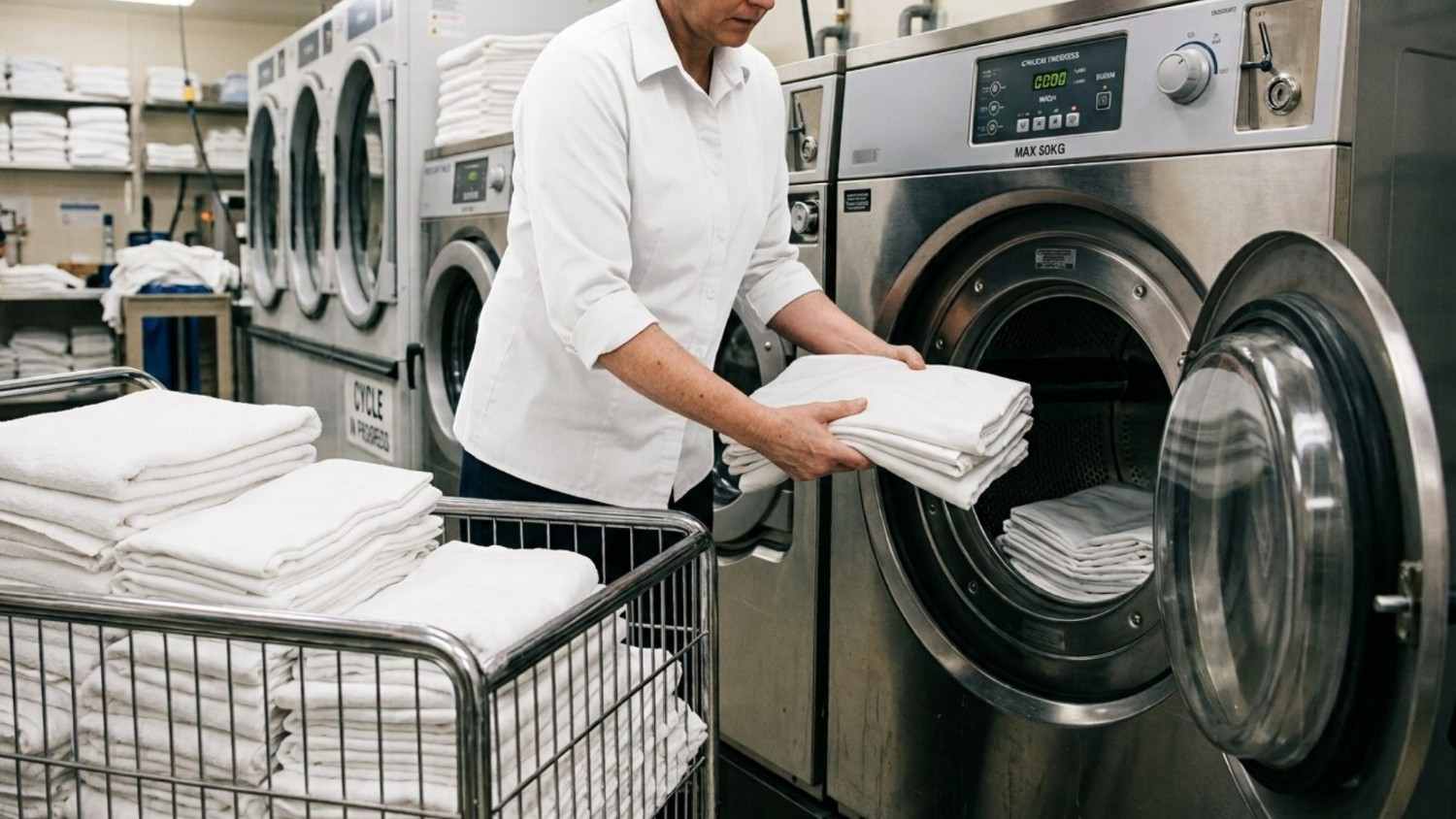
Your laundry operation can lose control when staff do not track linen movement between shifts. Missing counts and unclear responsibilities can create unexpected shortages, rushed washes, and unnecessary disruptions. A structured handoff process helps your team maintain accurate inventory records and keep each shift prepared.
Untracked linen loss carries a direct cost. Every sheet, towel, and pillowcase that disappears between departments must be replaced out of your operating budget, and replacement purchases rarely show up as a laundry problem on your P&L. They appear as rising linen spend with no identified cause, which is exactly why the loss continues.
Track Linen Counts During Every Shift Change
Treat your linen room like an inventory system where every movement matters. Count bundles in groups of 10 or 20 to keep the process efficient, then have both outgoing and incoming attendants confirm the totals.
This process helps your team identify shortages while details are still fresh instead of discovering problems weeks later. Clear records give managers the information they need to address issues before they affect daily operations.
Use One-for-One Linen Exchanges Between Teams
Keep clean and soiled linen exchanges organized between housekeeping and laundry teams. Require staff to return soiled linen before receiving the same amount of clean linen.
This system helps maintain proper linen levels and reduces unexplained losses that can affect inventory planning and replacement costs.
Create a Shared SOP Checklist for Every Shift
Use one checklist that covers handoff records, quality checks, finishing tasks, and redistribution. Have outgoing and incoming staff review the checklist together before completing the shift transition.
A clear handoff process reduces communication gaps and gives employees a consistent reference for following your laundry standards.
How Can You Schedule Laundry Around Occupancy Instead of Reacting to It?
Your laundry room can still experience delays even with an efficient setup if every load arrives at the same time. A smarter schedule helps your team manage demand, prepare linen before peak periods, and keep supplies available when your hotel needs them most.
Start Laundry Before the Housekeeping Rush
Schedule one laundry attendant to begin 30 to 45 minutes before the rest of the team. This gives your staff time to process overnight linen and unfinished loads from the previous day before housekeeping volume increases.
Starting ahead of demand helps prevent morning backups and keeps your team from relying on overtime to recover lost production time.
Match Attendant Coverage to Your Room Count
Staffing levels drive your schedule as much as timing does. Smaller properties often run a single attendant per shift, while larger hotels with high occupancy typically need dedicated coverage across both morning and afternoon blocks to keep machines loaded continuously.
Base your coverage on daily linen volume rather than room count alone. A property with heavy food and beverage operations generates far more textile volume per room than one without, and staffing to room count alone will leave that hotel short.
Run Heavy Loads During Slower Periods
Plan wash cycles around your hotel’s occupancy patterns, checkout schedules, and housekeeping demands. Process heavier items during quieter periods so your machines and staff remain available when rooms require faster turnover.
A planned schedule helps balance daily workloads and prevents peak periods from overwhelming your laundry team.
Create Linen Drop Zones on Every Floor
Set up clearly marked linen drop areas on each floor to reduce unnecessary trips between guest rooms and the laundry area. Pair these stations with rolling, height-adjustable folding tables so your team can move clean linen from the dryer to carts and back to guest areas with fewer handling steps.
Reducing unnecessary movement saves time, improves organization, and helps your team manage linen distribution more effectively throughout the property.
Discuss Your Hotel Laundry Equipment Needs With Our Team
Review your workflow before investing in new hotel laundry equipment. Simple process adjustments reveal where your operation loses time and help you determine when an upgrade will create the biggest impact.
Once your workflow is organized, the right commercial hotel laundry equipment can support faster processing, better consistency, and improved daily performance. Equipment choices should match your actual laundry volume, linen demands, and available space.
ACE Commercial Laundry Equipment Inc. helps hotels evaluate and select the right systems for their operations. As a Premier Huebsch® dealer serving Southern California, we provide commercial laundry equipment for hotel operations of different sizes and support installations with service designed to keep laundry rooms running. Contact our team to review your current setup and discuss the right laundry equipment in hotel environments based on your needs.