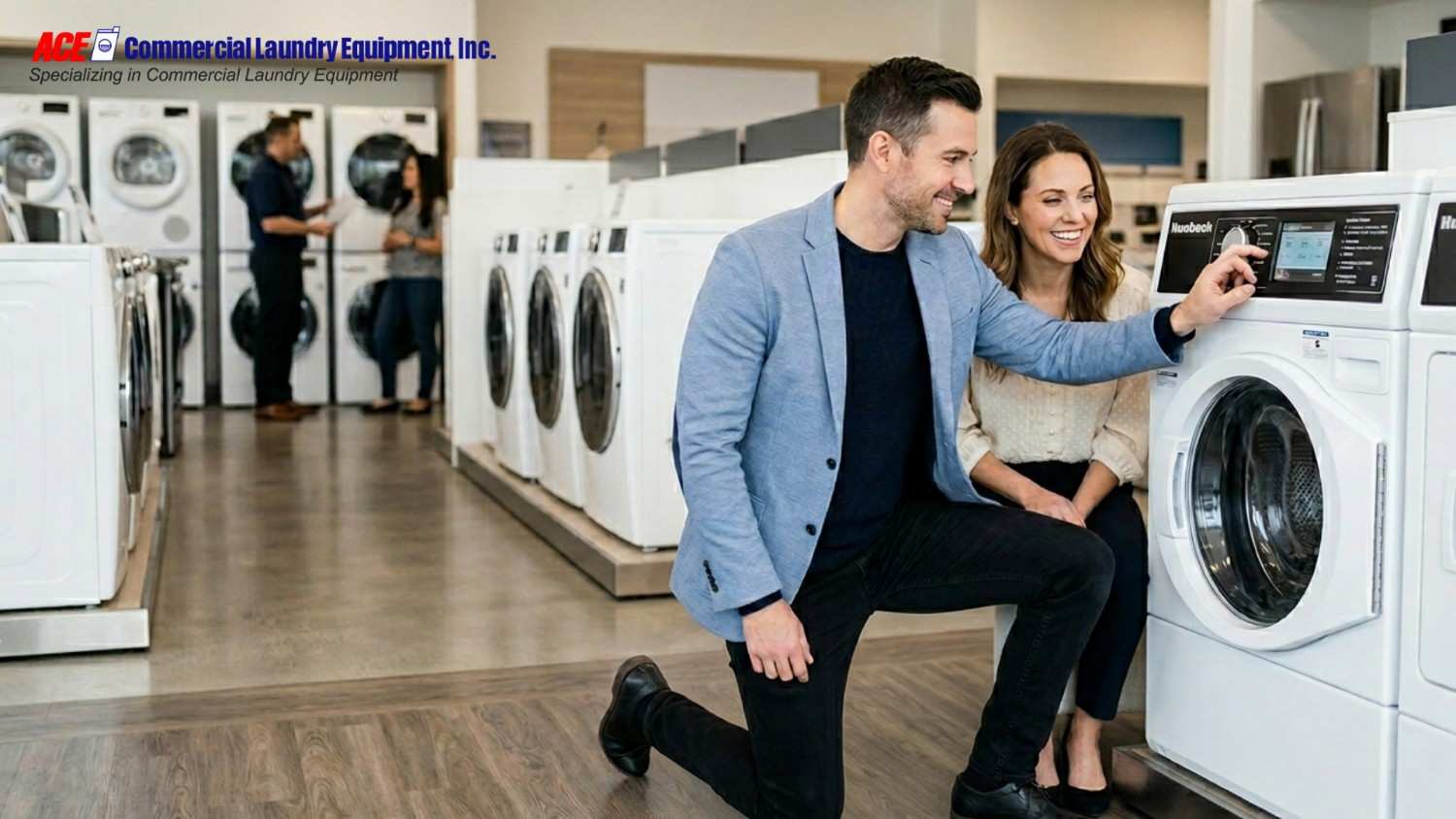
Buying commercial laundry equipment is a capital decision, not a shopping decision. The wrong purchase can drain your cash, strain your operation, and turn maintenance into a long-term burden. The right equipment helps your business control costs, protect throughput, and keep laundry moving when demand is at its highest.
You may already know what the machines do. The harder part is knowing what your business can afford, how to finance the purchase, and how to measure the return. This blog walks you through the decision like an experienced operator would: starting with the budget, weighing long-term costs, and choosing the dealer relationship that affects what you actually pay over time.
Start with Total Cost of Ownership, Not the Sticker Price
The cheapest commercial laundry machine on the lot is rarely the most affordable equipment to own. A low purchase price can look attractive at first, but the real cost shows up over time through utilities, repairs, downtime, replacement parts, and labor.
Total cost of ownership gives you the number that actually matters. It shows how much your equipment will cost your business across its full working life, not just on the day you buy it. When you compare machines, use total cost of ownership (TCO) as your baseline. It gives you a more accurate way to protect your budget and choose equipment that supports your operation long term.
What Goes into TCO Beyond the Purchase
The purchase price is only one line in your budget. Your real cost also includes installation work, such as electrical upgrades, plumbing, gas lines, and ventilation. It includes water, gas, and electricity across thousands of cycles. It also includes detergent, maintenance contracts, replacement parts, and the labor needed for repairs.
Premium commercial-grade equipment is built for 10-plus years of heavy daily use under proper maintenance. Cheaper machines may need replacement sooner, which means you pay for equipment twice. Before you commit, build a 10-year cost projection for each machine you are considering. The higher-priced machine on paper often becomes the smarter investment in practice.
How Energy and Water Efficiency Reshape the Numbers
Utility costs can take a major bite out of your laundry operation. Efficient equipment helps you control that cost every month.
High extraction speeds, measured in G-force, remove more water during the spin cycle. That reduces drying time and lowers gas or electric use. Water-sensing technology fills the drum with the right amount of water for each load instead of wasting water on partial loads. Automatic chemical dosing systems measure detergent accurately, which helps reduce chemical spend and protects fabrics from overdosing.
These features may look technical on a spec sheet, but they affect your bottom line directly. In your operation, they can mean lower utility bills, better fabric care, and stronger long-term savings.
Why Downtime Belongs on Your Cost Sheet
Many owners leave downtime out of the equipment budget because it does not arrive as a bill. That is a mistake. Downtime costs you money every time a machine sits idle.
For a laundromat, a broken machine means lost cycle revenue. For a hotel, healthcare facility, or multi-housing property, downtime can mean emergency outsourcing, overtime labor, and frustrated guests or residents. Your equipment choice should account for that risk before it becomes a problem.
Include downtime in the 10-year projection you built earlier. Estimate how many service issues each machine may have per year, how long each repair may take, and what those lost hours cost your business. That number belongs next to utilities, maintenance, and labor when you compare commercial laundry equipment options.
Right-Size Your Capacity Before You Spend a Dollar
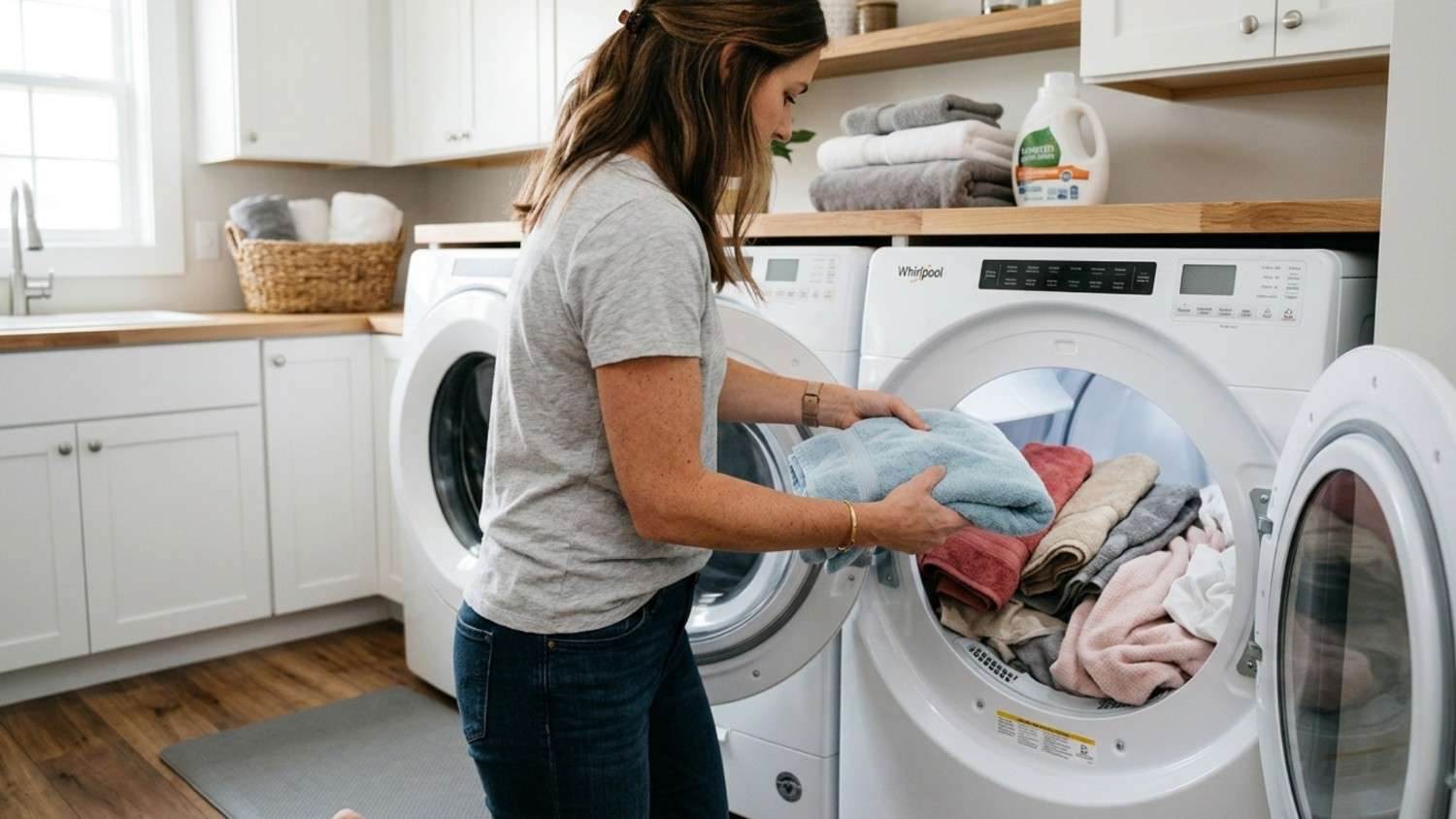
Buying too small creates bottlenecks during peak hours. Buying too large wastes utilities, runs half-empty machines, and ties up capital you did not need to spend. Both mistakes create avoidable waste: one slows your busiest days, and the other makes you pay for capacity you rarely use.
Calculating Peak Daily Load, Not Average Volume
Size your equipment for your busiest days, not your average days. A machine setup that works on a slow weekday may fall behind on weekends, checkout days, or high-turnover periods.
A practical starting point is to choose machines that can process your peak daily volume within about 8 hours of operation. Calculate the pounds of laundry your business handles during your highest-demand periods. If your property processes 200 pounds on a typical weekday but 400 pounds on weekends, build your equipment plan around the 400-pound reality.
Sizing for average volume leaves you short when throughput matters most. It can also force overtime, delay service, and frustrate customers, residents, or staff.
Matching Dryer Capacity to Washer Output
Your dryers should support about 1.5 times the capacity of your washers. Washers move loads quickly, especially with high-speed extraction, but drying usually takes longer. If your dryers cannot keep up, they become the bottleneck for the entire room.
Balance the system. A strong washer-dryer ratio keeps loads moving, protects your workflow, and helps your team handle busy periods without unnecessary delays.
Sizing for Your Vertical
Different businesses need different laundry setups. Use these ranges as a starting point, then compare them against your actual volume:
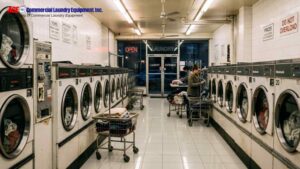
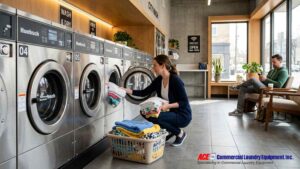
- Laundromats: Mix of mid-capacity vended washers, often 20 to 40 pounds, with a few larger 60-pound-plus machines for bedding and bulk loads.
- Multi-housing properties: Compact stack units based on resident traffic, building density, and expected daily use.
- Hotels and on-premise laundry (OPL) operations: Larger washer-extractors, often 60 to 100 pounds or more, to handle linen turnover during checkout windows.
- Healthcare facilities: Heavy-duty, high-capacity machines built for continuous cycles, strict hygiene needs, and demanding daily use.
These ranges can help you narrow the field, but your actual laundry volume should drive the final decision.
ALSO READ: How to Buy Commercial Laundry Equipment and Compare Your Options
Compare Financing, Leasing, and Outright Purchase
How you pay for commercial laundry equipment affects your cash flow just as much as which machines you choose. The best option depends on your available capital, ownership goals, tax position, and long-term plan for the business.
Most operators choose one of three paths: outright purchase, financing, or leasing. Each option can work well when it matches your budget and your operating strategy.
When Outright Purchase Makes Financial Sense
Buying outright works best when you have strong cash reserves and plan to own the equipment for its full lifespan. You control the asset, avoid interest costs, and eliminate monthly payments once the purchase clears.
This path often appeals to laundromat owners and established operators with steady revenue. After the equipment pays itself back, the machines can continue producing income without a financing payment attached to them.
How Financing Works for Commercial Laundry Equipment
Financing spreads the purchase cost across several years. You typically make a down payment, then pay the remaining balance over time. Once you pay off the loan, the equipment continues to generate value without monthly equipment payments.
Financing can help you preserve working capital for payroll, marketing, inventory, repairs, or unexpected expenses. It also lets you invest in better equipment without draining your cash reserves upfront. Terms vary by lender and program, so ask your dealer to walk you through the options available for your project size.
When Leasing Is the Smarter Move
Leasing can make sense when you want lower upfront costs and predictable monthly expenses. Some lease structures include maintenance or service coverage, which can help you avoid surprise repair costs.
The trade-off is long-term cost. Leasing often costs more than financing or buying over the full term, and you may not own the equipment at the end. Some lease payments may qualify as deductible operating expenses depending on your structure and business circumstances, so review the details with your tax advisor before making that assumption.
Weighing New vs. Used Equipment
A used or refurbished commercial laundry machine can lower your upfront cost, which is attractive on a tight budget. The trade-off is everything you cannot see: remaining lifespan, hidden wear, prior maintenance history, and limited or void warranty coverage. New equipment carries full manufacturer warranty terms, current efficiency standards, and predictable service support. For high-volume operations where downtime is expensive, new equipment usually delivers a stronger long-term return on your investment.
LEARN MORE: Commercial Laundry Equipment Financing Options Explained Simply
Build ROI and Payback Period Into the Decision
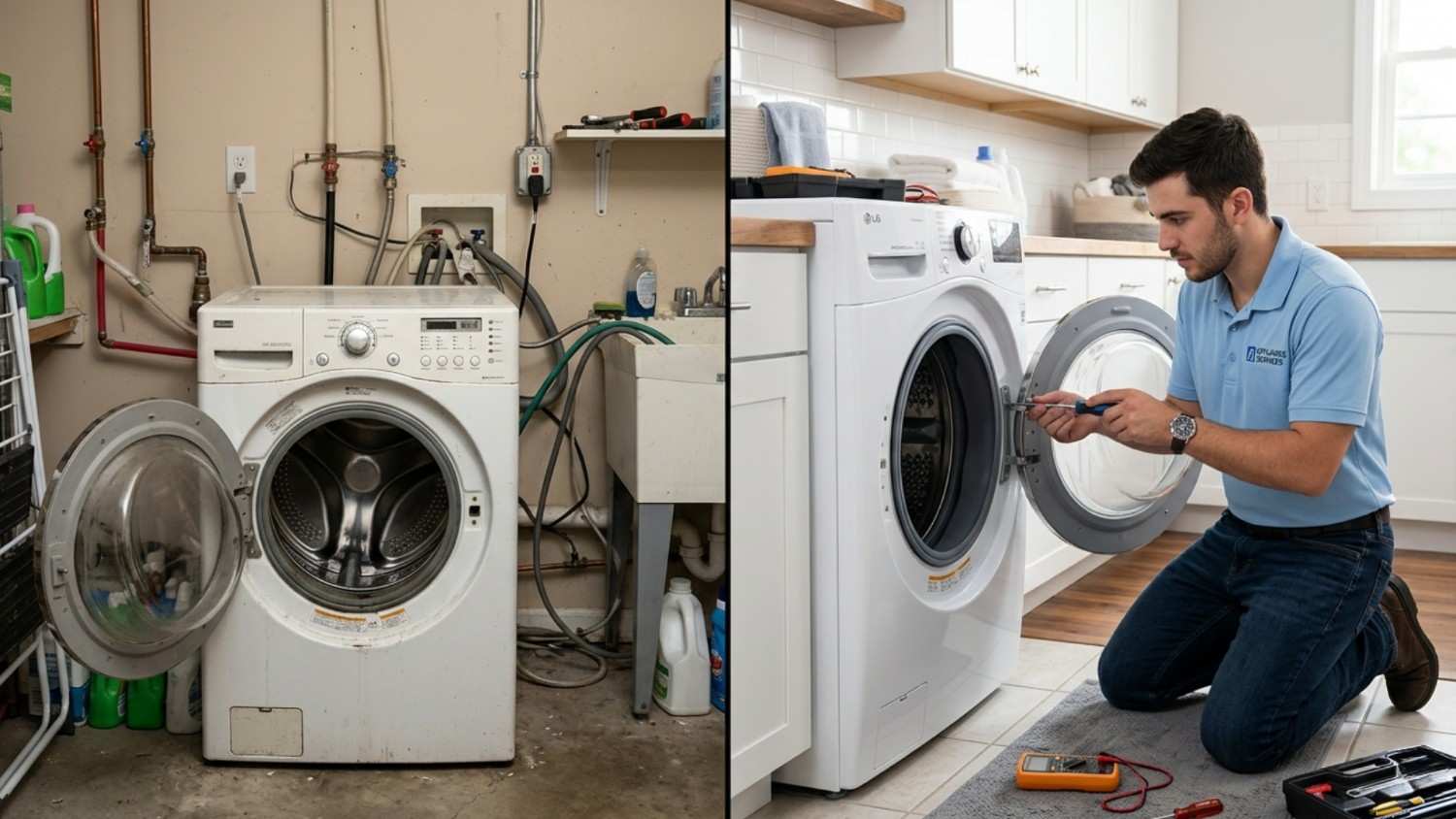
Once you understand the true cost of the equipment, ROI shows when the investment starts paying your business back. You need both numbers before you sign.
A strong ROI case connects the purchase to measurable gains, such as faster turns, added cycle revenue, reduced labor hours, fewer repairs, and more available machine hours.
How to Calculate Payback Period for New Equipment
The basic payback formula is simple: divide your total investment by the annual cash benefit the new equipment creates.
Your annual benefit usually comes from several areas: utility savings, increased throughput, added cycle revenue, reduced labor hours, and lower repair costs. As an illustration, suppose a machine saves your operation $4,000 per year in utilities and adds $2,000 per month in cycle revenue. That machine pays back faster than a cheaper option that delivers neither, even when the upfront price is higher.
Build this payback estimate during the purchase process. It gives you a clear business case and helps you compare equipment based on performance, not just price. Features that lift cycle revenue, such as digital payment solutions, can also strengthen your ROI projections.
Phased Upgrades vs. Full Replacement
You do not always need to replace the entire laundry room at once. In many cases, phased upgrades make more financial sense.
Start with the machines that break down most often, use the most utilities, or slow down your workflow. Replace those first, then schedule the next phase 18 to 24 months later as cash flow allows.
If a machine’s repair costs keep rising, cycle times slow down, or parts become harder to source, it may be time to replace it before it fails during peak demand.
This approach spreads your investment across multiple budget cycles. It also lets you test new equipment in your real environment before you commit to a full-room upgrade.
Track Performance After Installation to Validate Your ROI
Your equipment budget should not be a one-time exercise. Track repair frequency, chemical spend, labor hours, cycle counts, and machine availability throughout the year. Review the numbers quarterly or mid-year so you can see where your projections matched reality and where they missed.
That record gives you better timing for replacements and helps you avoid rushed equipment decisions.
Evaluate Warranty, Parts Access, and Service Before You Sign
Your dealer relationship affects what you pay after the sale. Warranty terms, parts access, and service response times can shape your real operating cost as much as the machine itself.
Do not treat service as an afterthought. A strong dealer helps you resolve service issues faster and keeps small problems from becoming expensive interruptions.
What a Strong Warranty Actually Signals
A strong warranty shows that the manufacturer stands behind the equipment. Coverage on major components, such as the wash drum and frame, shows that the manufacturer has confidence in the machine’s build quality.
Warranty protection also reduces your repair risk during the early years of ownership. Read the fine print carefully. Coverage length, included components, labor terms, and exclusions can vary widely between brands.
Why Local Parts Availability Changes Your Math
Parts access matters most when a machine goes down. A part that ships overnight from a local distributor can save you days of lost production compared to a part that must ship across the country.
During dealer evaluation, ask where the dealer stocks parts and how quickly they can deliver common replacement components for the exact models you are considering. Parts availability may not feel urgent during the sale, but it can become one of the most important factors in your operating costs later.
How to Vet Dealer Service Capability
Confirm service capability while you still have leverage in the buying process. Ask each dealer direct questions:
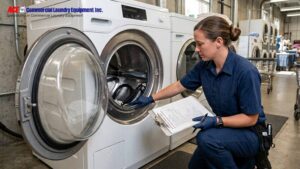
What is your typical service response time in my area? Are your technicians factory-trained on the models I am buying? Do you offer scheduled preventive maintenance contracts? Can you put your response commitments in writing?
A 4-hour service response is the standard ACE Commercial Laundry Equipment Inc. maintains for Southern California operators, and it sets a clear bar for what to expect from any dealer you consider. A strong dealer will answer clearly and support those answers in the service agreement.
Vague answers during the sales process often lead to slow service after installation. Choose the partner who can help your commercial laundry operation run reliably after the equipment is in place.
RELATED ARTICLE: Why Cheap Commercial Laundry Equipment Can Cost You More
Get Expert Help Before You Buy
Choosing the right commercial laundry machines for your business and budget starts with a clear plan. Once you understand your costs, capacity needs, and payment options, you can make a decision with more confidence.
As a Premier Huebsch® Laundry Dealer serving Southern California since the late 1950s, ACE Commercial Laundry Equipment Inc. helps businesses choose equipment with the right capacity, cost structure, and support plan. ACE Commercial Laundry Equipment Inc. provides commercial laundry equipment for sale to laundromats, multi-housing properties, hotels, healthcare facilities, and on-premise laundry operations.
If you are comparing the best commercial laundry machines for your operation, we can help you compare machines, estimate long-term costs, and review financing or leasing options that fit your project. Contact ACE Commercial Laundry Equipment Inc at 14404 Hoover St, Westminster, CA 92683, or call 877-630-7278 today to start planning your next equipment investment.
Frequently Asked Questions
How long does commercial laundry equipment last?
Premium commercial-grade machines built for heavy daily use typically deliver 10-plus years of reliable service when paired with proper maintenance. Actual lifespan depends on usage volume, load weight, cycle frequency, and how consistently you handle preventive care. Lower-grade equipment often requires replacement well before that point, which is part of why the total cost of ownership matters more than purchase price when you compare options.
Should I buy new or used commercial laundry equipment?
New equipment carries full manufacturer warranty coverage, current efficiency standards, and predictable service support. Used or refurbished commercial laundry machines can lower your upfront cost, but you take on more risk around remaining lifespan, hidden wear, and limited or void warranty terms. For high-volume operations where downtime is expensive, new equipment usually offers a stronger long-term return on your investment.
How do I size laundry machines for my business?
Calculate the pounds of laundry your operation handles during peak periods, not average days. Choose machines that can process that peak volume within about 8 hours of operation, and size your dryers at roughly 1.5 times the capacity of your washers to prevent bottlenecks during busy hours. Your industry also matters: laundromats, multi-housing properties, hotels, and healthcare facilities each have different capacity profiles.