Choosing a profitable laundromat location starts with finding an area where residents need convenient, reliable laundry services. Look for neighborhoods with a high concentration of renters, limited in-unit laundry access, steady foot traffic, and manageable competition. You should also consider parking, visibility, utility capacity, and lease costs before committing to a property.
Your success depends on choosing a site that attracts regular customers, supports your operating costs, and gives your business room to grow. Get the location right first, because even the most reliable commercial laundry equipment can’t make up for weak customer demand.
Who Actually Needs a Laundromat in Your Target Area?
Before touring potential locations, identify who lives in the surrounding area and how often they may need laundromat services. Local housing patterns, population density, and household characteristics can help you estimate demand.
Renters Make Up Your Core Customer Base
Neighborhoods with a high percentage of renters often generate consistent laundromat traffic, especially when apartments lack in-unit laundry facilities. Focus on neighborhoods with a substantial renter population, particularly where apartment buildings lack in-unit or adequate shared laundry facilities.
Look for:
- Apartment complexes and duplexes: Focus on apartment buildings without in-unit washers and dryers, as well as older properties where shared laundry facilities are limited or absent.
- Older residential buildings: Check whether these properties have limited space or hookups for laundry machines.
- New multifamily developments: Review recently approved housing projects that could increase your potential customer base.
Most Customers Live Within a Short Drive
Most customers prefer a laundromat within a reasonable distance of home, especially when transporting several loads of laundry. Your potential customer base depends partly on how far residents are willing to travel.
Start with a nearby trade area, then adjust your boundaries based on population density, driving routes, competition, and local travel patterns.
Map your target area and count the households that could realistically visit your store. Consider traffic routes and competing laundromats rather than relying on distance alone.
Match Your Laundry Services to Local Customer Needs
Your customers’ income levels can influence which laundry services they prefer and how much they’re willing to spend. However, housing conditions, household schedules, and access to laundry facilities also affect their choices. Understanding these preferences helps you build a business that meets local needs.
- Neighborhoods with limited in-home laundry access: These areas may support steady demand for affordable self-service washers and dryers, particularly among households without laundry facilities.
- Areas with busy households and working professionals: Customers may value time-saving services such as Wash-Dry-Fold, pickup and delivery, or scheduled laundry drop-offs.
- Commercial customers: Nearby gyms, salons, and restaurants may create additional opportunities for commercial laundry services.
Your service offerings should reflect local demand. Before choosing a location, determine whether customers primarily need affordable self-service laundry, convenient drop-off options, or additional services such as pickup and delivery.
Year-Round Demand Beats Seasonal Spikes
Consistent demand throughout the year helps you maintain predictable revenue. Compare neighborhoods with stable residential populations against areas where customer traffic changes significantly between seasons.
College communities and military neighborhoods may provide a steady customer base, but you should account for changes during school breaks or periods of relocation. Tourist destinations may experience larger fluctuations between peak and off-peak seasons.
You can evaluate local demand using these resources:
- U.S. Census Bureau American Community Survey: Review renter occupancy rates, household sizes, population characteristics, and income levels.
- City planning records: Identify upcoming residential developments, housing permits, and neighborhood growth trends.
- Commercial real estate reports: Examine traffic counts, local demographics, and customer trade areas.
Can Customers Easily See, Reach, and Trust Your Location?
Customers need a laundromat they can find and access without difficulty. Evaluate how your storefront, surrounding businesses, parking, and security features affect their experience.
Choose a Busy Street Where Drivers Can See Your Store
Look for a location along a main road or a common commuting route with consistent vehicle traffic. These areas can expose your business to potential customers throughout the day.
Pay attention to traffic speed and storefront visibility. Drivers traveling at lower speeds have more time to notice your signage and identify your laundromat. Make sure nearby buildings, trees, or other signs don’t block the view of your entrance.
You should also evaluate driveway access and turning restrictions. A highly visible location may still discourage customers if they cannot enter or exit the property safely and conveniently.
Use Glass Frontage to Showcase Your Laundromat
Large storefront windows allow potential customers to see inside your laundromat before entering. A clean, well-lit interior helps them assess the store’s condition, available machines, and overall environment.
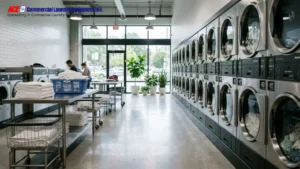
Look for a storefront with clear windows that allow customers to see the interior, available commercial laundry machines, and overall cleanliness before entering. Modern machines, clean floors, and organized laundry areas create a positive first impression and help build customer confidence.
Choose Nearby Businesses That Complement Your Laundromat
Customers often prefer laundromats near businesses they already visit. A location close to grocery stores, pharmacies, coffee shops, or shopping centers allows them to run errands while waiting for their laundry.
Look for neighboring businesses that customers visit regularly and that serve similar households. These locations can make your laundromat part of their weekly routine.
Prioritize Convenient Parking and Proper Lighting
Parking and lighting directly affect how comfortable customers feel visiting your laundromat. Before committing to a location, check for these features:
- Free, accessible parking: Make sure customers can park near your entrance, especially during busy weekends.
- Clear parking agreements: If you share a parking lot with other businesses, confirm your customers’ parking rights in writing.
- Adequate exterior lighting: Install or verify sufficient lighting around entrances, walkways, and parking areas.
- Public transportation access: Look for nearby bus stops or transit routes that make your store accessible to customers without vehicles.
Proper lighting becomes especially important if you plan to operate late at night or offer unattended laundry services. You can also install security cameras to monitor entrances and common areas and help customers feel more secure.
How Strong Is the Local Competition?
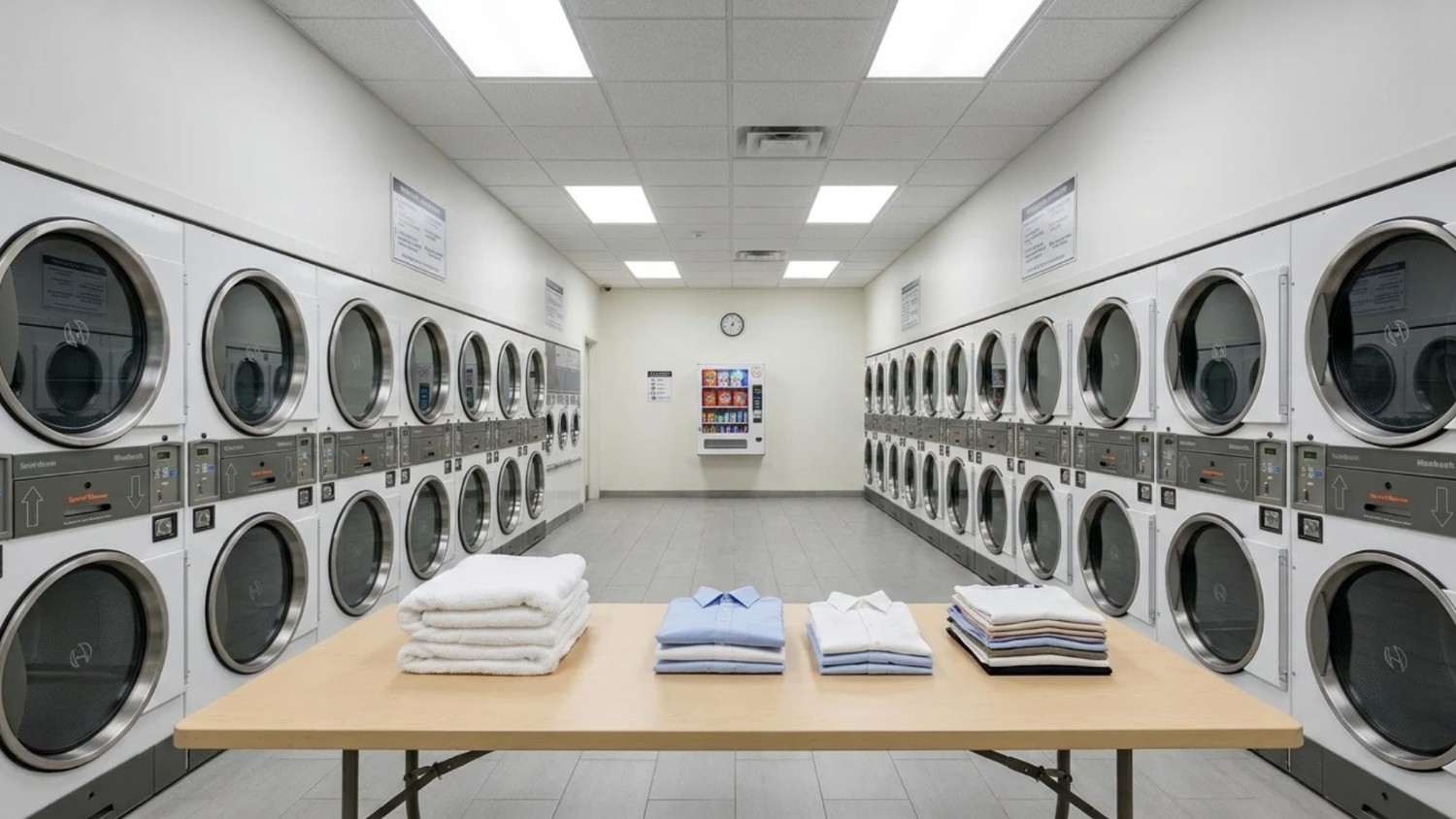
Having other laundromats nearby doesn’t necessarily make a location a poor investment. Instead, evaluate how well existing businesses meet customer needs and where your laundromat could offer something better. Understanding your competition helps you identify service gaps, set competitive prices, and determine whether the area can support another store.
Visit Competing Laundromats at Different Times
Visit nearby laundromats during weekday mornings, weekday evenings, and weekend afternoons. These visits help you understand customer traffic, peak operating hours, and how competitors manage their stores.
Pay attention to:
- Wash and dry pricing: Compare prices for small, medium, and large loads to understand local rates.
- Store cleanliness: Check the condition of floors, folding tables, restrooms, and customer waiting areas.
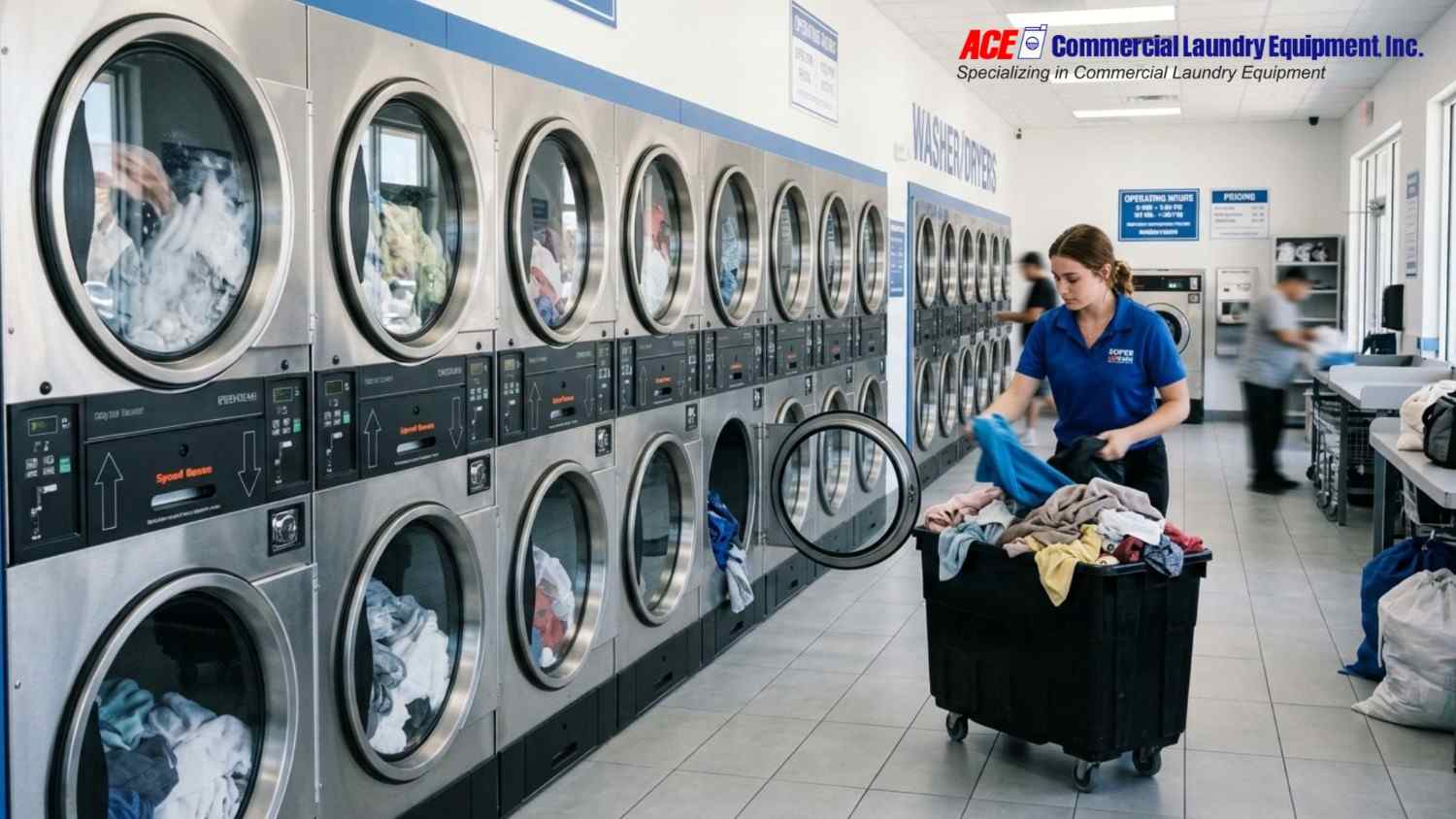
- Equipment condition: Inspect each commercial laundry machine for visible wear, maintenance issues, and out-of-order signs.
- Operating hours and staffing: See whether competitors offer extended hours, attended services, or self-service operations.
- Customer activity: Observe how many machines customers use and whether they experience long wait times.
Look for Opportunities to Offer Better Services
An outdated or poorly maintained laundromat may indicate an opportunity to attract customers who want a cleaner, more convenient place to do their laundry.
If nearby laundromats regularly have long wait times, additional washers or larger-capacity machines may help you serve unmet demand. If customers experience limited operating hours or unreliable machines, those problems may reveal opportunities for a better-managed store.
You can also consider flexible payment options, attended services, or Wash-Dry-Fold offerings that nearby businesses don’t provide. However, you should confirm that enough customers want these improvements before investing.
If several modern, well-managed laundromats already operate nearby, you’ll need a clear competitive advantage to attract customers. Purchasing an underperforming competitor may also offer an alternative to opening a new location, provided its financial performance and property conditions support your plans.
Will the Lease Support a Profitable Business?
Even a laundromat in a high-demand area can struggle if rent and other property expenses consume too much revenue. Before signing a lease, calculate your expected operating costs and review the terms carefully. Your goal is to secure a location that supports profitability without putting unnecessary pressure on your budget.
Keep Rent in Proportion to Projected Revenue
Your monthly rent should leave enough room to cover utilities, equipment payments, maintenance, and other operating expenses while generating a profit.
Calculate an affordable occupancy cost based on your projected monthly revenue, utility expenses, equipment financing payments, and desired profit margin. Include rent, property taxes, common-area maintenance fees, and other recurring property charges in your estimates.
Base your revenue projections on local demand, competitor pricing, and expected machine usage instead of relying solely on the landlord’s estimates. Compare conservative, expected, and optimistic revenue scenarios to understand how changes in customer traffic could affect your profitability.
If the location only appears profitable under your most optimistic estimates, reconsider the lease or negotiate better terms. This stress test matters even more in Southern California markets such as Los Angeles and Orange County, where high commercial rents leave less room for a slow first year.
Negotiate Lease Terms That Protect Your Investment
Your lease should give you enough time to recover your initial investment and establish a profitable operation. Since owners often finance commercial laundry equipment over several years, you need lease terms that support your equipment repayment schedule and long-term business plans.
Before signing, negotiate these conditions:
- Long-term lease and renewal options: Secure enough time to recover your investment, with options to extend your lease as the business grows.
- Predictable rent increases: Negotiate clear limits on annual rent adjustments to help you manage future expenses.
- Tenant improvement allowances: Ask the landlord to contribute toward necessary plumbing, electrical, ventilation, and other property upgrades.
- Limited personal guarantees: Negotiate terms that reduce your personal financial exposure if the business encounters difficulties.
Confirm that your lease allows the required equipment installations, plumbing modifications, dryer exhaust systems, and operating hours. Get the landlord’s approval for major improvements in writing before signing.
If you’re purchasing an existing laundromat, review the remaining lease term and confirm whether the landlord permits the lease to transfer to a new owner. You should also understand any conditions or fees associated with the transfer.
Compare equipment costs early to estimate your startup expenses, but avoid placing a binding order until you secure the location and verify that the building can accommodate your machines. Review your financing options and repayment terms to ensure your equipment costs fit within your projected budget.
Before finalizing your lease, confirm the building can accommodate your equipment, utility demands, and operating requirements.
LEARN MORE: What to Ask for in a Laundry Equipment Quote So You Can Compare Options
Can the Building Handle Commercial Laundry Equipment?
A laundromat requires more water, drainage, gas, and electrical capacity than many retail businesses. Before selecting a property, verify that its existing infrastructure can support your planned operations.
Check Zoning Requirements and Permits First
Before leasing a property, confirm that local zoning regulations allow laundromat operations at your chosen location. Commercial or mixed-use zoning does not automatically guarantee approval, so check with your local planning or zoning department.
You should also review local requirements for operating hours, exterior signage, parking, and building modifications. Contact the appropriate planning and building departments to identify the permits and approvals you’ll need for plumbing, electrical work, ventilation, and equipment installation.
Confirming these requirements early helps you avoid unexpected restrictions, permit delays, and additional construction expenses.
Verify That the Building Has Enough Utility Capacity
Your laundromat needs sufficient utility capacity to operate multiple washers and dryers at the same time, especially during busy hours. If the building’s existing systems cannot support your equipment, you may need expensive upgrades before opening.
Have qualified professionals evaluate these essential utilities:
- Water supply and pressure: Confirm that the building can supply enough water to operate several washers simultaneously without affecting performance.
- Drainage and sewer capacity: Check that drain lines and sewer connections can handle the wastewater your machines discharge during peak operation.
- Gas supply: Verify that the building has enough gas capacity to support your commercial dryers and other gas-powered equipment.
- Electrical capacity: Make sure the electrical panels, wiring, and service connections can safely handle the combined power requirements of your machines.
Ask your utility providers and licensed contractors to confirm the available capacity and any necessary upgrades in writing. Don’t rely solely on the landlord’s assessment.
You should also request local water, sewer, gas, and electricity rates to estimate your ongoing operating expenses. Understanding both utility capacity and consumption costs helps you determine whether the property can support profitable operations.
Inspect Major Building Systems and Accessibility
Beyond utility connections, inspect the building’s overall condition to identify repairs or improvements that could increase your startup costs.
Inspect the roof for leaks, review the HVAC system’s condition, and confirm that the building can accommodate dryer exhaust ventilation. Ask about previous repairs, deferred maintenance, and any structural issues that could affect your renovation plans.
Confirm that the property meets ADA accessibility requirements. These are federal mandates, and non-compliant properties expose owners to legal liability and may require costly retrofits before opening. Check entrances, walkways, machine access, folding areas, and restrooms to ensure customers with disabilities can use your facility.
If the building needs major repairs or accessibility improvements, obtain cost estimates before signing your lease. You may be able to negotiate certain upgrades with the landlord instead of covering every expense yourself.
If you’re buying an operating laundromat, don’t assume its existing infrastructure or equipment will support your renovation plans. Have qualified professionals assess the property’s condition and confirm whether upgrades are necessary.
Does the Floor Plan Support an Efficient Laundromat Layout?
A property may have sufficient utility capacity but still lack the space needed for an efficient laundromat. Before choosing a location, evaluate how the available floor area will accommodate machines, customer movement, and daily operations.
Check whether the layout provides enough room for:
- Washers and dryers: Allow adequate space for equipment installation, operation, and maintenance.
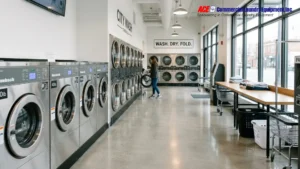
- Customer walkways: Provide clear, accessible aisles so customers can move comfortably while carrying laundry.
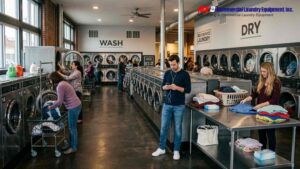
- Folding and waiting areas: Reserve enough space for folding tables, seating, and laundry carts.
- Utility and maintenance areas: Ensure technicians can access equipment connections and perform necessary repairs.
- Customer convenience: Consider how people will move between washers, dryers, folding stations, and exits during busy periods.
A practical layout supports smooth customer flow and gives technicians reliable access to operate and maintain your equipment efficiently.
Use the results of these inspections to establish the building’s practical equipment capacity before finalizing your store layout. ACE Commercial Laundry’s laundromat design team can map your floor plan against your utility capacity to show how many machines, and which sizes, the space can realistically support.
RELATED ARTICLE: Common Problems in Self-Managed Commercial Laundry Rooms
Turn the Right Location Into a Profitable Laundromat
As a Premier Huebsch® Dealer serving laundromat owners throughout Southern California, ACE Commercial Laundry Equipment Inc. helps you plan new stores, renovate existing locations, and choose the right equipment for your space. A location with strong customer demand, convenient access, reasonable rent, and reliable utilities gives your laundromat a solid foundation. The next step is selecting equipment that fits your space, serves your customers, and supports your business goals.
Our team helps you select commercial-grade Huebsch® equipment suited to your space, customer volume, and operating goals. We evaluate your location, available space, and utility capacity to recommend the right number of machines, equipment sizes, store layout, and payment systems.
You can explore our selection of commercial laundry equipment for sale, along with financing options and store layout support. We also provide equipment repair and maintenance services to help keep your machines operating efficiently after your store opens. With a 4-hour service response, our maintenance team is ready to support your store after it opens.
Your commercial laundry business deserves a location and equipment setup that work together. If you’ve identified a potential site, contact ACE Commercial Laundry to discuss your plans, review your equipment needs, and take the next step toward opening a profitable laundromat.