A successful laundromat requires high-extract washers, properly sized dryers, a reliable commercial water heater, and payment systems built for daily customer demand. Picture a busy weekend: customers waiting for open machines, dryers struggling to finish loads on time. These problems often trace back to the wrong equipment setup from the start.
Understanding how to choose the right commercial laundry equipment, prepare your space, and match your machines to your store’s needs can help you build a laundromat that operates efficiently from day one.
Which Commercial Washers and Dryers Form the Core Laundromat Stack?
A profitable laundromat starts with the right equipment foundation. Every store decision: layout, capacity planning, customer amenities, depends on selecting machines that fit your actual business goals.
Choose your equipment based on peak customer demand, not only what appears in a manufacturer catalog. A laundromat near Bolsa Avenue or Westminster Boulevard may handle higher customer volume than one in a quieter neighborhood, and higher volume means more capacity, more machines, and a different floor plan.
Reviewing available machines with your floor plan and utility specs in hand keeps the selection grounded in what your location can actually support.
High-Extract Washers and Capacity Mix Planning
High-extract washers remove more moisture during the spin cycle, which reduces drying time and energy use. When planning your washer mix, focus on:
- Washer sizes that support everyday laundry, oversized items, and specialty loads
- Customer behavior, including household laundry volume and larger items like comforters or rugs
- Equipment durability and long-term operating costs
- Available floor space for each machine size
A balanced washer setup includes multiple capacity levels. Smaller machines handle everyday loads, while larger units serve customers with bulky items that smaller machines cannot accommodate. Compare water usage, cycle times, maintenance needs, and equipment lifespan before committing to a purchase.
Multi-Pocket Tumble Dryers and Washer-to-Dryer Ratios
Your dryer setup should match your washer capacity so customers do not finish a wash cycle only to wait for an open dryer. Consider these factors when selecting dryers:
- Washer-to-dryer balance based on your equipment mix
- Dryer capacity that matches the loads your washers handle
- Gas or electric options based on your building’s available utilities
- Ventilation requirements before installation
Gas dryers remain a popular choice for locations with proper gas service because they often provide faster drying and lower operating costs compared to electric models. Note that gas dryers also require dedicated gas lines, a detail that ties directly into your facility requirements.
ALSO READ: Choosing the Right Washer & Dryer Capacity for Your Business
What Utilities and Facility Requirements Does Your Laundromat Need?
Once your machine selection is set, your building must be able to support it. Before installing any commercial laundry equipment, a licensed contractor must verify that the location meets the electrical, plumbing, gas, ventilation, and structural requirements of a working laundromat.
Important requirements include:
- Electrical capacity, including amperage, three-phase power availability, and overall load requirements based on your machine count
- Gas or LP supply that can support dryers and water heating systems
- Water pressure and drainage capacity for repeated high-volume wash cycles
- Floor strength, ceiling height, machine spacing, and access paths
- Dryer exhaust systems that properly remove heat, moisture, and lint
Your plumbing and ventilation systems must support continuous operation during peak hours. A properly sized commercial water heater or boiler helps maintain consistent wash cycles, while drainage systems such as drain troughs and lint interceptors protect plumbing from wastewater buildup.
In Westminster, confirm zoning requirements, business licenses, and any building or sign approvals before starting your buildout. Utility upgrades discovered after construction begins can become a significant and avoidable expense. Address electrical service, gas line capacity, plumbing, ventilation, and drainage early so they do not delay your opening or create performance problems after launch.
RELATED ARTICLE: Gas vs. Electric Commercial Dryers: Which is Better for Your Business?
What Payment Systems and Amenities Improve Laundromat Operations?
Once your building can support your machines, your payment setup determines how customers use them. Your payment system affects more than how customers start a wash cycle. It impacts pricing flexibility, store management, and how easily you can track daily operations.
Coin-only, card, and hybrid payment systems each serve different business needs.
| System | Upfront Cost | Pricing Flexibility | Data and Control |
| Coin-only | Lowest | Difficult to adjust | None |
| Card or mobile | Higher | Dynamic, remote | Cycle reports, downtime alerts |
| Hybrid | Middle | Flexible | Combines both |
For a new laundromat in a high-traffic Southern California market, a hybrid system gives you the most operational flexibility: customers can pay the way they prefer, and you can adjust pricing or pull cycle data without being on-site.
A hybrid payment system combines coin acceptance with card and contactless payment options through machine-mounted readers. This setup gives customers more ways to pay while allowing owners to review cycle data and monitor equipment performance remotely. If your store accepts coins, include a bill validator or change machine so customers can access payment without friction.
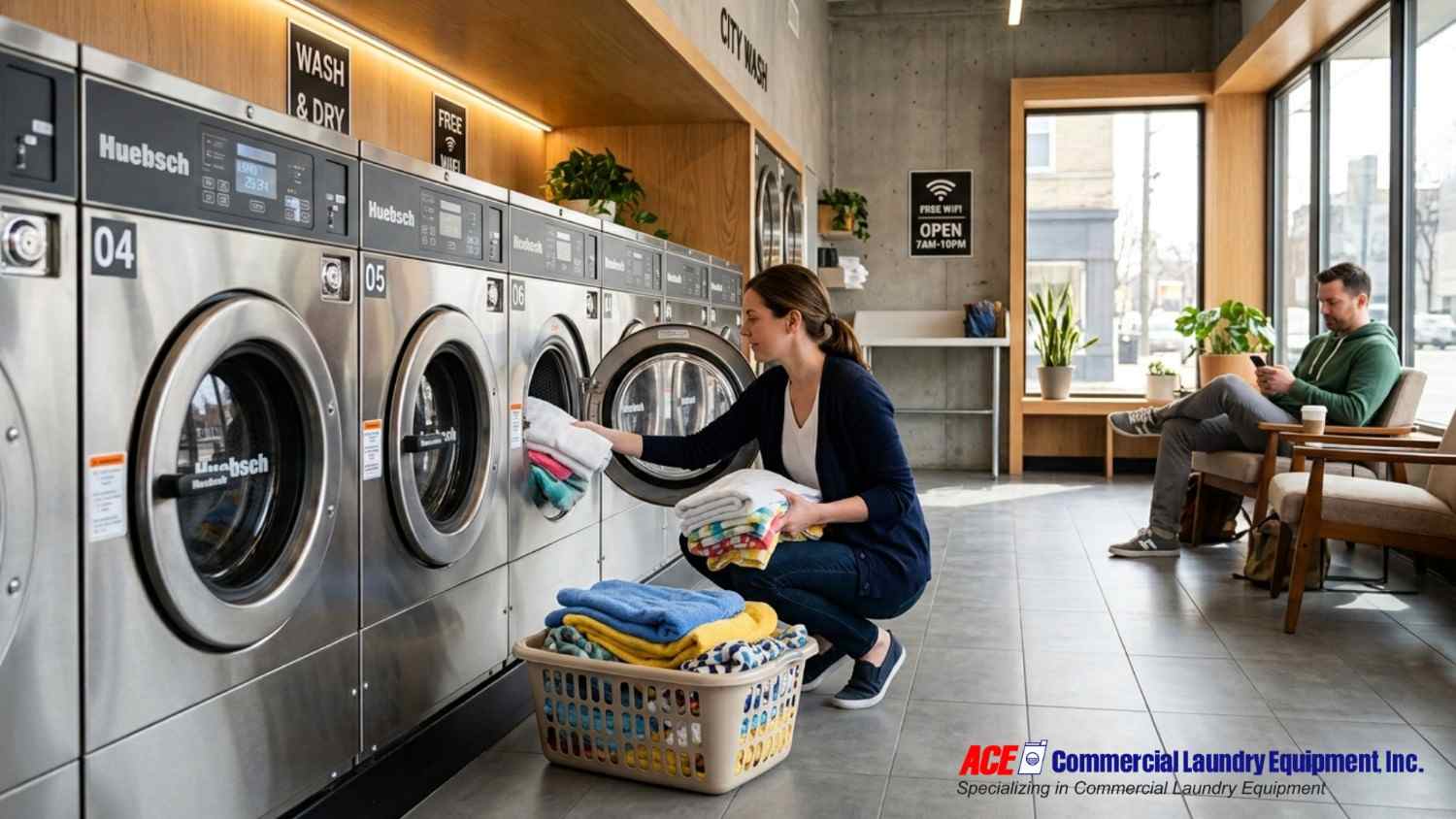
Customer amenities also influence repeat visits. Soap and softener vending machines, seating, folding tables, laundry carts, clear signage, bright lighting, and Wi-Fi help create a more comfortable store environment. Security cameras, alarms, and remote monitoring support stores with extended hours or unattended operations.
LEARN MORE: Commercial Laundry Equipment Buying Checklist for Owners and Managers
Build Your Laundromat Plan with Expert Guidance
A laundromat launch budget goes well beyond the machine list. Equipment, installation, permits, utility upgrades, payment systems, furniture, and working capital each need their own line item. Owners who lump everything into a single estimate are usually the ones who end up underfunding the project.
Consider each expense separately and evaluate how it affects your long-term operation. Maintenance needs, utility consumption, financing costs, and operating reserves all influence total investment, not just the sticker price on machines.
The best commercial laundry machines balance performance, reliability, operating costs, and long-term support. ACE Commercial Laundry Equipment Inc. helps Southern California laundromat owners evaluate Huebsch® equipment options, plan layouts, and prepare for successful installations. With a 4-hour service response benchmark, ACE Commercial Laundry Equipment Inc. keeps your operation moving long after installation. If you are developing a Westminster laundromat, contact us for guidance on selecting equipment that fits your location and operating goals.
Frequently Asked Questions
How many machines does a laundromat need to turn a profit?
There is no fixed number because profitability depends on your location, customer traffic, pricing, and operating costs. A smaller laundromat with the right machine mix and strong utilization can outperform a larger store with poor equipment planning. Evaluate your expected daily volume, peak-hour demand, and available space before deciding how many machines to install.
What is the difference between top-load and front-load commercial washers?
Top-load washers usually cost less upfront and offer shorter wash cycles, but front-load washers use less water, extract more moisture, and support larger capacity loads. Most modern laundromats choose front-load commercial washers because they provide better efficiency and long-term operating value. Your final choice should depend on your customer needs, available space, and business goals.
Can you finance commercial laundry equipment instead of buying outright?
Yes. Many laundromat owners finance their equipment instead of paying the full cost upfront. Financing helps preserve working capital for buildout expenses, permits, utilities, and operating reserves. Compare loan terms, interest rates, and total costs against your projected revenue before choosing a financing option.
How long do commercial laundry machines typically last in a laundromat?
Commercial laundry machines can last many years when operators follow proper maintenance schedules. Lifespan depends on factors such as daily usage, water quality, machine workload, and service history. A busy store will experience more wear than a lower-volume location, so consider expected cycles, maintenance needs, and replacement costs when planning your equipment investment.
What ongoing maintenance do commercial washers and dryers require?
Commercial washers and dryers need regular cleaning, inspections, and professional service to maintain performance. Washers require checks for hoses, seals, filters, and dispensers, while dryers need lint removal and exhaust system cleaning to maintain airflow and efficiency. Following a maintenance schedule helps reduce breakdowns, extend equipment life, and keep your laundromat running smoothly.