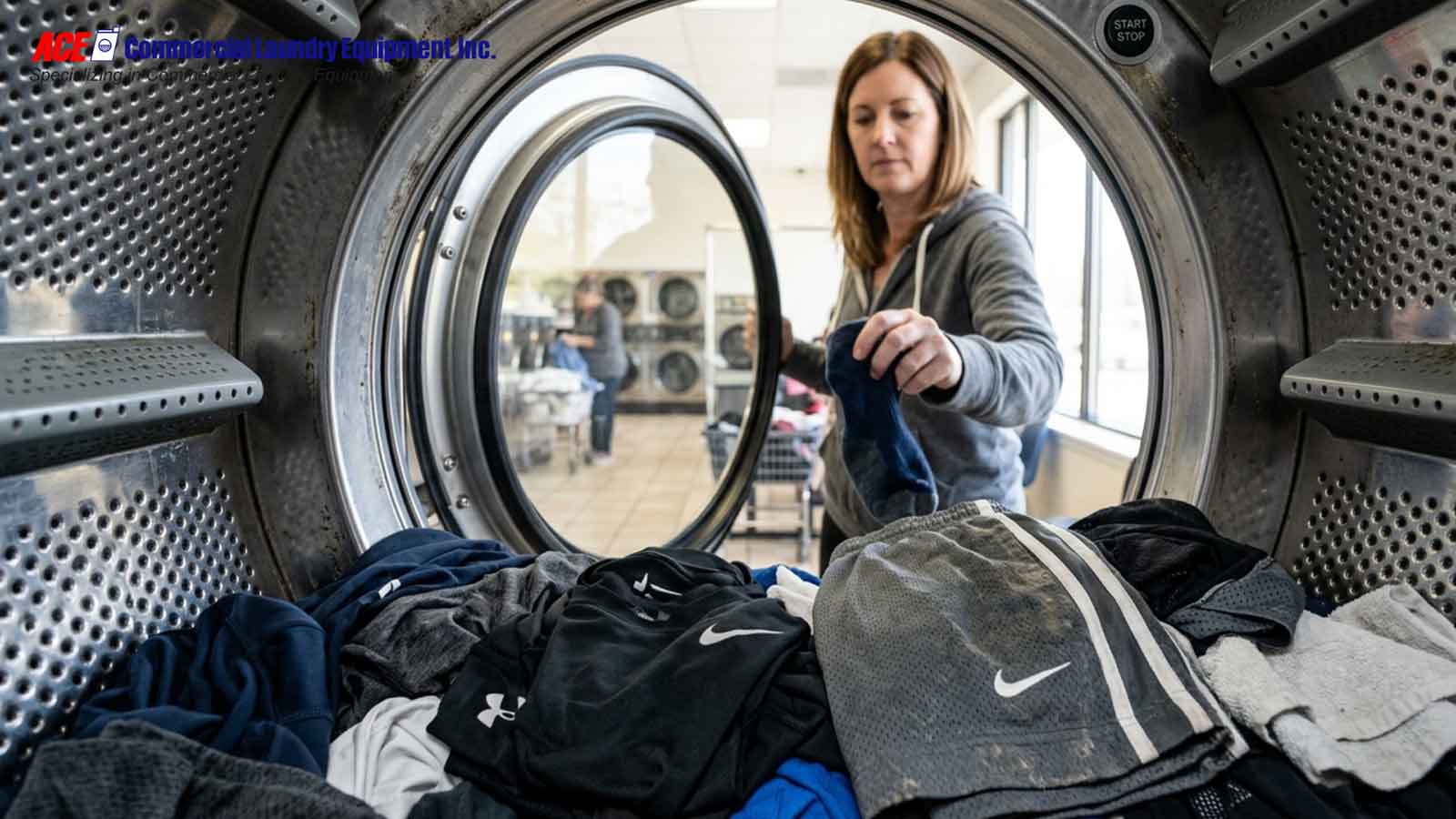
Your gym’s laundry routine may be costing more than you think. Towels, uniforms, and mats pile up quickly, and without the right systems, water, energy, labor, and outsourced laundry services can quietly eat into your operating budget. With the right laundry equipment for gyms and smarter usage practices, you can reduce waste and keep your facility running cleaner and more efficiently.
Why Gym Laundry Costs Keep Rising
Your laundry costs aren’t random. They follow predictable patterns that compound every single day.
Utilities Can Take a Bigger Bite Than You Realize
Water and energy costs hit your gym every time your staff starts a washer or dryer. Each wash cycle can add up through water, electricity, gas, detergent, and drying time. If your facility processes a high volume of towels, uniforms, or mats every day, those small costs can turn into thousands of dollars each month.
That money could support better member amenities, equipment upgrades, staffing, or facility improvements. Instead, it often disappears into preventable utility waste.
The bigger issue is visibility. If you do not track laundry volume, load size, and drying time, you cannot see where the waste starts.
READ MORE: Why Cheap Commercial Laundry Equipment Can Cost You More
The Five Major Utility Cost Traps
Once you know where your gym loses money, you can start fixing it. These five gym laundry equipment cost traps account for much of the waste in fitness facilities. Outsourced towel service may look simple on paper, but per-pound fees, rush charges, and limited process visibility can turn it into one of your gym’s most expensive laundry habits.
Trap 1: Equipment Inefficiency
Your machine type directly affects your operating costs. Older machines use more water per pound of laundry and extract less moisture during the spin cycle. Top-load machines may also use far more water than front-load models.
If your gym still relies on outdated equipment, you may pay more every month than necessary. Modern commercial gym laundry equipment uses water, energy, and cycle time more efficiently, helping you lower operating costs without sacrificing cleanliness.
Trap 2: Running Partial Loads
Partial loads waste the same cycle resources on fewer towels. When staff washes a small batch of towels, your gym still pays for most of the water, energy, and labor of a full cycle.
Each half-empty cycle raises your cost per towel. A few partial loads per day can turn into hundreds of wasted dollars each month. Full-load discipline is one of the simplest ways to reduce laundry costs without buying new equipment.
Trap 3: Clogged Vents and Dirty Lint Traps
A clogged lint trap forces your dryer to work harder and extends drying time, which raises energy use and puts more strain on the machine. Poor airflow increases cost per load significantly. When your dryer runs longer than necessary, your gym pays more for the same amount of clean laundry.
Trap 4: No Preventive Maintenance Program
Laundry equipment loses efficiency when you neglect it. Worn bearings, leaking seals, clogged hoses, uncalibrated dispensers, and poor airflow all increase utility use.
Small mechanical issues force machines to work longer than they should. A preventive maintenance program helps your gym catch small problems before they become expensive repairs and keeps laundry operations reliable.
Trap 5: Overdependence on Outsourced Laundry
Outsourced laundry does more than add service fees. It creates unpredictable vendor costs and limits your scheduling flexibility. Vendors often use high-temperature wash cycles to meet sanitation standards, and those energy costs get built into what you pay.
You also depend on their pickup and delivery schedule. When towel demand increases, delays or emergency deliveries can drive costs higher.
ALSO READ: Choosing the Right Washer & Dryer Capacity for Your Business
What Are the Best Ways to Reduce Gym Laundry Costs?
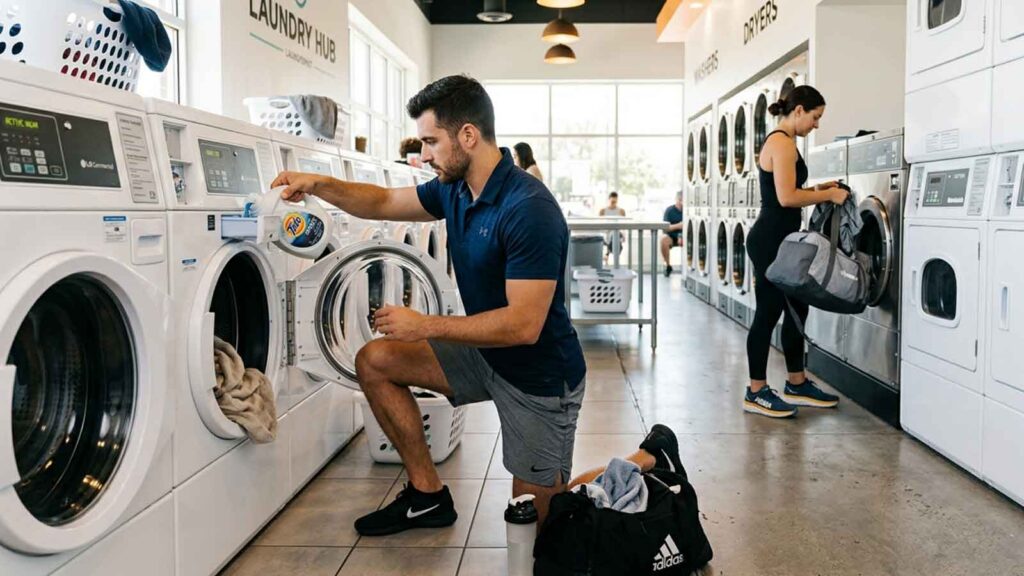
Reducing laundry costs starts with better systems. These solutions help your gym reduce utility use, simplify daily workflow, and make laundry costs easier to predict.
Solution 1: Switch to On-Premise Laundry (OPL) Equipment
On-premise laundry equipment lets your gym process towels, uniforms, and mats in-house instead of depending on outside pickups. This can eliminate recurring service fees, improve turnaround time, and help your team manage daily laundry needs more efficiently.
With an on-premise setup, you decide when to wash, which cycles to use, how much detergent to dispense, and how quickly laundry returns to circulation. Commercial laundry equipment for gyms from quality manufacturers like Huebsch offers energy-efficient systems built for high-volume fitness facilities.
The result is a laundry system that supports your operations instead of draining your budget.
Solution 2: Upgrade to More Efficient Drying Technology
Dryers often create one of the largest energy expenses in your laundry process. Heat pump dryers and high-efficiency drying systems reduce the amount of heat your dryer has to generate from scratch by recycling heat instead of constantly exhausting it.
Pairing an efficient washer with the right dryer can shorten drying time, reduce utility waste, and extend linen life. Your gym gets cleaner laundry with less energy loss.
Solution 3: Build a Preventive Maintenance Program
Poor maintenance turns efficient machines into costly machines. Your washers and dryers need routine attention to stay productive.
Create a monthly maintenance checklist that covers washer seals, dryer airflow, water levels, chemical dispensers, and service logs. Assign ownership to one staff member or manager so small issues do not become emergency repairs.
Solution 4: Optimize Load Sizes and Wash Cycles
Your laundry process should match actual usage. Set a minimum load standard based on machine capacity, follow machine guidelines, and avoid washing small batches unless necessary.
You should also separate laundry by soil level. Lightly used uniforms do not need the same cycle as heavily soiled towels or mats. Better load planning reduces rewash cycles and unnecessary rinse time.
Solution 5: Consider Water-Saving and Ozone Systems
Water reclamation systems reuse rinse water for future wash cycles, helping your gym reduce fresh water demand. Ozone laundry systems can also reduce the need for hot-water washing while still supporting sanitation goals.
These upgrades require planning, but they can deliver lower fresh-water demand across high-volume towel loads. If your facility processes towels every day, water-saving technology may be worth evaluating.
Solution 6: Train Staff on Utility-Saving Practices
Your equipment matters, but your team’s habits matter just as much. Staff should know how to choose the right cycle, clean lint filters, report leaks, and avoid unnecessary rewashing.
Create a training program covering:
- Run only full loads; don’t start half-empty cycles
- Use proper cycle settings matched to soil levels
- Clean lint filters weekly
- Report leaks immediately
- Use flow restrictors on faucets
Facilities that enforce staff training on best practices typically see meaningful reductions in utility waste through improved load discipline and maintenance habits. Track simple numbers like cost per load, number of rewash cycles, and dryer downtime to reinforce the message.
Start Saving on Gym Laundry Today
You do not need to wait for a broken washer, a vendor price increase, or another painful utility bill to reduce your laundry costs. Start by auditing your current setup and identifying the cost trap that affects your gym the most. Simple fixes like staff training and basic maintenance can reduce waste quickly with little to no added cost. Larger upgrades, such as efficient washers, water-saving systems, or on-premise laundry equipment, can deliver long-term savings and more predictable daily operations.
The sooner you act, the sooner your gym stops losing money to preventable laundry waste. If you are ready to evaluate your next step, ACE Commercial Laundry Equipment Inc. serves Southern California fitness facilities with a full lineup of commercial laundry equipment for gyms, including Huebsch systems designed for high-volume operations.
Our team offers flexible financing programs, comprehensive staff training, and 4-hour local service response. Contact ACE Commercial Laundry Equipment Inc. at 14404 Hoover St, Westminster, CA 92683, or call 714-640-6674 to compare equipment options, review your current setup, and identify practical ways to reduce waste based on your volume and budget.
Frequently Asked Questions
How long does it take to see ROI from upgrading to efficient laundry equipment?
You can see small savings within 1 to 3 months from no-cost changes like staff training, full-load policies, lint filter cleaning, and preventive maintenance. Equipment upgrades take longer. Front-load washers may pay back within 18 to 24 months through lower utility use, depending on your facility’s daily volume and regional utility rates. Heat pump dryers may take 2 to 3 years. Switching from outsourced laundry to on-premise laundry can create faster savings because you remove recurring service fees right away.
What’s the lifespan of commercial laundry equipment for gyms?
Commercial laundry equipment for gyms typically lasts 10 to 15 years with proper maintenance. These machines are built for high-volume use, unlike residential models that often wear out much sooner in a gym setting. Routine maintenance, including filter cleaning, airflow checks, seal inspections, and calibration, can extend equipment life and reduce repair costs. If you neglect maintenance, your machines may break down years earlier and cost more in repairs.
Should I lease or buy commercial laundry equipment?
Buying usually delivers better total cost value, while leasing lowers your upfront cost. If your gym has the capital, purchasing equipment gives you ownership, avoids ongoing lease payments, and can produce a stronger payback over time. Leasing may make sense if you need predictable monthly costs or included maintenance. Before you decide, compare your total five-year and ten-year costs, including maintenance, utilities, service fees, and expected equipment life. Many equipment providers, including ACE Commercial Laundry, offer financing programs to make equipment purchases more accessible.
Can I use regular detergent in commercial laundry machines?
No. You should use a commercial detergent made for high-volume laundry equipment. Household detergent can create too much foam, leave residue in towels, reduce absorbency, and force extra rinse cycles that waste water and energy. Commercial detergents work better with large loads, faster cycles, and commercial rinse systems. They also help protect your towels and equipment.
What water temperature is best for sanitizing gym towels?
Water temperature requirements depend on your specific machine, detergent formulation, local sanitation codes, and whether you use an ozone system. Many modern commercial systems can effectively sanitize gym towels at moderate temperatures when paired with appropriate chemical programs. Consult your equipment manufacturer’s guidelines and local health department requirements before adjusting your wash protocol to ensure sanitation standards are met while maximizing energy efficiency.