A hospital’s laundry room works like a tiny factory inside the building. If the factory misses a beat—linen runs late, carts cross in the wrong direction, or lint drifts onto finished sheets—two numbers suffer: infection rates edge upward and the time to free a bed stretches out. The steps below refine every stage of that factory so clean linen reaches patients fast, with as little chance of carrying microbes as possible. Each point explains what the action involves and why the entire facility feels the impact when it is done well.
How Laundry Speed Lifts Safety and Keeps Beds Moving
When linen moves quickly and stays separated from anything dirty, the whole hospital feels the benefit. Hospitals that switched to a clear, one‑way laundry path—dirty carts in one door, clean carts out the other—saw infection rates fall by roughly ten percent. Fewer germs hitchhike back to the wards because clean sheets never pass the spot where soiled ones wait.
Fast, reliable linen delivery also shaves time off each room reset. Environmental Services can strip a bed, grab fresh linen the moment it’s needed, and finish cleaning without pausing for a delayed cart. Case studies report savings of twenty to thirty minutes per room. Multiply that by a busy floor and the hospital gains several extra bed hours every day—enough to admit more patients without adding new rooms.
In short, a smoother laundry workflow doesn’t just tidy up the basement; it lowers infection risk, frees beds faster, and lets staff focus on patient care instead of hunting for clean sheets.
1. Measure the Real Workload
Measuring workload means counting every cart of soiled linen for one full week—recording the hour it leaves each unit, its weight, and the source ward—then graphing those counts hour by hour. The exercise shows the true peak demand instead of an average day. When staff schedules, washer start‑times, and pickup rounds are built for those two rush hours (usually dawn bedding and afternoon surgical packs), linen stops piling up in hallways, wards quit hoarding extras, and the purchasing team can lower backup inventory levels without risk. In short, a hospital that knows its real workload keeps material costs down and patient rooms supplied at the busiest moments.
2. Shape a One‑Way Path From Dirty to Clean
A one‑way path is a physical route that lets soiled carts roll through sorting, washing, drying, folding, and dispatch in a single forward line, never crossing or doubling back toward finished goods. Rearranging tables or staging areas until that forward flow is possible keeps dirty fabric—and the bacteria riding on it—permanently away from linen that is already clean. The payoff is twofold: cross‑contamination risk drops sharply, and staff walk fewer steps because they no longer weave around oncoming traffic. Over a week, those shaved minutes return as extra washer turns or earlier deliveries to the floors.
Tight footprint? These laundry‑room design tips show how to carve a clear, one‑way cart route even in crowded hospital basements.
3. Keep Airflow on Your Side
Positive airflow on the clean side of the plant means air, lint, and moisture drift toward the washer area and not back onto folded items. A facilities team can achieve this by nudging supply vents or adding a small exhaust fan near the soil dock. When a tissue held in the doorway flutters toward the washers, airflow is working for you. Controlled airflow removes one invisible infection route—the lint that can carry bacteria onto “ready‑to‑use” gowns—and keeps the finish area within infection‑control limits without adding daily tasks for the laundry crew.
4. Schedule Predictable Pickups and Deliveries
A fixed two‑hour pickup timetable posted on each ward replaces guesswork with certainty. Nurses know exactly when to expect a cart, so they send soil down on schedule and stop stashing extra sheets “just in case.” The laundry room receives a steady intake instead of surprise surges, which lets operators keep machines at the right fill level and finish cycles sooner. Predictability on the front end translates into on‑time deliveries back to the wards and faster room turnover for Environmental Services.
5. Separate Linen Types at the Earliest Moment
Color‑coded bags or bins on every floor let staff toss isolation gowns, burn‑unit bedding, and surgical drapes into clearly marked containers before the linen reaches a chute. Because these high‑risk items need longer, hotter wash programs, early separation prevents them from slowing regular loads or, worse, slipping through under‑processed. The result is accurate wash formulas, lower rewash rates, and a direct contribution to infection‑control targets.
6. Load Washers to the Correct Capacity
Energy‑efficient commercial laundry equipment sized to your weekday peak keeps utility costs down while meeting infection‑control demands.
Washers deliver their advertised clean‑out when filled to about ninety percent of rated weight. Under‑loading wastes hot water and detergent; over‑loading traps soil in folds and forces rewashes. A small floor scale—or a posted chart that turns “three blue bags” into pounds—guides staff to the right fill every time. Consistent loading trims utility bills and keeps cycle times predictable enough for Environmental Services to plan room cleaning down to the minute.
7. Maintain Equipment on a Routine, Not After Failure
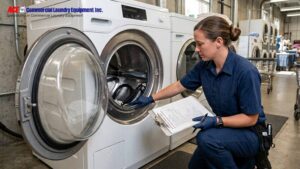
A 15‑minute weekly checklist that looks at door gaskets, drain valves, chemical pump lines, and temperature gauges catches small wear before it grows into a half‑shift breakdown. Keeping every machine available during peak hours safeguards the clean‑linen pipeline, protects infection goals, and avoids the overtime that follows a sudden backlog.
8. Track Two Core Metrics
Infection‑control staff already record hospital‑acquired infection (HAI) rates per 1,000 patient‑days, and Environmental Services times how long it takes to turn a bed. When laundry leaders post those two numbers before and after each process change, everyone sees whether the tweak helped or hurt. A slim scoreboard prevents data overload and unites nursing, EVS, and laundry teams around shared results instead of isolated tasks.
9. Cross‑Train the Crew
Teaching every operator at least two stations—say sorting and loading, or folding and staging—adds built‑in flexibility. A cross‑trained crew can absorb a sudden rush or cover a down washer without calling in overtime, keeping flow stable on high‑census days when patient comfort and infection control are most at stake.
10. Use Simple Technology Where It Pays Off
Starting with one targeted tool—such as RFID chips in surgical towels to pinpoint loss, or software that pings when a cart waits too long—focuses investment on the biggest leak first. Measuring its effect against HAI rates and bed‑turn times proves value quickly and avoids burying the team under gadgets they will not use.
11. Keep Communication Short and Direct
A single hotline or secure chat linking wards to the laundry supervisor turns surprises into manageable adjustments. An early heads‑up about an admissions spike lets the plant shift pickups or start an extra washer before shortages appear. A quick note when a floor returns fully clean linen helps rein in over‑ordering without meetings or memos. Fast, two‑way updates guard the schedule from hoarding and last‑minute scrambles.
Conclusion
Optimizing laundry workflow in a healthcare facility comes down to practical actions that protect clean linen from soil, match resources to real demand, and maintain steady output. The right commercial laundry equipment for hospitals makes this possible: measure true workload, enforce a one‑way path, guide airflow, separate high‑risk items early, load machines correctly, keep equipment healthy, and watch the two numbers that show patient safety and room readiness. When these habits take root, infection risk drops, beds open sooner, and linen budgets stay on track—all without major construction or complex software.
Need help choosing machines or planning service intervals? Call ACE Commercial Laundry Equipment Inc at 877-630-7278 or visit us at 14404 Hoover St, Westminster, CA 92683 to speak with a specialist today.