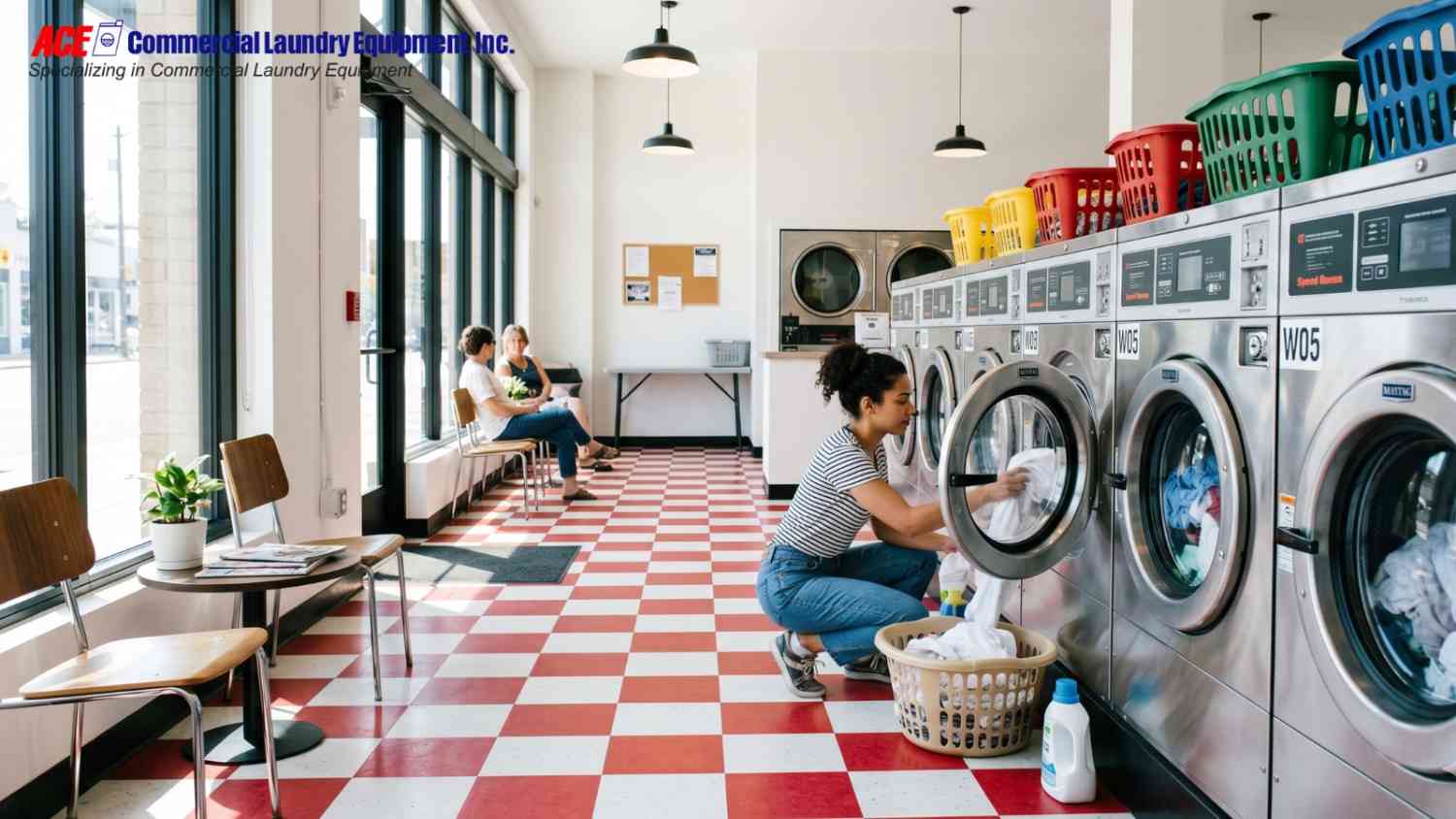
Cheap commercial laundry equipment costs more because you end up paying for it repeatedly through higher utility bills, frequent repairs, and shorter replacement cycles. What looks like savings upfront quickly disappears when machines use more water and energy and break down more often. Instead of a one-time investment, you take on ongoing expenses that reduce your margins.
Paying more upfront for reliable commercial laundry machines gives you efficiency, durability, and predictable costs, so you can focus on running your facility instead of constantly dealing with repairs.
The Real Price of a Low Sticker Tag
Evaluating commercial laundry equipment by purchase price alone means missing the costs that actually impact your bottom line. A low sticker price does not reflect what you will spend across the lifespan of the equipment. Total cost of ownership includes utilities, repairs, maintenance, and replacement frequency. Factor those in, and the financial picture changes significantly.
Purchase Price vs. Lifetime Cost
Premium commercial laundry machines from brands like Huebsch, Speed Queen, and UniMac are built for heavy use and can run reliably for 10 to 15 years or more. Huebsch units, for example, are constructed with steel cabinets, commercial-grade transmissions, and sealed bearings rated for sustained high-volume cycling, components that budget machines consistently skip to hit a lower price point. Lower-cost machines under the same workload often wear out in 3 to 5 years, requiring multiple replacements within the same period and increasing your total spend each time.
The Replace-Sooner Math
To make the lifetime cost concrete, consider a premium commercial laundry machine priced at $8,000 running for 12 years versus a budget unit at $4,000 that needs replacing every four years. The budget machine costs $12,000 over the same 12-year window, before a single utility bill or repair invoice. Add those in, and the gap widens further with every cycle.
Each replacement also carries installation costs, transition downtime, and the time required to source new equipment. These are not one-time losses. They repeat on the same shortened schedule as the machines themselves.
Where the Hidden Costs Show Up
Low-cost commercial laundry equipment generates consistent expenses across four areas:
- Utility bills: You pay more every month due to higher water, gas, and electricity use per cycle.
- Service calls: Repairs add up quickly when labor rates run $70 to $130 per hour, and parts are frequent.
- Downtime: Out-of-service machines interrupt your workflow and push customers away.
- Early replacement: You face another capital expense sooner than expected.
None of these costs appear on the original price comparison sheet, which is precisely why the purchase price alone does not reflect the actual cost of ownership.
ALSO READ: Commercial Laundry Equipment Financing Options Explained Simply
Higher Utility Bills Add Up Fast
Utilities are one of the largest ongoing expenses in any commercial laundry facility, and inefficient equipment drives those costs higher every load. Lower-cost machines often lack the engineering that reduces water, gas, and electricity use. That difference feels small on a single cycle and becomes significant on your monthly statement.
What Efficiency Features Actually Do for Your Bottom Line
The best commercial laundry machines include engineering that lower-tier units skip to reach a lower price point. Each missing feature adds a recurring cost to your utility bill:
- Load-sensing fill systems measure laundry weight and adjust water intake automatically. A partial load gets a partial fill rather than the full volume a budget machine uses, regardless of weight, cutting water consumption on lighter loads by 30 to 50 percent.
- High-extraction spin cycles remove significantly more moisture before the load reaches the dryer, shortening drying time and reducing gas consumption, which is the single largest utility expense in most laundry rooms.
- Sealed bearings and precision drum balancing reduce mechanical drag during the wash cycle, lowering electricity draw per load and extending motor life.
- Programmable cycle profiles let operators set wash time, water temperature, and chemical injection per fabric type. Budget machines run generic cycles that overuse hot water and detergent on loads that do not need either.
Look for the Energy Star Most Efficient designation when comparing options, as it identifies the top-performing models for water and energy consumption in any equipment category.
A facility running 20 or more cycles daily will see these gaps compound to hundreds of dollars per machine each month. Across a multi-machine room, the efficiency difference between premium and budget commercial laundry equipment can offset the price gap within the first few years of operation.
Breakdowns Are Expensive and Predictable
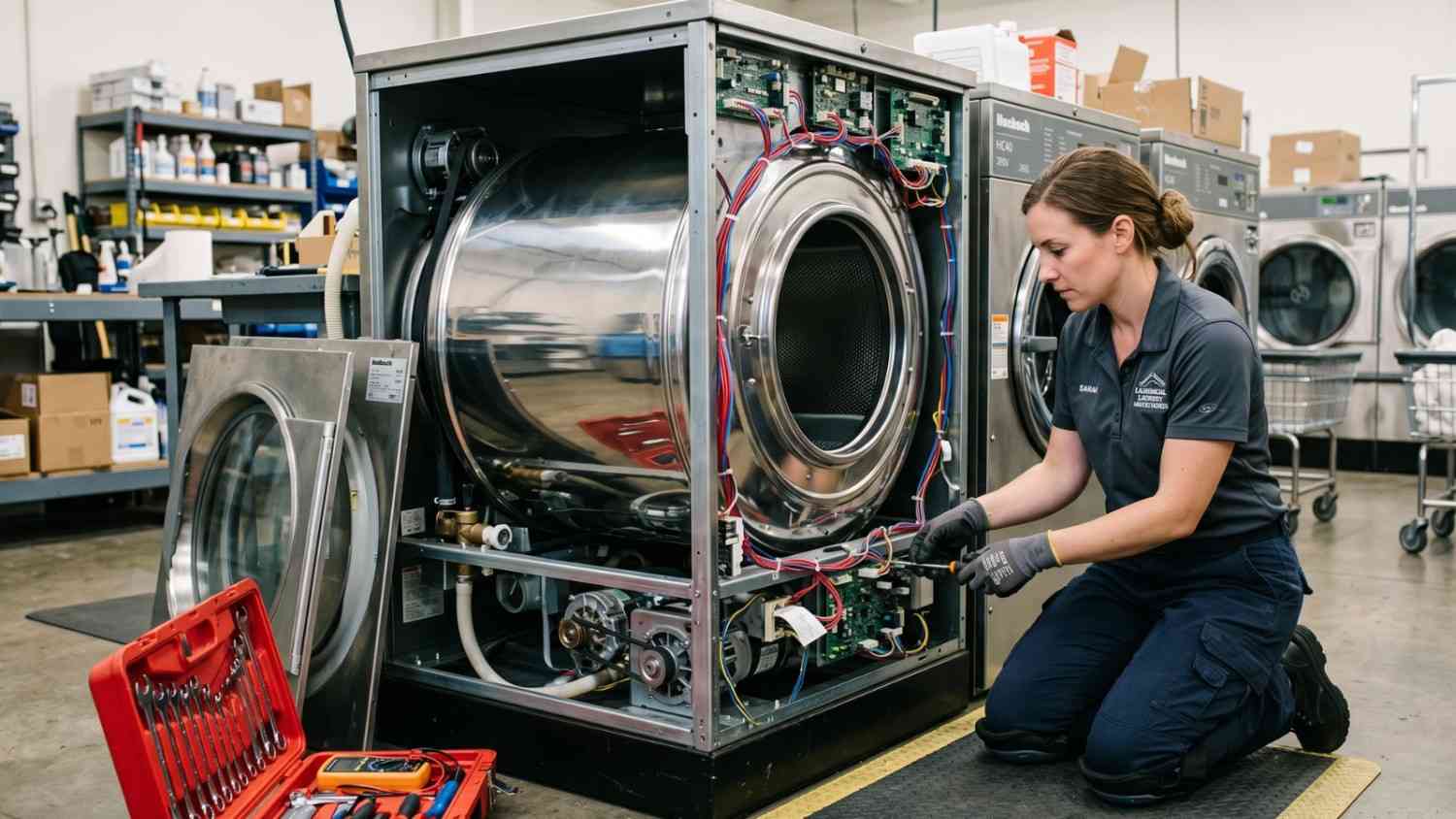
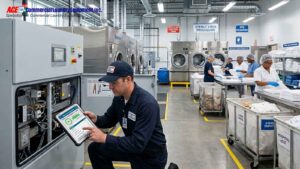
Lower-cost commercial laundry equipment often uses lighter-duty components not rated for high-volume use. Under real operating conditions, these parts wear out faster and fail more often, creating a repair pattern that quickly cancels any upfront savings.
What Downtime Actually Costs You Per Incident
A single emergency service call runs $70 to $130 per hour, with most repairs requiring two to four hours on-site once travel and diagnostic time are factored in. Add parts, and a single mid-range repair on a budget machine often lands between $400 and $900. A premium machine running properly avoids that bill entirely for years at a stretch.
The repair invoice is the visible cost. What happens during the hours or days the machine sits offline costs just as much, and it hits differently depending on your operation:
- For laundromats: A machine offline during peak weekend hours can mean 15 to 25 lost cycles per day at $4 to $7 per cycle. A two-day repair turnaround in a busy location often loses $200 to $350 in direct revenue, on top of the repair bill itself.
- For OPL hotel and hospital laundry: Missed processing windows push overflow loads to backed-up shifts or emergency third-party vendors. Outsourcing a single shift of linen through an emergency service commonly runs three to four times the in-house cost per pound
- For multi-housing properties: A single broken machine in a small laundry room takes a significant portion of resident capacity offline for the entire repair duration, generating complaints faster than nearly any other amenity failure.
The least visible cost is customer trust. Industry surveys consistently show that a self-service customer who walks into a laundromat and finds machines out of order is significantly less likely to return, even after the repair is complete. For a location built on repeat customer revenue, that single visit represents the potential loss of years of income from one household. No repair invoice captures that number, but it is real, and it accumulates.
Throughput Problems Cut Into Revenue
Not every cost appears on a repair invoice. Some show up in how much work your commercial laundry equipment can realistically handle each day. Machines that run slower, process smaller loads, or require extra cycles to handle the same volume create bottlenecks that limit output and reduce revenue directly.
When Your Equipment Cannot Keep Up
When your machines fall behind demand, the impact reaches across your entire operation:
- In laundromats, slower machines complete fewer paid cycles per day, lowering revenue per unit and per square foot.
- In on-premise facilities, staff spend more time waiting between loads, increasing labor cost per cycle completed.
- In high-demand environments like hotels and hospitals, processing delays create scheduling pressure and service quality issues.
- You may need to purchase additional commercial laundry machines just to meet existing demand, canceling any per-unit savings from the original purchase.
The best commercial laundry machines are designed to handle real workloads without creating productivity gaps. When equipment cannot keep up, it reduces both efficiency and revenue, two costs that compound daily without generating a single repair invoice.
RELATED ARTICLE: A Practical Guide to Choosing Commercial Laundry Equipment for Long-Term Growth
How to Evaluate Commercial Laundry Equipment the Right Way
The right question is not what a machine costs today. It is what that machine will cost you over the next decade. Evaluating commercial laundry equipment for sale with that frame makes the difference between a short-term bargain and a long-term investment immediately clear.
Focus on these factors when comparing options:
- Cycle volume capacity: Confirm the machine can handle your actual daily workload without strain or slowdown.
- Extraction rate: Higher extraction reduces drying time and lowers utility costs on every load.
- Energy and water efficiency: Prioritize machines with strong commercial efficiency ratings and the Energy Star Most Efficient designation.
- Service support: Equipment backed by a reliable local dealer network reduces both repair time and downtime when issues arise.
- Projected lifespan: Evaluate performance under your specific volume, not general marketing estimates.
The dealer behind the equipment matters as much as the equipment itself. Discounted commercial laundry machines from sellers with no local service network leave you without support when something breaks. A reputable dealer carries spare parts in inventory, has technicians within driving distance of your facility, and backs the equipment with a warranty that covers more than manufacturing defects.
Low-cost commercial laundry equipment consistently falls short across several of these categories at once. That combination is how a lower sticker price becomes a higher operating cost, cycle by cycle and year by year.
What About Used or Refurbished Equipment?
Some cost-conscious operators consider used or refurbished commercial laundry machines as the lower-cost path. Used equipment can work in the right context, particularly when sourced through a reputable dealer with documented service history. The same total cost of ownership logic applies, though. A used machine with three years of functional life remaining often costs nearly as much per remaining year as a new premium unit spread across its full lifespan, and it carries no warranty coverage on prior wear.
Upgrade Your Commercial Laundry Equipment
ACE Commercial Laundry Equipment Inc. helps Southern California operators run the real numbers before committing to a purchase. The team reviews your current cycle volume, utility bills, service history, and replacement timeline, then builds a side-by-side total cost of ownership comparison for your specific facility. You see the actual cost difference over a 10-year horizon before you spend a dollar.
If the upfront price of premium commercial laundry equipment is the obstacle, financing options spread the investment across the same period the machines will operate, often costing less per month than the repair and utility overruns of a budget alternative.
Contact ACE Commercial Laundry Equipment Inc at 14404 Hoover St, Westminster, CA 92683, or call 877-630-7278 to request a TCO analysis for your facility, or explore equipment financing options to see how a premium installation fits your budget now and serves your operation long into the future.