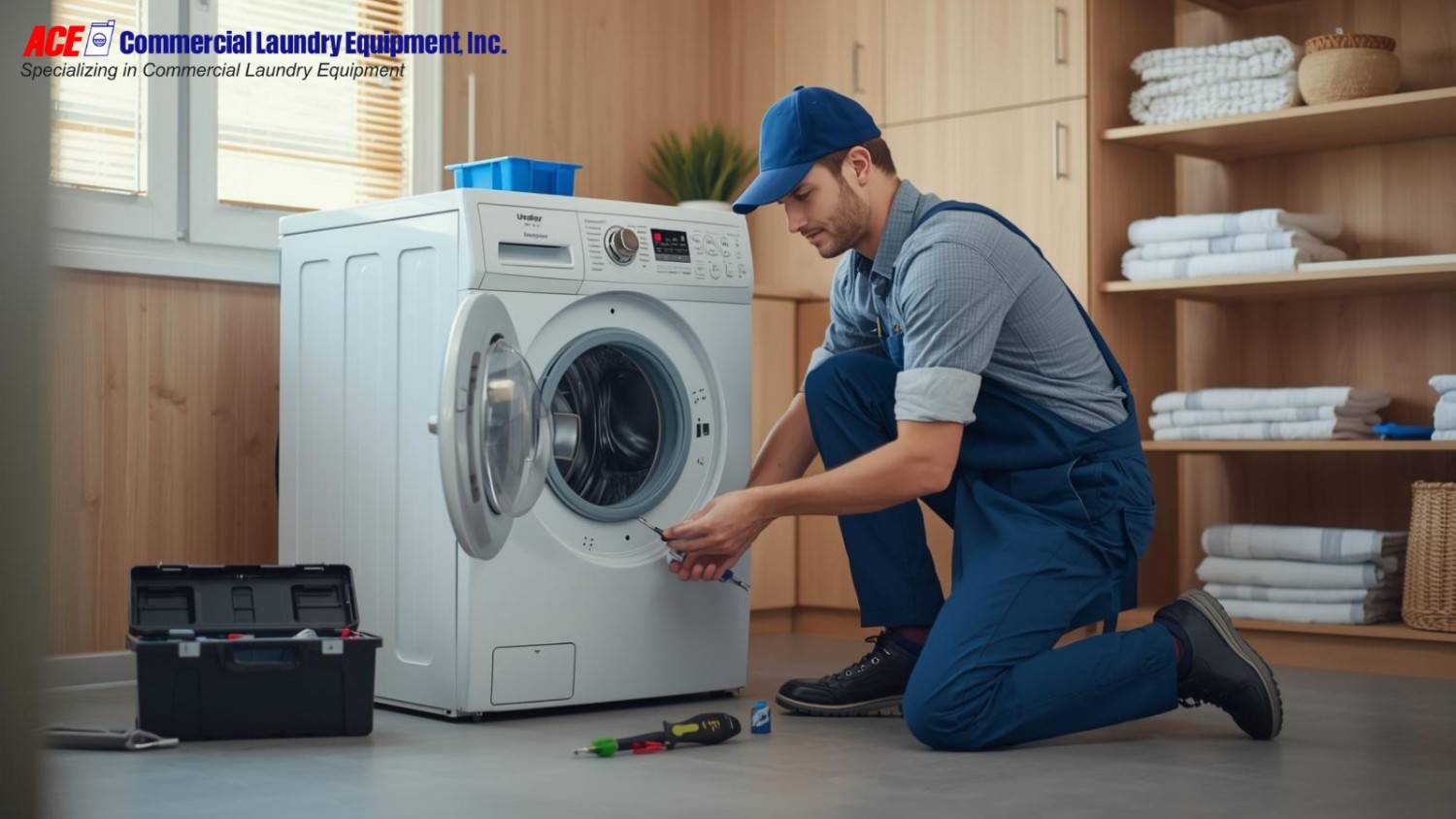
You have a repair quote in front of you, or a machine that keeps breaking down at the worst possible time. You need to decide what actually protects your bottom line. Repair when the issue is isolated and your machine still runs reliably. Replace when breakdowns happen often, and costs stack up.
This blog gives you a clear framework to make that call with confidence for your commercial laundry equipment.
How Long Does Commercial Laundry Equipment Typically Last
Before you run any numbers, you need a clear baseline. Knowing where your equipment sits in its lifespan shapes every repair-or-replace decision you make.
Expected Lifespan by Machine Type
Not every commercial laundry machine ages at the same rate. Commercial washers typically last 10 to 15 years under regular use, and dryers often reach 15 to 20 years with proper care. Front-load washers tend to last longer than top-loaders, often hitting the 15-year mark when you keep up with service. If your operation runs high cycles, like laundromats pushing 10,000 or more loads per year, your machines will wear out closer to the lower end of those ranges.
What Shortens Equipment Life Faster Than You Would Expect
Three factors will cut your equipment life short: hard water buildup inside key components, poor ventilation that forces dryers to overwork, and delayed maintenance that turns small problems into major failures. If you run your machines under these conditions, you can lose two to three years of usable life. Understanding this gives you a more accurate view of how much life your equipment actually has left.
Warning Signs Your Equipment Is Telling You Something
Before you apply any cost threshold, your machine needs to show symptoms first. The list below gives you a quick read on what each signal means:
- Grinding or squealing during a cycle: Points to worn bearings or a degrading belt. Act early, or a $150 fix becomes a $600 motor problem.
- Increasing vibration: Signals imbalanced drum components or weakening motor mounts, redistributing stress to surrounding parts.
- Leaks around door seals or hoses: Rarely stay contained. Water near electrical systems or adjacent machines creates compounding damage fast.
- Declining wash quality: Customers notice before you do. Residue or odors on finished loads signal the machine is losing performance integrity.
- Longer-than-normal cycle times: A washer that cannot reach full spin speed leaves loads wetter, pushes drying times up, and cuts daily throughput.
- Frequent “out of order” signs: More than one breakdown every two to three months means you are managing an unreliable asset, not a maintenance schedule.
If two or more of these symptoms appear together on the same unit, the decision framework in the next sections becomes your most important tool.
READ MORE: Signs It’s Time to Replace Your Commercial Washer or Dryer
The Case for Repairing First
Repair is not a fallback. In the right situation, it protects your cash flow and keeps your operation running without unnecessary capital spend.
Cost and Age Thresholds That Favor Repair
You can rely on two rules to guide your decision:
- Machine Age: If your unit is under 6 years old and breaks down infrequently, repair is almost always worth pursuing. A younger machine still has a significant productive life ahead, and the cost to extend it is typically low.
- The 50% Rule: If a single repair exceeds 50% of the cost of comparable commercial laundry equipment for sale today, you are funding a replacement, not fixing the problem, regardless of how old the machine is.
If your machine is under 6 to 8 years old, breaks down infrequently, and stays well below these cost limits, you should keep it in service.
Minor Fixes Worth Doing
Some repairs deliver a strong return no matter the machine’s age. Hoses and door seals usually cost $50 to $150 and take little time to replace. Door switches and motor capacitors run around $100 to $200 and are commonly available. Belts and pumps typically cost $100 to $400 and offer predictable results. If your equipment is still under warranty, the decision is simple: repair it and avoid unnecessary spending.
When Replacement Becomes the Smarter Investment

You need to recognize when a machine can no longer deliver reliable performance. Once repair costs keep rising and the unit keeps losing efficiency, replacement becomes the smarter financial move.
Age and Repair Cost Thresholds That Signal Replacement
If your commercial laundry machines are over 10 to 12 years old or your dryer is past 12 to 15 years, you should start planning for replacement, even before a major failure hits. Two financial signals make the decision clear:
- Annual repair costs hit 15–20% of replacement value: You are spending significant money on a machine that continues to depreciate without solving the underlying problem.
- Parts become hard or impossible to source: Once critical components go obsolete, you lose the option to repair entirely.
When both show up, replacement is the only move that keeps capacity stable and stops repair spend from snowballing.
Efficiency and Business Growth Considerations
Older machines cost more to run every day. Aging machines work harder to complete the same cycle, drawing more water and energy than modern units require. The best commercial laundry machines available today use sensors to control water levels, shorten cycle times, and reduce utility costs across every load.
If your machines struggle to keep up during peak hours or look worn enough to affect customer perception, replacement becomes a growth decision, not just a maintenance one.
Higher utility costs are only part of the equation. You should weigh your recent repair spending, the replacement cost of a comparable unit, and the savings a newer machine can deliver over time. Leasing or refurbished options can lower the upfront cost, which makes new commercial laundry equipment easier to budget for.
ALSO READ: How to Buy Commercial Laundry Equipment and Compare Your Options
A Practical Decision Framework Before You Call Anyone
You do not need a technician to tell you where your equipment stands. Run through these three questions and match your answers to the thresholds covered earlier in this blog.
H3: The Three Questions to Ask Right Now
- How old is the machine, and where does it sit relative to its expected lifespan?
- Washers under 6 to 8 years with infrequent issues favor repair. Washers past 10 to 12 years or dryers past 12 to 15 years favor replacement planning.
- How does this repair cost compare with what you have already spent this year?
- If the single repair exceeds 50% of a comparable new unit, stop spending. If your total annual repair costs have reached 15 to 20% of replacement value, the machine is draining money faster than it earns.
- Is this machine creating operational problems beyond the repair itself?
- Lost revenue during downtime, staff time spent coordinating service visits, and customers switching to other machines or facilities all add hidden costs that a repair quote will never show.
If your answers point toward replacement on two or more of these questions, the financial case for continued repair weakens significantly. If all three align, replacement is the clear next step.
Ready to Make the Right Call?
Your decision comes down to three factors: your equipment’s age, what you have already spent on repairs, and what it costs you to keep running it. When those numbers turn against your machine, repairs will not fix the bigger problem. You protect your margins when you act before the next breakdown forces your hand.
ACE Commercial Laundry Equipment Inc. helps you evaluate your current equipment, compare real replacement costs, and review financing or leasing options that fit your budget. You get clear answers and a plan that works for your operation. Reach out today, share what you are dealing with, and get a straightforward recommendation on your next move.