Jeans are built to last, but even sturdy denim can lose its fit, color, and shape if it isn’t correctly cared for. Tossing them into a commercial washer or at home washer without a plan may clean them in the moment, but it can also shorten their lifespan.
This guide breaks down clear, easy-to-follow steps so you can keep your denim fresh and comfortable without the guesswork.
Preparing Jeans Before Washing
Proper preparation makes a big difference in how well your jeans hold up. Taking a few minutes before starting a wash helps reduce fading, wear, and accidental damage, while also protecting the fabric’s structure.
- Wash less often: Jeans don’t need to be washed after every single wear. In fact, washing them every 5–10 wears, or only when they look dirty or smell, helps protect their fabric. Too many washes can wear down the dye and stretch the material, causing jeans to lose their original fit. Fewer washes also save time, water, and energy.
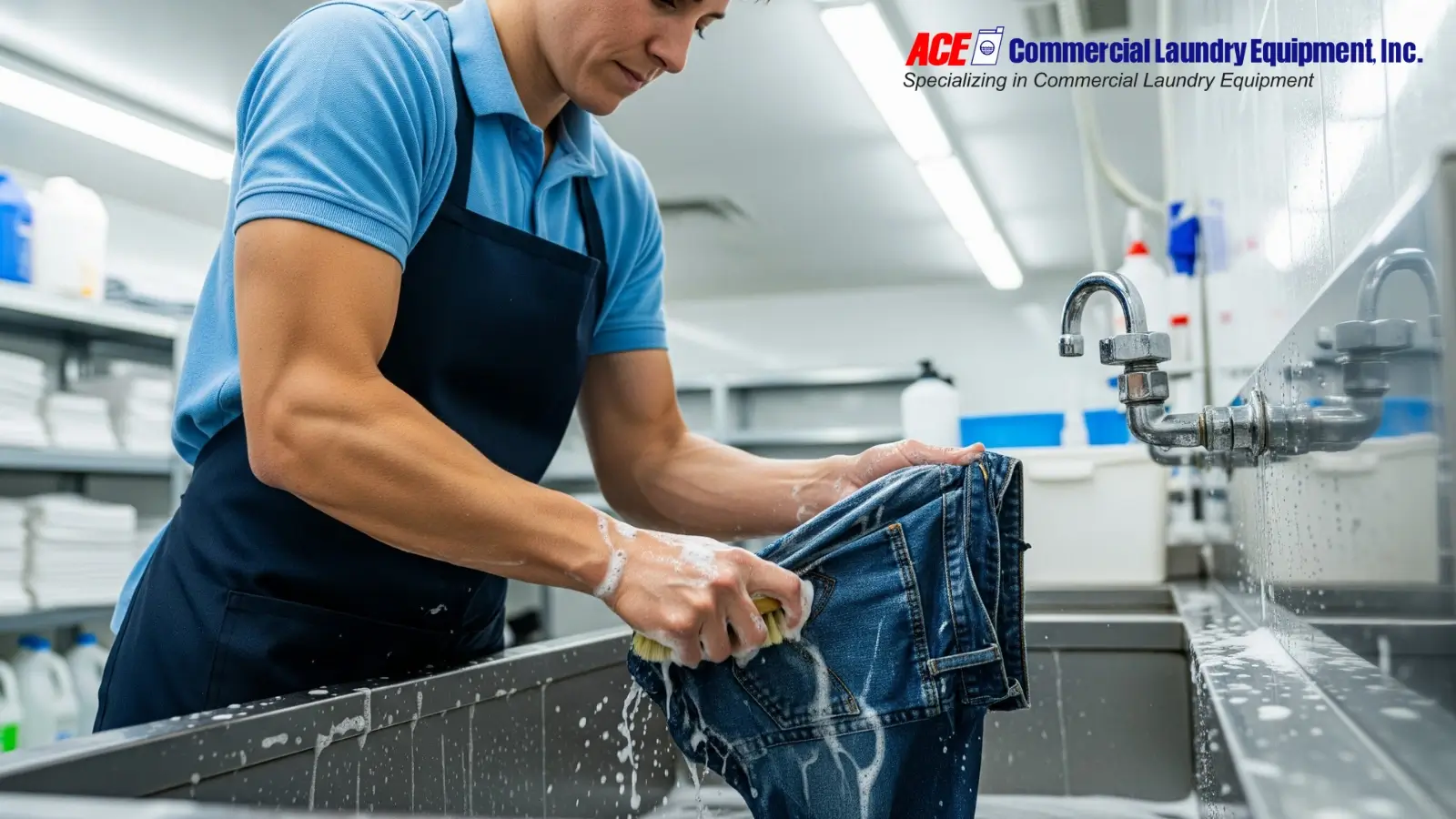
- Spot clean stains: A small stain doesn’t always require a complete cycle. Dabbing the mark with mild soap and water on a cloth or soft brush often removes it effectively. This keeps the rest of the fabric from unnecessary wear. Spot cleaning is especially useful for spills, such as food or coffee, that haven’t soaked into the material.
- Empty and check pockets: Keys, coins, or pens left behind can scratch fabric, leave stains, or even damage the machine. Always double-check every pocket before washing. It’s a quick step that saves you from surprises like ink leaks or holes in the fabric. Over time, this habit keeps both your jeans and your washer in better condition.
- Turn them inside out: Turning jeans inside out protects the outside from rubbing against other fabrics in the wash. This reduces friction, which is one of the main causes of fading and thinning. It also helps zippers, buttons, and rivets avoid scraping against other garments. Inside-out washing extends the life of the denim’s outer surface and keeps colors richer for longer.
How to Wash Jeans the Right Way
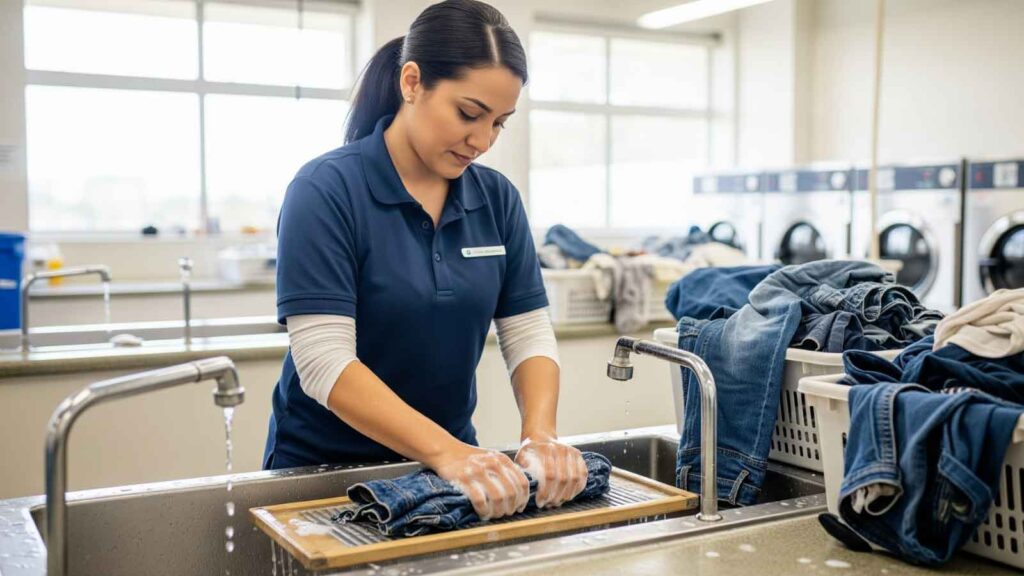
Using the correct wash method is key to keeping denim from shrinking, fading, or losing its shape. A few thoughtful choices during the wash cycle can help preserve both the look and comfort of your jeans for years.
Choose the Right Settings
Washing settings directly affect how your jeans hold up after each cycle. Choosing gentler options reduces the stress on the fabric while still keeping it clean.
- Use cold water: Cold water helps denim hold onto its original dye while also reducing shrinkage. Hot water, on the other hand, breaks down fibers more quickly and can cause jeans to become stiff. Keeping the wash cold is especially important for darker or raw denim styles. This one step alone can significantly extend the life of your jeans.
- Select gentle cycle: A delicate cycle uses slower, less aggressive motions than heavy-duty settings. This minimizes friction, which helps the fibers stay firm and smooth. Gentle cycles also reduce the risk of seams pulling apart or edges fraying. Over time, this makes jeans more comfortable to wear and keeps them looking newer.
- Avoid heavy soil cycles: Many machines have settings for tough fabrics or very dirty items, but these aren’t suitable for jeans. The more vigorous agitation is harsh on denim and wears the fibers down quickly. Unless your jeans are extremely soiled, stick to gentle or regular cycles. This keeps them clean without sacrificing durability.
Pick the Right Products
What you put in the washer matters just as much as the cycle you choose. Using the right cleaning products ensures your jeans stay strong, soft, and flexible.
- Use mild detergent: Harsh detergents often contain bleach or strong chemicals that strip away fabric dyes. A gentle detergent keeps the fibers healthy while still cleaning away dirt and sweat. Choosing mild formulas is also safer for sensitive skin. Stocking up on the right laundry supplies makes it easier to care for jeans consistently, while also helping them hold their natural texture and softness.
- Avoid fabric softener: While softeners might seem helpful, they actually leave a coating on the fabric. This buildup can weaken elasticity, causing jeans to sag over time. The residue also makes denim less breathable and heavier to wear. Skipping the softener ensures your jeans stay supportive and comfortable.
- Add boosters only when needed: If your jeans smell musty, baking soda or a splash of vinegar can refresh them without harsh chemicals. These natural options break down odors gently while protecting the fibers. They also rinse out cleanly, leaving no residue behind. Use them sparingly so your denim doesn’t get over-treated.
Wash Them Correctly
Even with the right products and settings, the way you load your jeans into the machine makes a difference. Proper handling keeps colors true and helps avoid damage.
- Wash separately or with dark colors: New jeans, especially darker shades, often release excess dye during the first few washes. Washing them with light clothes risks staining other fabrics. Pairing them only with similar dark colors prevents accidents and keeps your wardrobe safe. Over time, this habit maintains both your jeans and other garments.
- Don’t overload the washer: Giving jeans enough space in the drum allows water and detergent to move through evenly. When machines are crammed, dirt can stay trapped in the folds of fabric. Overloading also strains the washer itself, potentially shortening its lifespan. Keeping loads lighter leads to better results and also helps protect commercial laundry equipment from unnecessary strain, ensuring it lasts longer.
- Fasten buttons and zippers before washing: Open zippers or metal buttons can snag other fabrics or damage the machine’s interior. Closing them beforehand reduces friction and prevents sharp edges from rubbing against the denim itself. This simple step helps maintain both your jeans and other clothes in the load. It’s a quick precaution that saves on wear and tear.
Drying Jeans Without Damage
How you dry your jeans can determine how long they retain their shape and color. The correct method prevents shrinkage, stiffness, and fading, thereby extending the fabric’s lifespan.
- Air dry whenever possible: Hanging jeans in a well-ventilated area allows moisture to evaporate naturally, which preserves the original fit. Air drying also keeps fibers from becoming brittle, unlike high-heat exposure. For dark-colored jeans, hang them indoors or in the shade to avoid sun fading. This method takes a little longer, but it’s the gentlest way to protect denim.
- Use low heat in the dryer: High heat can cause denim fibers to contract, resulting in shrinking or an uneven fit. Using a low-heat tumble in a commercial dryer gives a safe balance between convenience and fabric care, while offering more space for denim to move freely. With less friction, the fabric comes out cleaner and softer.
- Check progress during drying: Stopping the cycle early prevents jeans from becoming stiff and rough. By opening the dryer halfway, you can feel if they’ve reached a comfortable dampness. This small habit reduces over-drying, which is one of the biggest causes of denim damage. It also saves energy by not running unnecessary extra time.
- Remove while slightly damp: Taking jeans out before they are fully dry makes it easier to smooth out seams and folds by hand. This prevents set-in wrinkles that can be difficult to iron later. The remaining moisture helps them keep their shape as they finish drying in the open air. As a result, jeans feel softer and look neater when worn.
Simple Habits to Keep Jeans Lasting Longer
Beyond washing and drying, everyday care plays a crucial role in maintaining the longevity of denim. With a few smart habits, you can reduce wear and keep jeans looking sharp.
- Rotate pairs often: Wearing the same jeans every day puts too much stress on the same fibers. By alternating between two or three pairs, each pair gets more time to rest and recover. This helps the material bounce back from stretching and bending. Over time, rotation helps prevent them from wearing out too quickly.
- Store them correctly: Hanging jeans by the waistband keeps the fabric smooth and reduces creasing at the knees or thighs. Folding neatly along the seams is another safe option that avoids deep wrinkles. Avoid cramming jeans into an overfilled drawer, as this can distort their shape. Proper storage is a simple way to maintain structure without extra effort.
- Refresh between washes: Airing jeans out on a hanger helps odors fade naturally without the need for water. A steamer can be used to release light wrinkles and kill surface bacteria. Some people even place jeans in the freezer overnight to reduce smells without washing. These tricks give jeans a clean, fresh feel without stressing the fabric.
- Keep them clean with gentle care: Small stains can usually be removed with a damp cloth and mild soap, rather than a complete wash. Quick cleaning like this prevents dirt from becoming deeply embedded in the fibers. Gentle sprays or fabric fresheners can also keep them smelling pleasant. These steps extend the time between washes, which reduces wear and saves water.
Ready to Take Your Denim (and Laundry) to the Next Level
Jeans deserve care, and so does your laundry setup. At Ace Laundry, we make that easier with reliable machines and full-service solutions designed to keep clothes in top condition. Our machine sales include high-capacity washers and dryers built to handle denim and other heavy fabrics without extra strain.
For those who want laundry done on their schedule, our On-Premise Laundry (OPL) options bring commercial efficiency directly to your location. And if you’d rather leave the technical side to the experts, our Full-Service Laundry Room Management ensures every machine is installed, maintained, and serviced for you.
Contact us today to discover how Ace Laundry can help simplify laundry care while keeping your jeans looking their best.
Read Also: Laundry Mistakes You Might Be Making—And How to Fix Them