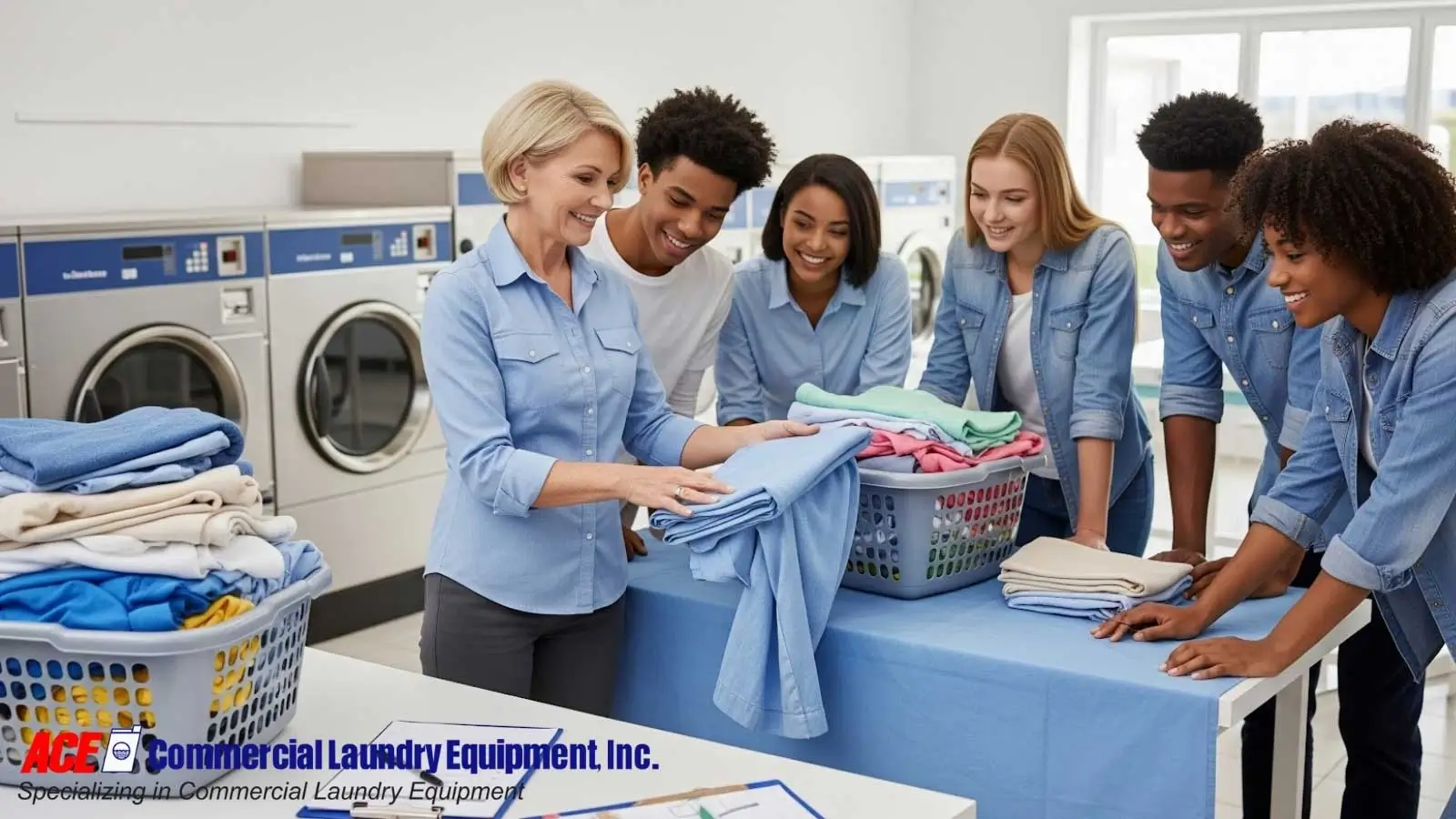
Running a smooth laundry operation depends on more than just good equipment; staff training makes all the difference. Without the right guidance, even small mistakes can lead to wasted time, damaged fabrics, or safety risks.
This guide breaks down practical ways to train staff so your laundry room runs efficiently and consistently. Whether you manage a small team or oversee full laundry room management, these strategies are explained in simple terms so anyone can follow them.
Core Strategies for Training Laundry Room Staff
Staff training becomes easier when it’s broken down into clear, repeatable methods. The following strategies show you exactly how to prepare, guide, and support your team without assuming prior expertise.
Create Clear Standard Operating Procedures (SOPs)
Consistency starts with written instructions that outline daily tasks. When steps are documented, staff can follow the same reliable process every time.
- Write down step-by-step workflows: List out how to sort laundry, choose the right cycle, and fold items after drying. Written guides make expectations clear and reduce misunderstandings between team members. They also give staff a reference point when they forget a detail. Over time, this builds confidence and consistency.
- Ensure consistency across the team: When everyone follows the same steps, the results are uniform. Customers appreciate knowing they will get the same quality no matter who handles their laundry. This also avoids arguments between staff about which way is “correct.” Standardization makes teamwork smoother and service more reliable.
- Speed up onboarding for new hires: New staff can get up to speed quickly with written instructions at their fingertips. Instead of relying only on verbal explanations, they can review the guide at their own pace. This cuts down on training time and reduces repeated questions. It also helps new hires feel less overwhelmed.
Provide Hands-On, Practical Training
Learning is most effective when staff can practice tasks directly. Hands-on training ensures employees understand not just what to do, but how to do it correctly.
- Practice tasks under supervision: Start with simple tasks like loading machines or measuring detergent. Supervisors can correct mistakes immediately before bad habits form. This type of training also builds confidence because staff learn by doing. It’s more effective than just reading or listening.
- Demonstrate safe machine use: Show step-by-step how to load machines evenly, add the right detergent, and select the appropriate cycles. Staff should see how to avoid overloading and misuse that could damage fabrics. Clear demonstrations reduce the risk of accidents and equipment breakdowns. Visual examples stick better than explanations alone.
- Include stain treatment demonstrations: Staff often face stains from food, oil, or ink. Showing exactly how to apply treatments teaches them what works in real situations. They’ll understand the difference between spot-cleaning and full washes. This knowledge helps protect fabrics and keeps customers happy with the results.
Teach Hygiene and Safety Protocols
A clean laundry operation is also a safe one. Teaching hygiene and safety protects both employees and customers.
- Train on handling soiled linens: Teach staff to wear gloves, separate heavily soiled items, and place them in bags. This prevents germs from spreading onto clean fabrics. Simple steps like this reduce the risks of contamination. Customers trust businesses that clearly prioritize cleanliness.
- Emphasize personal hygiene habits: Require handwashing before and after handling each load. Gloves, aprons, or masks should be used when needed to prevent contact with chemicals or dirty laundry. These habits keep employees safe from illness or irritation. They also keep laundry fresher and more sanitary.
- Cover equipment safety basics: Teach how to stop machines in emergencies, recognize faulty sounds, and avoid blocking vents. Staff should know never to overload machines or use damaged cords. Safety training reduces injuries and keeps operations running smoothly. It also protects expensive equipment, such as commercial laundry equipment, from unnecessary damage.
Reinforce Skills with Regular Refreshers
Training should not stop after the first week. Ongoing refreshers help staff keep skills sharp and adapt to new tools or methods.
- Schedule short sessions regularly: A monthly refresher keeps information fresh and prevents old mistakes from returning. Each session can focus on one topic like folding or safety. This avoids overwhelming staff with too much at once. Frequent small updates are easier to absorb than long, rare trainings.
- Use performance evaluations as guides: Reviews highlight where employees excel and where they need support. Managers can then create training targeted to those areas instead of repeating what staff already know. This keeps the training relevant and practical. It also shows staff that their growth is being tracked and valued.
- Provide ongoing feedback in daily work: Small corrections during a shift are more effective than waiting for reviews. Managers can point out improvements in real time so staff remember better. Positive reinforcement also encourages good habits to stick. Over time, feedback builds a stronger, more confident team.
Build a Positive, Motivated Team Environment
Staff are more likely to perform well when they feel valued and supported. A motivated team keeps operations running smoothly even on busy days.
- Encourage open communication: Let staff share concerns, ask questions, or suggest ideas without fear. This creates a culture where problems are solved faster. When employees feel heard, they take more responsibility for their work. Strong communication also prevents misunderstandings and tension.
- Recognize hard work openly: A thank-you, small reward, or public praise can boost morale. Recognition shows staff their effort is noticed and valued. When people feel appreciated, they are more likely to stay motivated. Lower turnover means less time and money spent retraining new staff.
- Offer chances to grow skills: Give employees opportunities to learn new roles, such as machine maintenance or customer service. Growth builds confidence and loyalty to the business. Staff who feel trusted often put more care into their work. Over time, this raises the overall standard of the entire team.
How Strong Training Improves Laundry Operations

Strong training benefits every part of a laundry business, from daily operations to long-term customer loyalty. A well-trained team reduces mistakes, keeps customers happy, and ensures the business runs at its best.
- Fewer errors mean fewer setbacks: Staff who understand proper machine use avoid problems like overloading, fabric damage, or wasted cycles. This prevents delays and protects both clothing and equipment. Fewer mistakes save money on repairs and replacements. They also create a smoother, stress-free workflow.
- Customers see consistent results: When clothes are always returned clean, folded, and in good condition, clients feel confident about the service. Training ensures every team member works to the same standard, no matter the shift. Consistency builds trust and keeps people coming back. Over time, this reputation attracts more loyal customers.
- Efficiency improves overall output: Trained staff spend less time figuring things out and more time completing tasks correctly. This increases the number of loads that can be processed in a day. Better use of resources like detergent and water also lowers costs. The combination of speed and accuracy makes the operation more profitable.
- Safety and hygiene are better maintained: Employees who know protocols handle soiled items carefully and protect themselves with proper gear. This lowers the risk of spreading germs or causing injuries. Safe habits also prevent accidents that could disrupt the business. A clean and safe workplace improves morale as well as customer confidence.
- Stronger teamwork develops naturally: Training teaches staff to rely on the same methods, making it easier to work together. When everyone understands their role, coordination becomes smoother. This reduces confusion and frustration during busy times. Over time, teamwork strengthens efficiency and customer service.
Tools and Resources That Support Staff Training
Even the best training program works better when staff have access to the right tools. Providing resources makes learning easier, daily tasks smoother, and overall operations more dependable.
- Training manuals and quick guides: Easy-to-read materials give staff a reference they can check anytime. Having instructions available prevents confusion and reduces the need to constantly ask managers for help. These resources are especially useful for new employees still building confidence. They also help ensure consistency when supervisors aren’t nearby.
- Visual aids and signage in the laundry room: Clear posters or labels near machines remind staff of important steps, like cleaning lint traps or selecting the correct cycles. Visual reminders reduce mistakes during busy shifts. They also support staff who learn better through images than text. This makes complex tasks easier to follow for everyone.
- Access to modern equipment: Outdated machines can make training harder because staff must work around inefficiencies. Providing reliable, up-to-date machines makes learning simpler and less frustrating. It also ensures that employees are practicing on the same type of equipment they’ll use daily. Modern machines often have built-in safety features that help reinforce training.
- Supplemental supplies and tools: Extra resources like stain removers, gloves, or cleaning kits make it easier for staff to apply training correctly. When the right supplies are always on hand, employees don’t cut corners. This creates a safer, more hygienic environment. Having essentials stocked also keeps the workflow steady during peak hours.
- Support from external partners when needed: By working with providers who supply equipment, parts, or even vending options, resources are always available. A trusted vending commercial washing machine supplier can make it easier to keep detergents or small essentials accessible for both staff and customers. Reliable partnerships give managers peace of mind and free up time to focus on training staff effectively.
Start Improving Your Laundry Room Operations Today
Practical staff training is what keeps laundry businesses reliable and customer-focused. By building a team that knows exactly what to do, managers can reduce stress, improve consistency, and boost customer trust.
A motivated, skilled team ensures every load is handled with care and efficiency, which directly translates to higher satisfaction and loyalty. Training also helps businesses save money by avoiding errors, extending equipment life, and improving productivity.
Ace Laundry provides the equipment, resources, and support needed to keep operations running smoothly. From professional-grade machines to complete laundry room management solutions, they give businesses the foundation for long-term success. With reliable supply options, including essential parts and janitorial supplies, Ace Laundry helps you create an environment where staff training thrives.
Contact us or visit Ace Laundry today to explore how their services can make your laundry room more efficient and dependable.
Read Also: How to Prevent Downtime with Routine Laundry Equipment Checks