Mold and mildew can develop in any laundry machine, but the stakes are higher in commercial settings where equipment runs longer hours and serves more people. Musty odors drive customers away, cause complaints from tenants, and can shorten the lifespan of your machines if the buildup spreads to gaskets or internal parts.
The good news is that simple, consistent habits make a big difference. This guide covers practical steps you can apply to both residential-style units and commercial laundry equipment, helping you keep your machines clean, efficient, and protected from preventable issues.
How Mold Develops and How to Control Moisture
Mold grows easily when your machines stay damp and warm, especially when detergent or fabric softener residue builds up. High-volume operations increase the risk because your equipment runs back-to-back cycles with little time to dry out.
Front-load washers are especially vulnerable. Their horizontal drum design creates pockets where water lingers, particularly around the door area, where folds and seams stay damp. The tight seal that keeps water in during the wash also traps moisture afterward, making it easier for spores to settle. Top-load washers drain more fully but can still collect buildup in dispensers and under agitators.
Controlling Moisture at the Machine Level
The goal is to keep your machines as dry as possible between cycles so mold has fewer conditions to take hold. Here are simple practices to help control moisture:
- Leave washer doors open between cycles to allow trapped moisture to evaporate.
- Promptly remove wet loads from the machines. Damp clothes left inside for even 30 minutes create humidity that spreads throughout the drum.
- Run high-spin cycles to remove excess water before clothes enter the dryer. Less moisture means less humidity remaining in the washer drum.
- Run dryers empty on high heat for 15 minutes to ensure any moisture from previous loads is completely removed.
Tip: When running hot-water cleaning cycles, use the hottest available setting (at least 140°F) to break down early organic buildup more effectively.
These habits help your machines stay drier between cycles and make it harder for mold to get established.
The Impact of Mold and When to Call a Professional
Ignoring mold can lead to bigger problems, both for your equipment and your business.
Signs your equipment needs professional service:
- Persistent odor despite cleaning: If a musty smell lingers even after you’ve followed cleaning routines, mold may have spread to hard-to-reach areas like deep inside the drum or gaskets.
- Visible mold in tight spaces: Mold often settles in areas that stay damp and don’t get enough airflow. When buildup appears in these hidden spots, routine cleaning may not reach it, and a deeper professional treatment is usually needed.
- Multiple machines having problems at once: If several machines are breaking down or experiencing similar issues, it could signal an underlying problem that needs professional attention.
- Hard water stains that don’t come off with normal descaling: If standard descaling methods aren’t working, it’s time to call in an expert to deal with stubborn mineral buildup.
Business Impact:
- Premature seal wear: Persistent moisture and residue cause the rubber components around the door to deteriorate faster, leading to repairs or replacements sooner than expected.
- Drum corrosion requiring professional repair: Mold can cause drum corrosion, compromising machine performance and leading to expensive repairs.
- Increased service calls and downtime: Mold problems often require frequent service calls, which result in operational downtime and lost revenue.
- Shortened machine lifespan: Mold accelerates wear on various components, meaning you’ll need to replace your machines sooner than expected, adding to long-term costs.
- Health concerns and liability risks: Mold spores can contaminate clothing or linens, leading to potential health issues and liability concerns.
Addressing problems early keeps your equipment in better shape and reduces unexpected downtime.
How Often Should Professionals Service Your Equipment?
In addition to calling for help when problems appear, schedule routine professional maintenance at least once a year for moderate-use facilities. For high-volume laundromats, on-premise laundry rooms, or locations with hard water, plan for bi-annual service.
Routine service helps with:
- Deep internal cleaning: Removes buildup in areas you can’t reach during daily cleaning, keeping your machines running smoothly.
- Seal and component checks: Identify early wear so parts can be replaced before they fail and cause downtime.
- Calibration and performance tuning: Keeps wash and dry cycles operating at the correct settings, improving consistency and efficiency.
- Mineral buildup prevention: Reduces strain on internal parts, especially in hard-water regions, helping your equipment last longer.
Staying proactive extends equipment life and reduces long-term costs.
Detergent and Chemical Input Management
What you put into your machines directly affects the potential for mold growth. Using more detergent or softener than your machines need doesn’t improve cleaning; it simply leaves behind film inside the washer. Over time, this buildup creates the conditions where mold can take hold, so managing these inputs is an important part of preventing internal deposits.
Correct HE Detergent Usage
High-efficiency (HE) detergents are designed for HE washers, producing fewer suds and rinsing more completely than traditional formulas. When you add more than the recommended amount, excess suds don’t rinse out and can leave behind a layer that contributes to buildup on interior surfaces.
Overdosing detergent is common in commercial laundry settings where tenants or customers control dispensing. More detergent doesn’t mean cleaner clothes. Excess product simply accumulates on your machine surfaces. Consider automatic injection systems that dispense precise amounts regardless of user behavior, eliminating this variable entirely.
Eliminating Fabric Softener Residue
Liquid fabric softeners leave behind a waxy buildup that attracts and holds mildew. For commercial operations, the convenience of fabric softeners rarely justifies the maintenance burden. Wool dryer balls or dryer sheets provide softening benefits without coating your equipment.
Some on-premise laundry facilities even remove softener dispensers entirely. This simple change simplifies maintenance while eliminating one of the main sources of mold-friendly residue.
Daily and Routine Cleaning Tasks
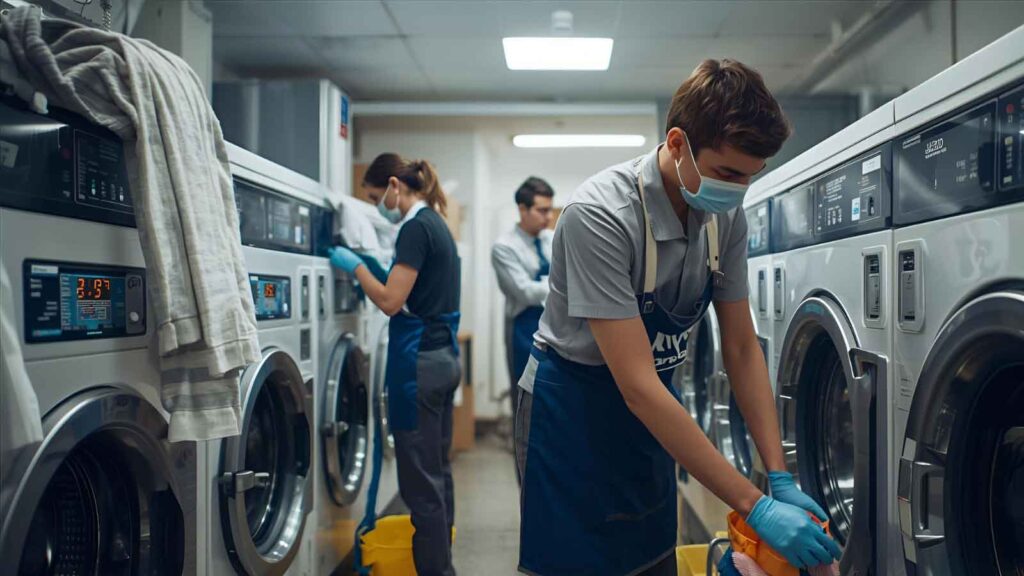
Consistent cleaning is essential to prevent mold buildup. These tasks should be incorporated into daily, weekly, and monthly routines to maintain your commercial laundry equipment.
Daily Surface Cleaning
Gaskets, seals, and dispensers need quick wipe-downs after heavy use periods. A diluted vinegar solution or a mild commercial cleaner helps remove early signs of mold before it becomes a problem.
Focus on:
- Inner folds of front-loader doors
- Detergent dispensers
- Drum surfaces near the door opening
Each wipe-down takes just two to three minutes per machine. This small time investment prevents much larger cleaning projects later on.
Weekly and Monthly Thermal Cycles
- Weekly: Run an empty hot-water cycle to flush out early organic buildup. High heat disrupts mold activity and helps keep the interior of each machine cleaner. Rotate through your equipment so every unit receives routine treatment.
- Monthly: Add two cups of white vinegar to your drum and run a complete hot cycle. This descaling treatment dissolves mineral deposits and detergent scum that create rough surfaces where mold can anchor. In hard water areas, like Southern California, monthly descaling is particularly important for your equipment’s longevity.
- For stubborn buildup, use commercial descaling products designed for laundry equipment for stronger results.
Operational Standards for Staff and Customers
To prevent mold across your entire facility, you need clear protocols. If you manage an attended laundromat or an unattended multi-housing laundry room, standardized practices ensure nothing gets overlooked.
For attended facilities:
- Create daily checklists for wiping down high-moisture zones and clearing lint traps
- Assign specific machines to specific staff members for accountability
- Plan recurring maintenance tasks on a shared schedule
- Train all staff on the proper detergent usage
For unattended facilities:
- Post clear signage asking customers to leave doors ajar after use
- Install lint trap indicators to show when cleaning is needed
- Schedule regular staff visits to perform maintenance tasks
- Consider machines with cycle-complete notifications to encourage prompt retrieval
These operational standards transform individual prevention tactics into systematic facility-wide protection.
Related Article: How to Train Staff for Effective Laundry Room Operations
Lint Management and Fire Safety
Excess lint blocks airflow through your dryer system, causing heat to build up and allowing moisture to linger in the room. When ventilation slows, your equipment works harder, and conditions become more favorable for mold.
Daily Lint Trap Cleaning
Make it a habit to clear your lint traps after every load. In commercial laundry operations, this job falls to your staff or requires clear direction for customers. Consistent cleaning keeps heat from accumulating inside the dryer and helps maintain steady airflow that limits mold-friendly conditions.
Annual Vent Inspections
In addition to daily lint trap cleaning, schedule annual professional vent inspections. These inspections identify buildup, damage, or venting issues before they interfere with performance or allow moisture to circulate back into the room. Clear vents help your dryers operate safely and efficiently while supporting a cleaner, healthier environment.
Also Read: The Importance of Regular Cleaning for Commercial Laundry Machines
Room-Level Environmental Controls
The environment in your laundry room plays a key role in preventing or encouraging mold growth. These upgrades help protect all your equipment while creating a more pleasant experience for your customers.
Humidity Management
Aim to keep the room’s air dry, ideally below 50 percent humidity. A small digital hygrometer can help your staff track conditions at a glance so you can adjust airflow or equipment use when needed.
Depending on the size of your facility, here are some ways to reduce humidity:
- Use portable dehumidifiers for smaller spaces: These units remove excess moisture, preventing humidity buildup and mold growth.
- Install commercial dehumidification systems for larger facilities: These systems efficiently control humidity over a larger area, ensuring a dry environment for your equipment.
- Keep exhaust fans running during and after peak hours: Exhaust fans expel moist air, reducing humidity and improving air circulation.
- Use air conditioning systems that remove moisture while cooling the air: Air conditioners not only cool the space but also help reduce humidity, maintaining a comfortable and dry environment.
Air Circulation
Ceiling fans improve air movement and help surfaces dry faster. Open windows when the weather allows. For enclosed commercial laundry rooms, HVAC systems should provide adequate air exchange to avoid stagnant conditions. Moving air makes it harder for mold to settle and grow.
Take Action to Protect Your Equipment
Mold prevention is simple when you follow a few key steps. By controlling moisture, managing detergent inputs, and establishing regular cleaning routines, you can keep your equipment in top shape for years.
ACE Laundry supports commercial laundry operators throughout Southern California with equipment, maintenance, and professional guidance. Explore our selection of commercial laundry equipment for sale designed for high-volume operations! Our team helps you select commercial laundry machines matched to your specific application and keeps them running efficiently for years.
Ready to upgrade your facility? Contact ACE Laundry today to discuss your needs with our specialists.