Choosing commercial laundry equipment is one of the biggest decisions you’ll make. The machines you buy now will drive your day-to-day output, energy and water costs, maintenance workload, and ability to grow for years. Many buyers fixate on the upfront price and miss the real drivers of long-term value.
This blog gives you a clear process for selecting the right machines based on operational fit, feature payback, scalability, and total cost of ownership. You’ll learn how to define your requirements, separate must-haves from nice-to-haves, and choose equipment that supports expansion instead of holding you back.
Starting with Your Operational Reality
Before you compare commercial laundry equipment for sale, define what your operation actually needs. When you choose machines without clear volume targets, space measurements, and workflow requirements, you end up with equipment that slows production, drives up costs, or limits growth. This section sets the baseline for every decision that follows.
Calculating Current and Projected Volume
Your daily laundry volume dictates the capacity and number of machines you need. Measure your current output in pounds or kilograms per day, then forecast demand for the next three to five years.
Key volume considerations include:
- Current daily pounds processed across all load types: Sets your baseline so you can size equipment to what you handle today.
- Seasonal fluctuations and peak demand periods: Prevents backups during rush periods and protects service levels.
- Anticipated business growth or facility expansion: Helps you plan capacity so peak demand stays manageable as volume increases.
- Mix of fabric types requiring different cycle settings: Prevents cycle mismatches that slow throughput and reduce quality.
High-volume operations (hotels, healthcare) often need 20–100 lb capacities per load. Shared facilities (apartment complexes) often perform better with multiple smaller machines that handle mixed load sizes efficiently.
If you undersize, you create bottlenecks that frustrate customers and cap revenue. If you oversize, you tie up cash and waste utilities. Match capacity to real demand, with enough headroom to cover peak loads.
Mapping Space, Utilities, and Workflow
Space limits shape your options just as much as volume. Measure your floor space and plan clearance around each machine for loading, unloading, and service access.
Utility infrastructure requires specific attention:
- Water supply capacity and pressure ratings: Keep fill times consistent and prevent slow cycles when machines run together.
- Gas line availability and BTU delivery for dryers: Supports proper drying performance and avoids long dry times and service issues.
- Electrical panel capacity for high-efficiency motors: Prevents power limitations that force expensive upgrades after purchase.
- Ventilation and exhaust system requirements: Protects drying speed, safety, and equipment life.
- Drainage capacity for multiple simultaneous cycles: Prevents backups and downtime when several machines drain at once.
Workflow drives daily productivity. Place washers and dryers to reduce steps between stations. Use stackable units when floor space is tight, and ceiling height allows. In multi-housing laundry facilities, design layouts that handle steady foot traffic without sacrificing machine count.
ALSO READ: Choosing the Right Washer & Dryer Capacity for Your Business
Matching Equipment to Your Operation Type
Different operations face different demands. The right equipment for a self-service laundromat looks different from what works best in a hospital or hotel. This section breaks down key selection factors by facility type so you can match machines to your specific environment.
Laundromats
Laundromats run on customer turnover and machine availability. Your equipment must handle unpredictable loads, varied fabric types, and continuous daily use with minimal staff oversight.
Priority features for laundromats:
- Mix of capacity sizes: Offer small, medium, and large-capacity washers so customers can match machine size to their load. This maximizes revenue per square foot and reduces wait times.
- Durable, abuse-resistant construction: Customers load machines differently than trained staff. Choose equipment built to handle overloading, foreign objects, and heavy daily cycles.
- Simple, intuitive controls: Minimize user errors and reduce service calls. Touchscreen interfaces with clear cycle options work well in self-service settings.
- Card and mobile payment integration: Remove payment friction and attract customers who don’t carry cash. Digital payment also simplifies revenue tracking and reduces coin handling.
Multi-Housing Facilities
Apartment complexes, condominiums, and student housing need equipment that serves many residents with different schedules and laundry habits. Reliability and low maintenance drive long-term success.
Priority features for multi-housing:
- Compact footprint with stacking options: Maximize machine count in limited laundry room space. Stacked washer-dryer units fit more capacity into smaller footprints.
- Quiet operation: Reduce noise complaints, especially in facilities where laundry rooms sit near living units.
- Vandal-resistant design: Protect coin boxes, control panels, and access points from tampering and damage.
- Remote monitoring and alerts: Get notified when machines need service so you can address problems before residents complain.
Hotels and Hospitality
Hotels process high volumes of linens, towels, and uniforms on tight turnaround schedules. Equipment must deliver speed, consistency, and fabric care to protect guest experience and brand standards.
Priority features for hospitality:
- High-capacity machines (40–100 lbs): Process large batches of sheets, towels, and table linens efficiently. Fewer loads per day means faster turnaround and lower labor costs.
- Programmable cycles for specific fabric types: Standardize wash quality across shifts and staff. Pre-set cycles for linens, towels, and uniforms protect fabric life and maintain brand standards.
- High-G extraction: Remove more water during the wash cycle to cut dry times. Faster drying means faster turnaround and lower energy costs.
- Chemical injection systems: Automate detergent and softener dosing for consistent results and reduced waste.
Healthcare and On-Premise Laundry (OPL)
Hospitals, nursing homes, and medical facilities face strict hygiene requirements and handle contaminated textiles daily. Equipment must meet infection control standards while processing high volumes reliably.
Priority features for healthcare/OPL:
- Thermal disinfection cycles: Reach and maintain temperatures required to kill pathogens. Look for machines with programmable temperature controls and cycle verification.
- Barrier washer options: Separate clean and soiled sides of the laundry operation to prevent cross-contamination in high-risk environments.
- Heavy-duty construction for continuous use: Healthcare facilities often run equipment 12–16 hours per day. Choose machines rated for that duty cycle.
- Compliance documentation: Select equipment that supports record-keeping for infection control audits and regulatory requirements.
Common Buying Mistakes to Avoid
Buyers with good intentions still make expensive mistakes when they choose commercial laundry equipment. Most errors come from incomplete planning or decisions based on short-term cost. Know these risks before you buy so you protect uptime, cash flow, and customer experience.
Undersizing for Current Demand
Many buyers size equipment around average daily volume and ignore peak periods. A site that processes 200 pounds on a typical weekday may need to handle 400 pounds on weekends or during seasonal surges. When you size for averages, you create backlogs during high-demand periods, exactly when you should run at full capacity.
Size for your busiest days, not your quiet ones. Build enough capacity to handle most peak demand comfortably, then account for the volume increase you expect over the next three to five years.
Overlooking Utility Infrastructure
Buyers often choose machines based on features and price, then learn that their site cannot support the equipment. Low water pressure hurts wash performance. Undersized electrical panels trip breakers when multiple machines run. Limited gas supply reduces dryer BTU delivery and stretches dry times.
When you discover these gaps after purchase, you pay for upgrades under pressure, lose time, and delay operations. Verify water, gas, electric, venting, and drainage capacity before you commit, then include any required upgrades in your budget.
Choosing Residential “Commercial-Style” Equipment
Some brands sell upgraded residential machines as “commercial-style” options at lower prices. They may look similar to commercial units, but they do not carry the same internal construction for continuous use. Bearings, seals, suspension systems, and control boards often fail under heavy daily cycles.
A residential unit built for light weekly use will not survive 20 to 40 loads per day. The low purchase price disappears when you replace the machine in a fraction of the expected lifespan. Confirm you’re buying true commercial-rated equipment with warranties and duty-cycle ratings that match your workload.
Skipping Service Access Clearance
Installations that chase maximum machine count often sacrifice service clearance. When you push a machine tight against a wall or wedge it between units, technicians lose access to panels, hoses, and components. Simple repairs take longer, cost more, and may require moving equipment.
Follow the manufacturer’s minimum clearance requirements. Plan space around each unit for maintenance access so service stays fast and predictable over the equipment’s life.
Ignoring Parts Lead Times
Many buyers assume parts arrive fast when something fails. In practice, lead times vary by brand and dealer network. Some dealers stock common parts locally and deliver in 24 to 48 hours. Others source parts through distributors or overseas channels, turning a basic repair into weeks of waiting.
A machine sitting idle for weeks turns into lost revenue and customer frustration. Before you buy, ask about parts availability for your exact models and get typical delivery windows for wear items like belts, bearings, pumps, and control boards. That answer tells you how strong the support network really is.
Features That Pay for Themselves
Not every feature delivers real value. Strong buyers invest in features that cut operating costs, reduce downtime, or increase throughput. The features below produce consistent, measurable returns across most commercial settings.
Capacity and Construction Quality
Match drum capacity to your typical load weights. A commercial laundry machine built for hotel linens needs different specs than one built for mixed personal laundry.
Choose stainless steel drums for commercial use. They resist corrosion, stay balanced at high spin speeds, and hold up under heavy, continuous loads. With proper maintenance, well-built machines often run 10–15 years; lower-grade builds often fail in 5–7.
Front-load washers lead in commercial settings for clear reasons: they use less water, extract more water during the spin cycle, and handle larger loads relative to footprint. They clean thoroughly with less fabric wear.
When you review laundromat equipment options, buy true commercial-grade machines, not “commercial-style” residential upgrades. Commercial units use heavier-duty bearings, seals, and internal components designed for nonstop cycles.
Energy Efficiency and Water Conservation
Utility costs compound every month. Efficient machines reduce water, gas, and electricity use for the life of the equipment.
- Energy Star-rated equipment: Cuts utility use through verified efficiency standards, turning into predictable monthly savings.
- High-efficiency washer design (HE): Reduces water and energy use per cycle, lowering cost per pound processed.
- High-G extraction (200 G or higher): Pulls more water out during the final spin, so dryers run shorter cycles, saving energy and increasing throughput.
- Dryer moisture sensors / auto-dry: Stops the cycle at the right dryness level to prevent wasted heat, reduce wear on fabrics, and lower energy use.
Controls That Simplify Operations
Controls affect labor, consistency, and service calls. The right control package reduces mistakes and keeps production moving.
- Programmable cycles: Standardizes results across staff and shifts, and lets you tune cycles to fabric type and soil level for better quality and faster processing.
- Intuitive user interface: Reduces operator and customer errors, cuts training time, and lowers preventable service calls.
- Cycle tracking and usage data: Keeps cycle choices consistent across staff and prevents off-standard settings that hurt quality or throughput.
- Built-in diagnostics: Speeds troubleshooting, reduces downtime, and helps technicians fix issues faster.
RELATED ARTICLE: The Benefits of Smart Technology in Commercial Laundry
Calculating True Cost and Long-Term Value
Purchase price only shows what you pay on day one. Total cost of ownership shows what you will pay over the life of the machine, and which option actually delivers value. This approach keeps you from buying low-cost equipment that creates higher long-term expenses.
Beyond the Sticker Price
Total cost of ownership includes every expense associated with equipment across its useful life. Calculate these components for an accurate comparison between options.
- Installation costs: The one-time cost to set up the machines and make your site ready (labor, venting, gas hookups, electrical work, water lines, drains, permits). Gas dryers need proper venting and gas connections; larger washers may need upgraded supply and drainage.
- Utility consumption: The ongoing cost to run the equipment (water, gas, electricity). Use each model’s published usage data to estimate annual utility spend, then project it across the machine’s expected lifespan to see the real cost difference between “efficient” and “standard.”
- Maintenance expenses: The ongoing cost to keep machines operating (preventive service, repairs, parts replacements, downtime risk). Higher-quality commercial builds typically need fewer repairs and less frequent parts replacement, which reduces both service spend and lost revenue.
- Financing costs: The cost of paying over time (interest, fees, total financed amount) and its impact on cash flow. Compare the total cost of financing versus paying upfront so you can choose the option with the lowest total cost for your business.
Measuring ROI Through Productivity Gains
Returns come from more than lower utility bills. Faster cycle times increase throughput without buying extra machines. Reliable equipment protects revenue by running consistently under daily demand. Customer-friendly features help you win and keep users when competitors offer similar pricing.
Use a simple ROI method to compare upgrades:
- Estimate added capacity from shorter wash + dry cycles (turns per day).
- Estimate revenue lift from higher machine availability and faster turns.
- Estimate cost changes from reduced service events and parts replacement.
- Combine those gains, then compare them to the price difference between options.
Common ROI drivers from equipment upgrades include:
- Higher throughput from shorter cycle times and stronger extraction
- Lower labor costs through automation and simpler operations
- Longer service life that pushes out replacement dates
High-efficiency equipment can reduce future compliance risk. Many jurisdictions keep tightening water and energy standards. When you buy equipment that meets current high-efficiency benchmarks, you reduce the chance of premature replacement or forced retrofits later.
Technology and Scalability for Long-Term Growth
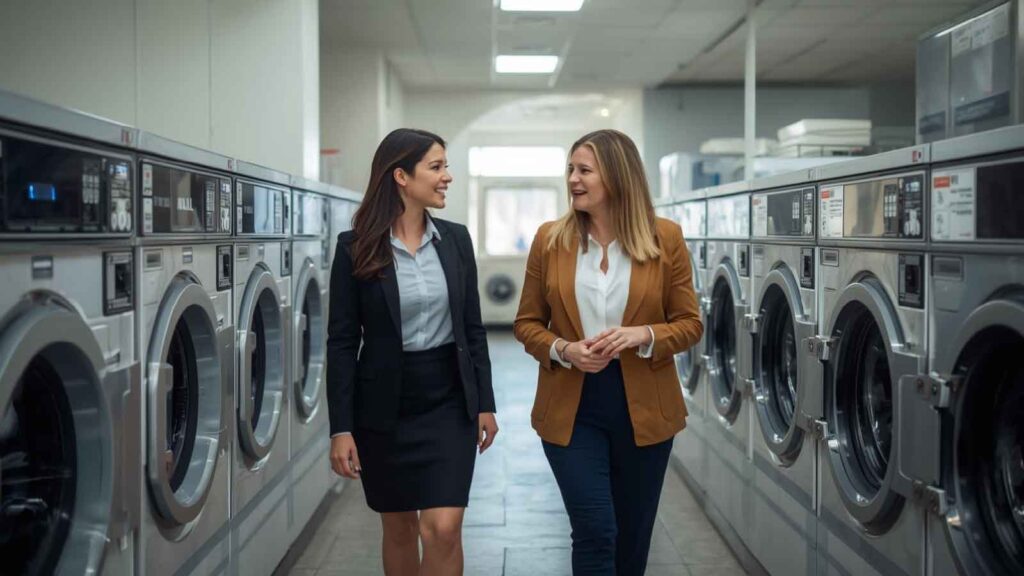
Technology choices and growth planning work together. The equipment you select today must handle expanding demand, integrate with modern payment and monitoring systems, and stay supported by manufacturers and dealers for years. This section covers scalability, connectivity, and support in one framework.
Scalability and Technology Compatibility
Choose equipment built for expansion. Modular setups let you add capacity in stages. Network-ready machines can take software updates that add features without swapping hardware.
Key compatibility requirements:
- Use payment systems that support multiple providers and avoid proprietary lock-in
- Support standard communication methods so that monitoring tools work across brands and sites
- Offer upgrade paths for controls and user interfaces
- Leave capacity headroom so you can absorb volume increases without creating bottlenecks
Plan for growth, not just today’s workload. If you buy equipment that only fits current volume, you risk hitting a ceiling and replacing machines early. In many cases, buying slightly more capacity up front costs less than replacing undersized equipment later.
Payment, Connectivity, and Analytics
Cash-only setups reduce convenience and make revenue tracking harder. Modern digital payment solutions let customers pay with cards, mobile wallets, and loyalty programs, often alongside coin options.
Card and app-based payment integration offers multiple benefits:
- Increase usage by removing payment friction
- Track revenue automatically and reduce manual coin handling
- Support variable pricing for peak and off-peak hours
- Flag payment system issues through remote monitoring
- Produce clean transaction records for accounting and reporting
Connected equipment and monitoring tools help you manage performance across the week. Usage analytics show which machines run most, which cycles customers use, and when demand peaks during the day and week. Use this data to adjust layout, staffing, hours, pricing, and future capacity additions.
Predictive maintenance tools use performance data to spot early signs of failure. Planned repairs cost less than emergency fixes and protect revenue during high-demand periods.
Finding Reliable Manufacturer and Dealer Support
Support determines uptime. Established manufacturers tend to produce more refined equipment, and strong dealers keep it running.
Evaluate support before you buy:
- Local dealer coverage for installation and service
- Parts availability and typical delivery times
- Warranty terms and how claims work
- Technical support access and response speed
A strong local dealer reduces downtime. When a machine goes down, every hour matters. Dealers with trained techs and parts on hand fix problems faster than dealers who order parts from far away.
Read warranty terms closely. Coverage length, included components, and exclusions vary by brand. Some warranties cover parts only; others cover parts and labor. Clear warranty terms help you compare real value, not marketing claims.
NEXT READ: Best Commercial Laundry Equipment and Brands
Get the Right Equipment Plan for Your Next Stage of Growth
Commercial laundry equipment decisions affect your costs, capacity, and flexibility for years. Use the framework in this guide to evaluate machines based on operational fit, feature payback, technology readiness, total cost of ownership, and long-term scalability, not sales pressure or upfront price alone.
ACE Commercial Laundry Equipment Inc. brings decades of experience helping Southern California businesses select equipment matched to their specific situations. Our team understands the operational realities of laundromats, multi-housing facilities, hotels, and on-premise laundry operations across different scales and settings.
Ready to discuss your equipment needs? Contact our team for recommendations built around your volume, layout, budget, and expansion plans. We represent proven brands and back every install with local service and support to keep your operation running.